Voting Extended in Brazil Amid Close Race Between Lula and Bolsonaro
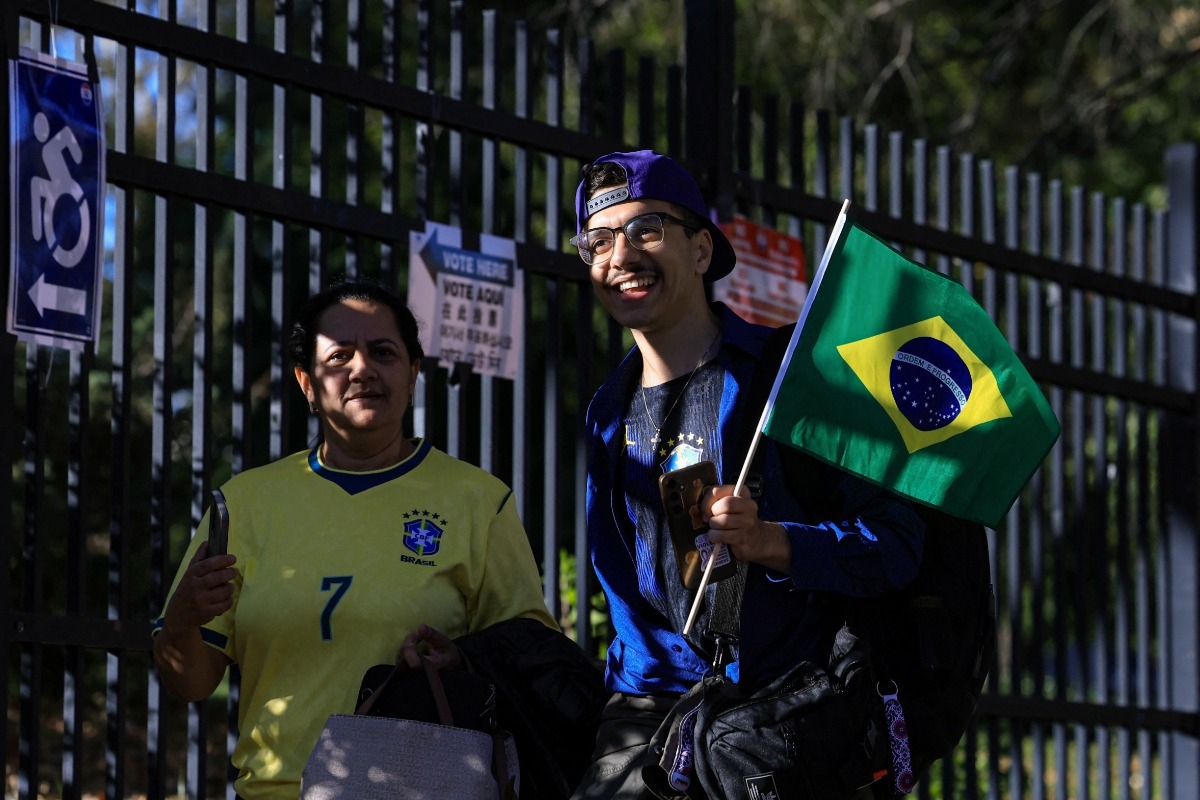
The Supreme Court extends voting due to logistical issues and rain.
Translated by Qiyas from الجريدة — Original source
Brazil’s Supreme Court extended voting by two hours on Sunday in a fiercely contested election between right-wing Senator Flávio Bolsonaro and outgoing left-wing President Luiz Inácio Lula da Silva, who complained that citizens were unable to reach polling stations due to transportation problems.
The decision came minutes after the scheduled closing time of polling stations at 5:00 p.m. local time (20:00 GMT), with the Supreme Court ordering the extension of voting nationwide until 7:00 p.m., citing the “seriousness of the circumstances presented.”
Lula (80) had asked the judiciary to extend voting, stating that 40 percent of buses were withdrawn from service in São Paulo, and that the same problem was recorded in several cities in northeastern Brazil, where he had won a large margin in the first round. He condemned the situation, saying, “Something terrible is happening.”
A regional electoral court ordered the suspension of the transport official in Salvador for failing to provide free transportation on election day, while local media reported that 75 buses were prevented from leaving their depots in the city.
Flávio Bolsonaro (45), son of former President Jair Bolsonaro, also requested an extension of voting due to heavy rains in southern and southeastern Brazil, where he has a broad base of supporters.
This will be Lula’s final electoral contest; he will turn 81 next week and hopes to reverse the voting trend after finishing second in the first round behind the son of former President Jair Bolsonaro.
After casting his vote at a polling station in Rio de Janeiro, Bolsonaro said, “Brazil cannot continue like this for another four years. Everyone’s lives have gotten worse,” calling for “real change.”
For his part, Lula, speaking in a hoarse voice after casting his vote, urged voters to “choose a country where the flag is respected.”
Seeking a fourth term, Lula presented himself as a bulwark against U.S. interference and democratic backsliding, and pledged to expand social protection.
Sunday’s runoff will determine whether Brazil remains among the few countries in Latin America governed by the left, or joins the wave of rightward shift in the region supported by U.S. President Donald Trump.
Bolsonaro, meanwhile, pledged to combat crime firmly and reduce government spending, while pledging to hand Brazil over to “Jesus Christ,” offering a vision of change that has won the support of Brazilians seeking a new approach.
Maria Fernanda Elisbaao (21) told Agence France-Presse, “Brazil needs more time with Lula, especially since the country is on the verge of falling into the clutches of fascism.” She cast her vote in São Bernardo do Campo, a stronghold of the left-wing leader, near São Paulo.
Bolsonaro has sought to present himself as more moderate than his father, Jair, who is serving a 27-year prison sentence for attempting a coup after his defeat to Lula in the 2022 elections.
He pledged that if elected, his first act would be to release his father, a deeply divisive figure in Brazil, whose legacy loomed large during his eldest son’s campaign.
Following the first-round defeat, the left mobilized strongly, organizing massive rallies under the slogan “We will never allow Bolsonaro’s return,” with participants citing the former president’s chaotic management of the COVID-19 pandemic, his destruction of the Amazon rainforest, and his cuts to government programs and public services.
Deforestation in the Amazon, the world’s largest tropical rainforest, has fallen to its lowest level in four decades under Lula.
Despite the wildfires ignited by the El Niño climate phenomenon across the Amazon in recent weeks, and heavy rains that fell in the south of the country, climate change has received little attention in the election campaign.
Lula, who enjoys high esteem thanks to social welfare programs that lifted millions out of poverty, returned to power in the 2022 elections after a major corruption scandal led to his imprisonment for more than 18 months.
During his third term, Brazil saw declines in inflation and unemployment rates, and millions were rescued from the grips of hunger. However, voters have complained about the rising cost of living and expressed growing frustration over the spread of crime.
Walter dos Santos, 56, who lives in northeastern Brazil—a region that serves as a stronghold for the president, who hails from there—said, “Even if some describe them as mere handouts or aid, they were a tremendous help to us. Because those who have tasted hunger fully understand the importance of these programs and do not take their existence for granted.”
After the setback he suffered in the first round, Lula reshaped his strategy on social media, began recording video messages, and purchased his first mobile phone.
A fierce battle erupted on social media involving Meta, the parent company of WhatsApp, Facebook, and Instagram. Lula’s campaign accused the company of bias toward his rival through “algorithmic manipulation.” Meta denied this, but admitted that some of Lula’s campaign ads were mistakenly halted due to technical issues.
Regardless of the winner, Brazil is heading into a difficult and turbulent post-election period.
Political analyst Thomas Trauman said, “If the left wins, it will face four years in a hostile Congress and impeachment threats,” pointing to the significant legislative gains made by the right.
He added, “If the far right wins, it will be a government based on revenge, targeting the Supreme Court,” which the right has fiercely opposed since it convicted Jair Bolsonaro of attempting a coup.
Flávio Bolsonaro stated that he would seek the impeachment of Supreme Court Justice Alexandre de Moraes, who led the case against his father.
