Al-Fatwa seminar on 'commercial cover-up' calls for a grace period to rectify the situation... Commerce Ministry ready to enforce the law on time
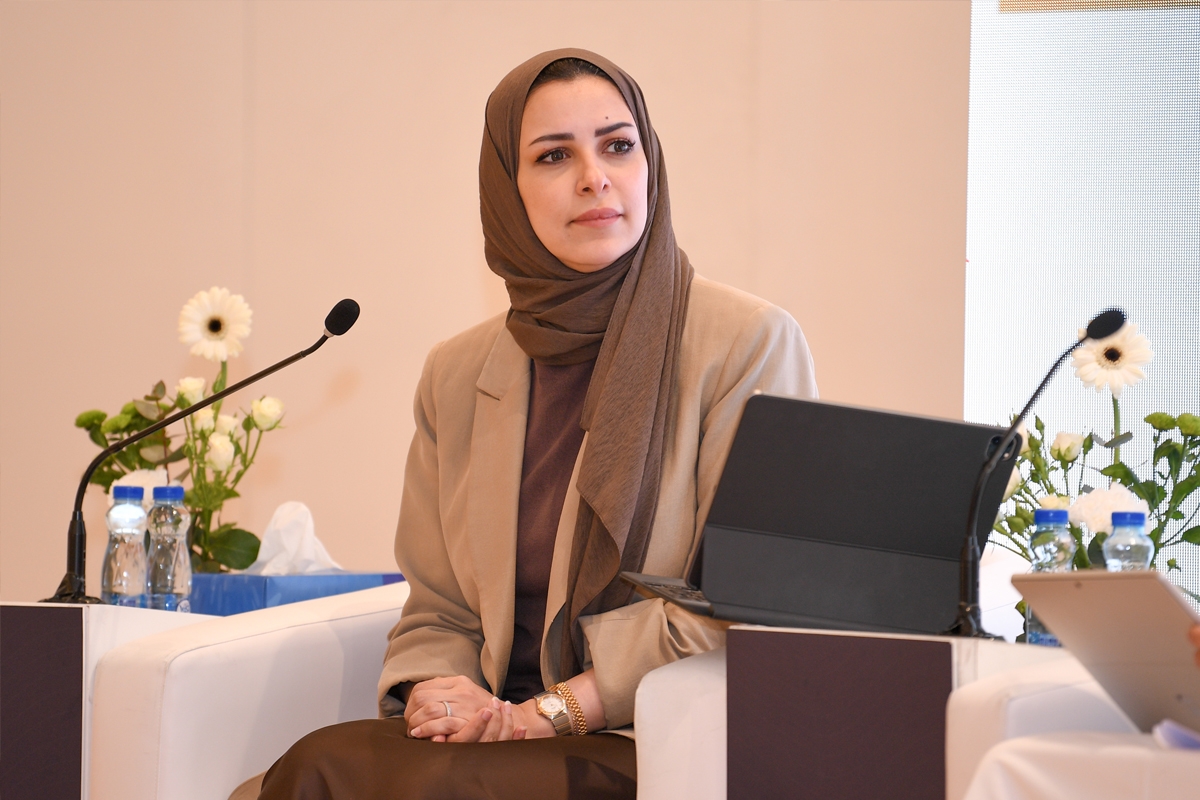
A dialogue seminar calls for a grace period to rectify the situation regarding commercial cover-up, while the Ministry of Commerce is ready to enforce the law.
Translated by Qiyas from الجريدة — Original source
During a dialogue seminar titled “The Commercial Concealment Law: An In-depth Analysis Between Legal Provisions and Practical Applications,” hosted yesterday, Sunday, by the Fatwa and Legislation Department at its headquarters, speakers—specifically law professors—agreed that the law did not specify a deadline for amending existing situations. However, they considered that the period stipulated for issuing the executive regulations of the law, which is six months, constitutes the designated deadline. They emphasized the necessity of addressing this gap by granting a grace period for business entities and activities to rectify their status before resorting to penalties.
Deputy Minister of Commerce and Industry (Acting), Marwa Al-Juaidan, revealed that the Ministry of Commerce and Industry has begun examining commercial registers to verify the accuracy of beneficial ownership data for business owners prior to the issuance of the executive regulations for the Commercial Concealment Law. She noted the ministry’s readiness to implement the law, stating that registers serve as one of the primary tools for detecting commercial concealment practices, alongside coordination and information exchange with relevant government entities.
Al-Juaidan urged business owners to utilize the current period to amend their status and correct their commercial practices before the law enters into force in early February 2027. She clarified that this period does not constitute a license to violate the law, but rather an opportunity to regularize affairs and comply with legal requirements.
She explained that the issuance of the law’s executive regulations will outline detailed procedures and practical implementation mechanisms. The ministry has formed a specialized legal committee to draft the regulations, which are expected to be issued soon, paving the way for completing implementation procedures. These include intensifying supervision and field inspections, as well as granting ministry employees the status of judicial police officers in accordance with approved procedures.
She added that the number of active commercial activities in Kuwait amounts to approximately 140,000. She emphasized the importance of verifying whether the data recorded in commercial registers aligns with the nature of the actual activity being conducted. She pointed out that regulatory authorities can access commercial registers and report any suspicions or violations to the ministry for verification and appropriate action.
Al-Juaidan noted that status amendments can be made through the Ministry of Commerce and Industry’s electronic portal, including modifying ownership percentages or correcting practices that do not match the commercial register data. She stressed that recorded data must reflect the actual reality of the commercial activity and its nature.
Al-Juaidan emphasized that the objective of the law is not to punish business owners, but to enhance compliance with regulations governing commercial activities, consolidate transparency and integrity, protect fair competition, and foster a business environment based on legitimate practices.
For his part, Dr. Ahmed Al-Mulhem, Professor of Commercial Law at the College of Law at Kuwait University, stressed the necessity of distinguishing between commercial concealment and legitimate commercial practices. He clarified that the existence of single-person companies and other legal forms does not inherently constitute concealment; rather, it requires examining the nature of the activity, the surrounding facts, and their compatibility with legislation.
Al-Milhama stated that the Commercial Concealment Law aims to address illegal economic practices rooted in 65 years of history, emphasizing the importance of understanding its scope and distinguishing between practices that violate the law and legitimate business activities. This distinction contributes to protecting the economic environment and enhancing compliance with business regulations. He clarified that commercial concealment is not limited to enabling an individual to conduct business in violation of the law; it also encompasses various forms, such as providing funds, assets, or material means to another person to engage in illegal activities, as well as legally enabling them to use a trade name, trademark, or commercial license in contravention of prevailing legislation.
He noted that the roots of these practices date back to the early stages of Kuwait’s economic renaissance, pointing out that previous commercial legislation included restrictions on foreign ownership percentages. This created legal challenges whose effects were evident in several commercial practices and cases, including those involving exchange companies in the 1980s.
He added that instances of concealment may appear in various sectors, such as contracting, retail shops, pharmacies, and labor recruitment agencies, by using existing licenses or companies to cover activities conducted by individuals in violation of the law. Concealment may also be facilitated through intermediaries who allow individuals to engage in business activities without verifying the legality of such actions.
He stressed the importance of interpreting the law in light of relevant legal principles to achieve the goal of combating commercial concealment while simultaneously preserving legitimate forms of business and investment.
For his part, Dr. Mohammed Al-Mutairi, Professor of Commercial and Corporate Law at the College of Law, Kuwait University, stated that the legislator established controls to define the activities covered by the law. He emphasized that not all economic activities constitute commercial activities, and that concealment does not necessarily involve enabling foreigners; it may also involve enabling any individual to conduct an activity in violation of the regulations governing it.
He added that simple trades and crafts that do not require a license, according to relevant controls, are not considered commercial concealment if practiced by foreigners. He noted that non-profit companies are naturally excluded from the scope of the law, as they do not aim to generate financial returns.
Al-Mutairi explained that the legislation provided legal pathways for foreigners to engage in economic activities, including the Law on Encouraging Direct Investment, which permits foreign investment according to its regulations. He also pointed to legislative amendments that allowed foreign companies to open branches in Kuwait without requiring a local agent, subject to stipulated conditions.
For his part, Dr. Ahmed Al-Khader, Professor of Civil and Commercial Procedure Law at the College of Law, Kuwait University, stated that identifying the beneficial owner of commercial entities is a fundamental tool in combating commercial concealment, money laundering, and corruption. This is because it enables the identification of individuals who exercise actual control over companies and economic activities, even if their names do not appear in official records.
Al-Khader clarified that the importance of identifying the beneficial owner is based on international obligations, including the United Nations Convention against Corruption, which Kuwait ratified under Law No. 47 of 2016. This convention emphasizes the importance of disclosing the identities of natural persons who exercise actual control over legal entities.
He noted that the 2024 regulation on beneficial ownership was issued in response to requirements related to transparency and anti-money laundering, explaining that developing this regulation and strengthening its implementation mechanisms, including the imposition of sanctions, contribute to raising the level of compliance with relevant international laws and standards.
He added that identifying the beneficial owner is not limited to knowing the registered owner of the company, but extends to the person who exercises actual control over its decisions, whether directly or indirectly. He clarified that the adopted controls include the criterion of owning or controlling 25 percent, or the ability to influence decisions or appoint a majority of the board of directors, in accordance with the stipulated conditions.
Al-Khader emphasized that maintaining a register of beneficial owners at the Ministry of Commerce and Industry enhances the ability of regulatory authorities to track relationships between parties associated with commercial entities and to uncover individuals behind non-compliant practices.
He stressed that the concept of exercising economic activity is linked to actual control and the nature of the role performed by the individual, rather than mere nominal ownership. He pointed out that identifying the true parties to a commercial relationship helps uncover those who conceal their involvement and those who benefit from such concealment, thereby clarifying responsibilities.
