Researches: Gulf Interest in Small Nuclear Reactors for Energy
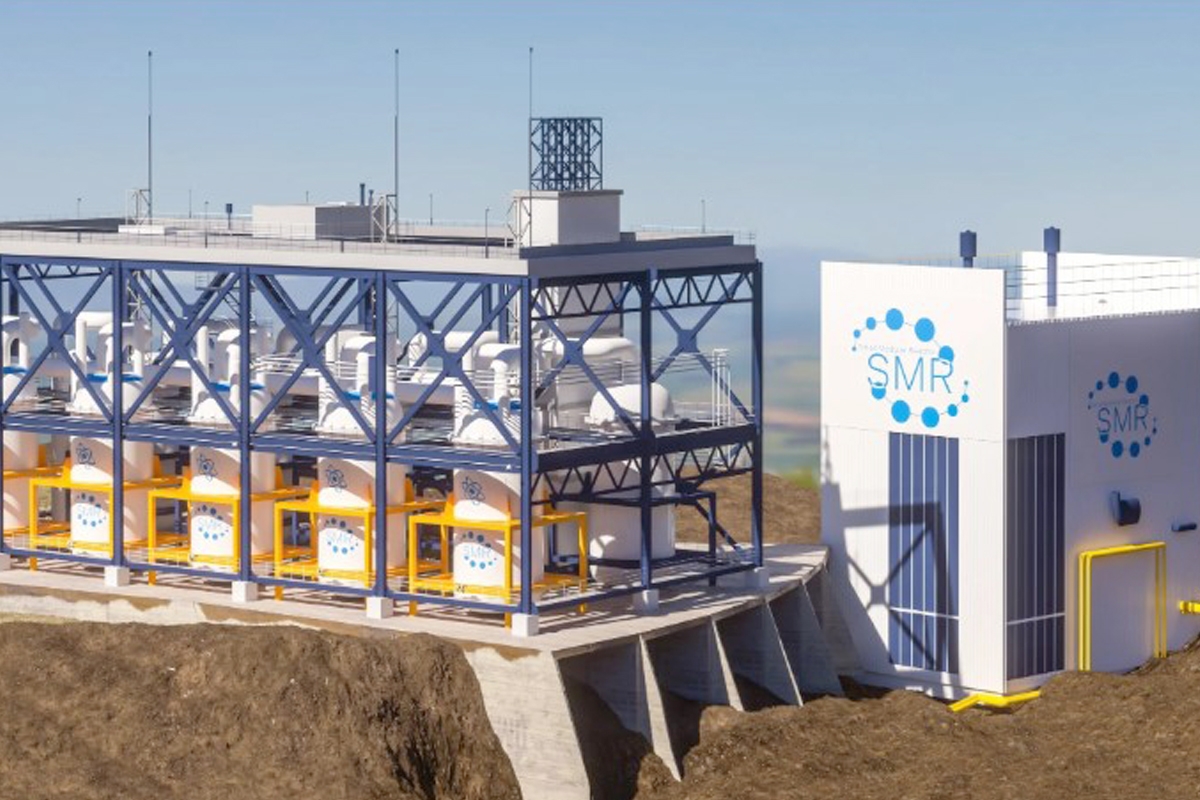
Dr. Bader Al-Mutairi of the Kuwait Foundation for Advanced Sciences emphasized Gulf countries' interest in small nuclear reactors, pointing to the Manama workshop and the U.S.-led FIRST initiative to enhance peaceful nuclear readiness without current formal commitments.
Translated by Qiyas from الجريدة — Original source
Dr. Bader Al-Mutairi, a nuclear energy expert and Associate Researcher at the Kuwait Institute for Scientific Research, stated that small modular reactors (SMRs) represent an advanced category of nuclear technologies. He noted that they allow for gradual capacity expansion and better alignment with local needs, while requiring lower initial capital investment compared to large nuclear power plants.
Al-Mutairi told Al-Jarida that SMRs rely on safety features that help reduce operational complexity and enhance public confidence. He highlighted their compact size, factory-based manufacturing capabilities, and cost competitiveness relative to traditional large nuclear reactors.
He pointed out that their modular design and limited footprint make them suitable for countries facing constraints in electricity grids or infrastructure, or those seeking non-electric applications such as water desalination and industrial heat supply.
Al-Mutairi noted that he contributed to assessing the potential use of SMRs in areas such as electricity generation, water desalination, and industrial applications, while following international and regional developments in this field. This work was part of his participation as a representative of Kuwait at the first regional workshop of the FIRST initiative for Gulf Cooperation Council (GCC) countries, hosted by the Kingdom of Bahrain earlier this year.
He added that the GCC’s engagement with the peaceful uses of nuclear energy was evident at the workshop, where regional stakeholders gathered to discuss the prospects and future of nuclear energy. The event brought together policymakers, technical experts, and regulatory bodies, who explored the potential role of nuclear technologies, particularly SMRs, in the region’s future energy system.
Al-Mutairi explained that the Foundational Infrastructure for the Responsible Use of Small Modular Reactor Technology (FIRST) initiative falls under a capacity-building program led by the U.S. Department of State to support partner countries exploring SMRs and advanced nuclear technologies in accordance with the highest standards of safety, security, and nuclear non-proliferation. He noted that the discussions were jointly organized by the GCC Secretariat General and the United States, featuring technical sessions presented by senior experts from the U.S. government and national laboratories, as part of a coordinated effort to enhance the region’s nuclear policy readiness.
He emphasized that Kuwait is keen on monitoring global and regional nuclear trends, despite the absence of an official national commitment to nuclear energy at present. The focus has been on foundational aspects of nuclear energy planning, including regulatory readiness, economic assessments, and technology selection methodologies, alongside non-electric applications of SMRs such as water desalination, industrial heat, and hydrogen production.
Al-Mutairi clarified that the Manama workshop was not an indicator of decisions to build nuclear reactors, but rather reflected growing regional readiness to develop policies and adopt a systematic approach to studying nuclear energy options. He noted that the discussions highlighted how SMRs could be evaluated in the context of rising electricity demand, long-term water desalination needs, and the decarbonization of energy-intensive sectors, should the country decide in the future to proceed with detailed feasibility studies.
He noted that the region is facing energy sector transition challenges, such as rising electricity demand, economic diversification, and climate commitments, emphasizing the importance of evidence-based, gradual policymaking in the energy sector. He reaffirmed that early engagement, building regional knowledge networks, and strengthening institutional capacities are all essential prerequisites before making any major decisions on nuclear energy.
He stressed that the U.S.-led “FIRST” program, in coordination with the Gulf Cooperation Council (GCC) and with active regional participation, is advancing at a more consistent and strategically rigorous pace, within a framework of international cooperation and institutional knowledge.
Al-Mutairi affirmed that although Kuwait, Qatar, and Oman currently have no formal nuclear energy commitments, their active participation in the Manama workshop reflects clear regional interest in following nuclear developments to support potential future decisions, compare international standards, assess technical pathways, and evaluate institutional readiness in case they decide to explore nuclear options in the future. He pointed out that Kuwait, like other Gulf states, is monitoring the nuclear pathways of neighboring countries.
