Al-Shal: Government's acknowledgment of housing policy errors came too late
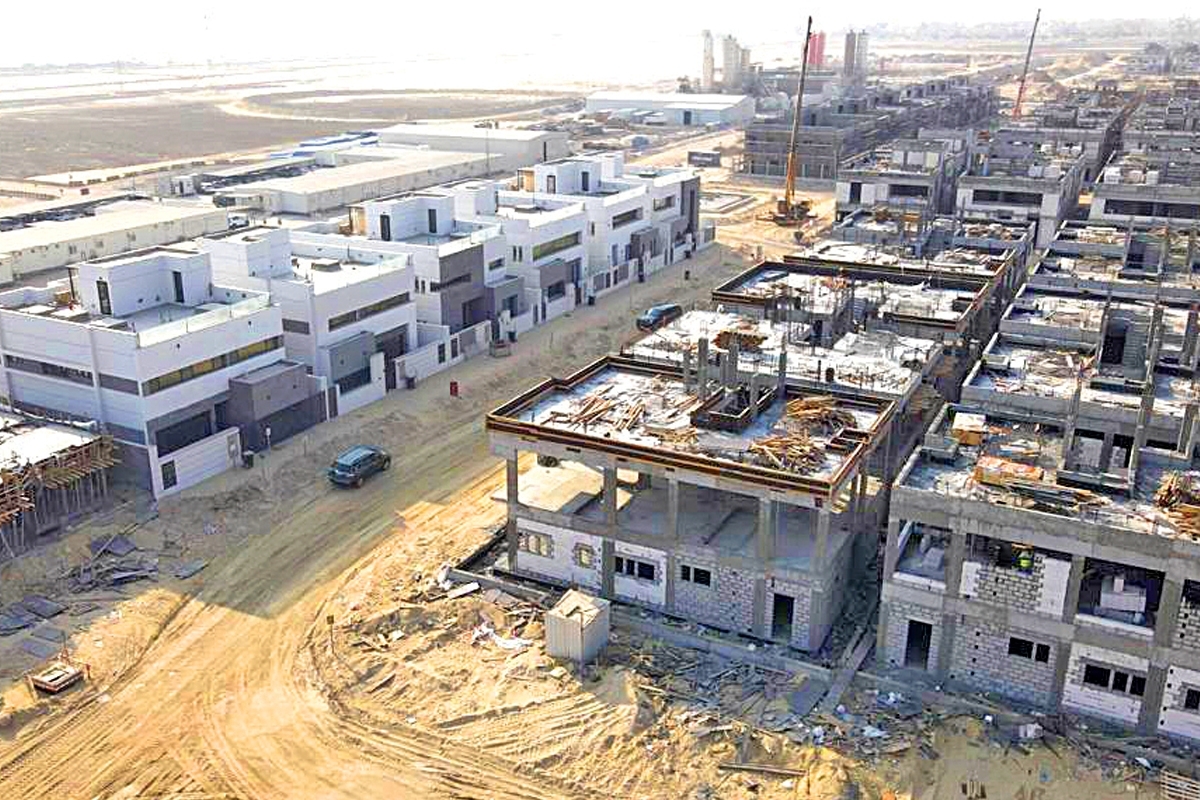
Al-Shal emphasized that the acknowledgment of housing policy errors was delayed, warning of worsening economic and financial imbalances due to horizontal expansion.
Translated by Qiyas from الجريدة — Original source
“Despite the diverse housing care provided by the state to Kuwaiti citizens, the housing problem continues to worsen due to the financial challenges facing the state in general and the Kuwait Credit Bank in particular, stemming from structural imbalances in the economic environment. This has created new risks to the ability to sustainably provide dignified housing for Kuwaiti citizens in the near term, amid accumulating demand and limited supply.”
Al-Shal clarified that this paragraph, situated between two contrasting clauses, is quoted verbatim from the explanatory memorandum of Law Decree No. 114 of 2026 concerning real estate financing for beneficiaries of housing care, which was published in the 1813th issue of “Kuwait Al-Yawm” newspaper, issued on Sunday, the 18th of the current month.
The text accurately summarizes what has been stated for decades by most experts: namely, that so-called housing policy projects are unsustainable, and continuing them will deepen the housing care problem and structural economic issues.
Al-Shal emphasized that the acknowledgment of the error in housing care policies over time came far too late, yet it did not generate sufficient awareness to advance proposals for new, sustainable solutions. According to the explanatory memorandum itself, the solution lies in developing the financing aspect of Law No. 118 of 2023 concerning the establishment of companies to create and economically develop cities or residential areas, as one of the pillars in solving the housing problem.
He added: In other words, the solution does not address the fundamentally flawed concept of housing care, which was the main cause of its failure—namely, horizontal housing expansion—but rather focuses on changing the entity responsible for reconstruction and establishing a different financing concept that combines government contribution and guarantee with commercial financing. While this may shorten waiting periods and perhaps alleviate financing pressures on the general budget in the short term, it will not achieve sustainability. A future government will likely issue the same caveat mentioned at the beginning of the paragraph after some time.
Al-Shal further stated: To avoid a delayed acknowledgment of the unsustainability of the new housing care project, given that the economic and financial situation has deteriorated further, those responsible must review its repercussions on structural economic imbalances, the most important of which are three.
The first is its impact on the imbalance in the composition of the local economy, or GDP driven by its current primitive engines: a high-cost public sector that generates about 70 percent of it, or, by another calculation, oil that generates between 40 and 55 percent, depending on price and production movements. In a country where the contribution of its GDP to its peers in the Gulf Cooperation Council countries has fallen from about 12.4 percent in 2008 to 6.5 percent in 2025, horizontal housing expansion will exacerbate economic unsustainability.
The second is that continuing horizontal housing expansion will increase energy consumption at the expense of export shares, as well as water, infrastructure such as roads, and more imported marginal labor. This occurs in a country where the general budget deficit has reached approximately 34.5 billion dinars over the past ten fiscal years, with an additional deficit exceeding 9.8 billion dinars expected for the current fiscal year. Furthermore, the value of domestic and foreign public debt has multiplied by approximately 8.1 times since March 2024.
The third issue is the distortion of the national workforce balance in a country where the public sector employs approximately 83.1 percent of Kuwaiti nationals, with a significant margin of concealed unemployment. Recent reports indicating a surplus exceeding 30 percent in the most critical role for human capital development—the Ministry of Education—will inevitably lead to a rapid rise in open unemployment. This unemployment will, in turn, make it impossible for many to repay installments and interest on homes in horizontal urban expansion projects, transforming the problem into a social, political, and financial crisis. The correct priorities for any economy are sustainable employment, excellence in education, housing, and other services.
Al-Shal said: “We hope we are wrong this time, but it must be proven by reviewing whether the success or failure of the housing care project is linked to the concept of horizontal expansion and its repercussions on the economy’s structural imbalances, or to the financing model and the change in responsibility for developing its cities and units. Proving this is extremely easy; it requires only a numerical assessment of its impact on future structural imbalances.”
