Al-Omar on Iran's Threats to Cut Internet Cables: We Hope for Alternatives
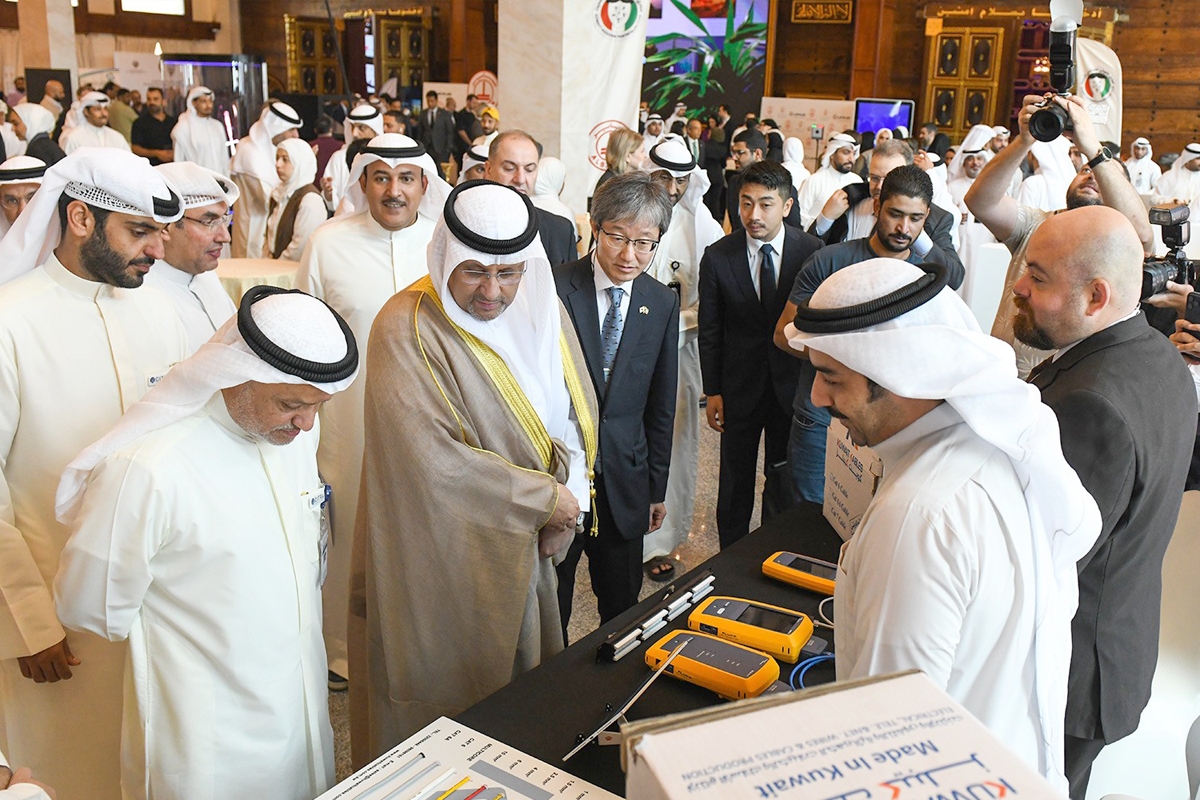
Minister of State for Communications Affairs Omar Al-Omar confirmed Kuwait's readiness to enhance digital infrastructure and transition to a paperless government, expressing hope for internet alternatives in case of Iran's threats to cut cables, noting that satellites
Translated by Qiyas from الجريدة — Original source
State Minister for Communications and Information Technology, and Acting Minister of Information and Culture, Omar Al-Omar, confirmed that Kuwait is moving toward enhancing integration among government entities and data interoperability, thereby enabling greater utilization of modern technologies, foremost among which is artificial intelligence. He noted that Kuwait is preparing to advance the digitization of government archives, aiming to realize the concept of a paperless government.
Speaking on the sidelines of the opening of the International Forum on Artificial Intelligence and Digitalization, titled “Crisis Management, Innovation, and the Future of Institutions,” Al-Omar stated that the availability of digital services grants the state a competitive advantage under current circumstances, citing past experiences that have proven the importance of such services.
Addressing concerns related to Iran’s threats to cut cables in the Strait of Hormuz and the possibility of internet outages, Al-Omar remarked that this issue affects the region as a whole, not just Kuwait. He expressed hope for the availability of suitable alternatives, stating, “We do not want to assume the worst, but we must always be prepared. May God protect our homeland.”
Regarding the potential reliance on satellites as an alternative to terrestrial and submarine cables for internet transmission, Al-Omar clarified that current technological development has not yet reached a stage where satellites can provide the same capacity as cables. While they can be utilized for personal purposes, they cannot serve as an equivalent substitute for existing infrastructure.
On the subject of cooperation with Japan, he affirmed that Kuwait’s doors are open to various partnerships that benefit the country, welcoming projects that add value and enhance capabilities and potential in the fields of digital transformation and technology.
In his speech during the forum’s opening, Al-Omar pointed out that the current stage of artificial intelligence applications requires accelerating the pace of digital transformation and consolidating reliance on modern digital solutions and tools in Gulf countries. This should align with the impact of these technologies on various societal aspects, while also strengthening the role of digital innovation in meeting the needs of evolving societies and supporting remote communication across different sectors.
For his part, Dr. Khaled Al-Zamil, Director General of the Public Authority for Communications and Information Technology, stated that with the entry of artificial intelligence into the work environment, institutional capacities for analyzing information, supporting employees, improving planning, developing work mechanisms, and enhancing knowledge exchange are expanding. However, he emphasized that true benefit from these technologies does not begin merely with their use, but rather with understanding the problem to be addressed and precisely defining the targeted outcomes.
Meanwhile, Japanese Ambassador to Kuwait Kenichiro Mukai said the world is witnessing rapid transformation driven by artificial intelligence, which holds significant potential in many fields such as healthcare, agriculture, education, and infrastructure. Its applications are expected to extend to various countries and impact the lives of every individual.
