Nvidia CEO: We stand on the brink of a new industrial revolution led by AI factories
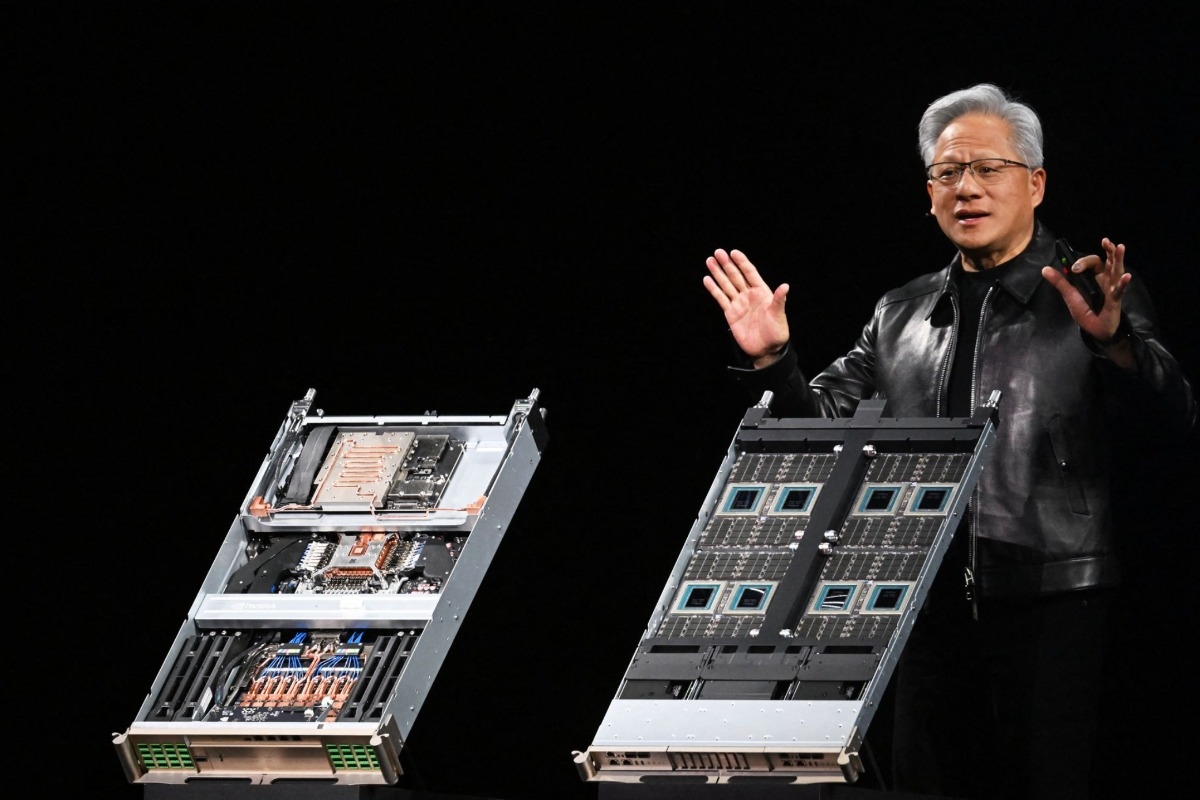
Jensen Huang clarifies Europe's role in the AI economy and Nvidia's $10 billion investment
Translated by Qiyas from الجريدة — Original source
Jensen Huang, chief executive of Nvidia, the US-based global leader in artificial intelligence chips, has allayed concerns that Europe could lose its role in the global development of AI.
Speaking at the GTC technology conference in Berlin, Germany, on Wednesday, Huang said Europe is a key player in the new “AI economy,” adding, “Every company in Europe will become an AI company. There is no doubt about that.”
Huang noted that Nvidia has been deeply rooted in Europe for 33 years, from its early work in chip development to its current partnerships with major corporations such as Siemens, Volkswagen, and Mercedes-Benz. He added that the company invested nearly $10 billion (about €8.9 billion) in the European market last year alone to strengthen a network of startups and established firms.
The head of the world’s most valuable company described the ongoing transformation as an industrial revolution, noting that companies will no longer merely use software but will operate their own “AI factories.” These facilities will not produce physical goods but rather digital intelligence to be used across various sectors, from drug development to more efficient energy distribution. “After decades of progress in the computing industry, we are now on the cusp of a new industrial revolution,” he said.
During his keynote address in Berlin, Huang unveiled new hardware solutions, including specialized desktop computers known as “RTX Spark.” These devices are designed to enable complex AI tasks to be performed locally, without users needing to rely on external computing centers. Nvidia aims to make this technology more accessible to a broader range of companies and developers.
“Physical AI” was another central theme of the keynote. This field involves machines that do more than process data; they can understand and interact with the real world. Huang demonstrated robots that use AI to learn how to adapt to their environments and complete tasks. “This is indeed the next wave of AI: AI that understands the physical world,” he said.
To ensure these autonomous systems operate safely, Nvidia also introduced new security concepts. These initiatives aim to ensure that digital assistants, known as “agents,” adhere to strict rules and are prevented from accessing sensitive corporate data without authorization.
