Al-Tabtabaee: Governance and Evaluation Are the Foundation of Education Reform
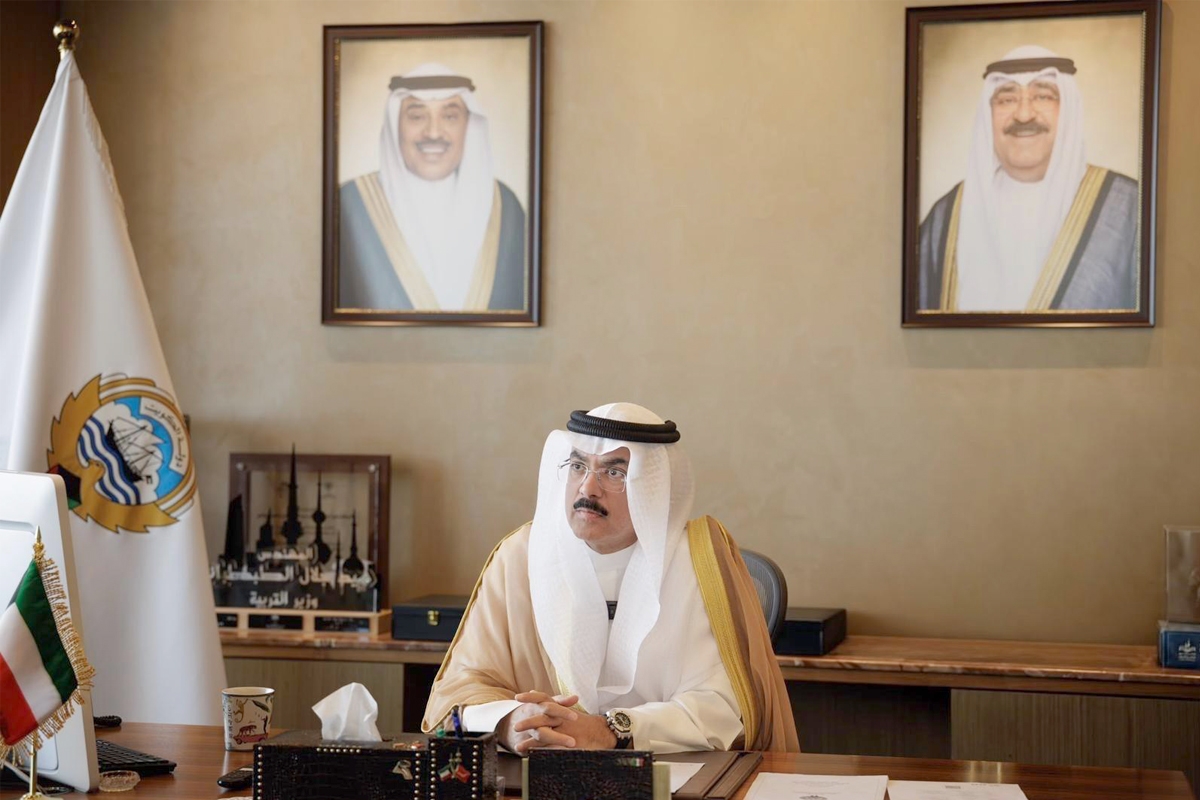
Minister of Education Sayed Jalal Al-Tabtabaee affirmed that governance and evaluation are two key pillars for education reform, during the opening of a regional workshop in Kuwait.
Translated by Qiyas from الجريدة — Original source
Minister of Education Eng. Sayed Jalal Al-Tabtabaee affirmed that Kuwait views governance and institutional evaluation as two fundamental pillars in the educational reform process, clarifying that this stems from a firm conviction that educational development requires decisions based on data and evidence, taking into account the actual needs of the educational field, and subjecting their outcomes to continuous follow-up and evaluation.
This came during the opening of a specialized regional workshop titled “Governance of General Education Evaluation Institutions in Arab Countries: A Prospective Perspective,” organized by the Ministry of Education and the UNESCO Regional Bureau for Education in Science and Technology in Kuwait (REF-ED) this morning. The event was hosted under the patronage and attendance of Al-Tabtabaee, with the participation of the Center’s Director General, Dr. Abdulrahman Al-Mudairis, and a select group of experts, educational leaders, and representatives of national, regional, and international institutions, via the Zoom platform. The workshop aims to enhance Arab integration in evaluation governance and elevate the quality of educational systems.
Al-Tabtabaee stated that “the workshop represents an important scientific and educational platform to discuss a strategic issue related to educational development, namely the governance of evaluation institutions and enhancing their efficiency and the reliability of their results, thereby supporting the quality of educational policies, contributing to improving educational outcomes, and opening broader horizons for exchanging expertise and insights and strengthening joint efforts to develop educational systems in Arab countries.”
He noted that the Ministry, in parallel with reform efforts, has sought to make digital transformation one of the key enablers for enhancing institutional governance. This is achieved through the development of an integrated and electronic digital system that serves various aspects of the educational and administrative processes, supporting transparency in procedures, fairness in the application of standards, and efficiency in follow-up and accountability.
Al-Tabtabaee highlighted the importance of the study prepared by the UNESCO Regional Bureau for Education in Science and Technology in Kuwait, due to its analysis of the current state of governance of general education evaluation institutions in Arab countries, its comparison with leading international experiences and practices, and its forecasting of alternatives and future scenarios for their development.
He added that “Kuwait’s hosting of this workshop embodies its commitment to enhancing Arab and international educational cooperation, and represents an extension of the attention given by the political leadership to the development and quality improvement of education, and to supporting reform steps aimed at building a more efficient and sustainable educational system capable of keeping pace with changes and achieving national goals.”
