Al-Wuqayan Documents Abdullah Al-Faraj's Life and Poetry
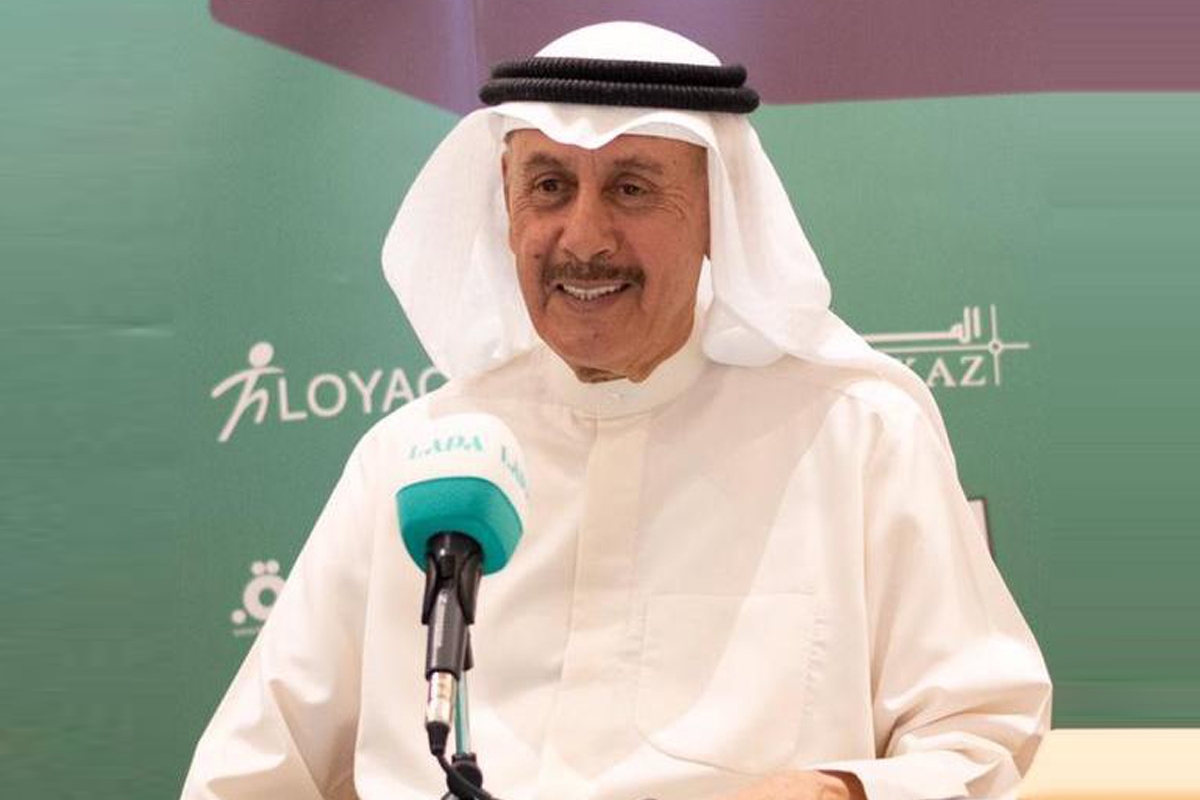
Dr. Khalifa Al-Wuqayan's new book chronicles the life and eloquent poetry of Abdullah Al-Faraj, drawing on historical sources and rare manuscripts.
Translated by Qiyas from الجريدة — Original source
Dr. Khalifa Al-Waqian examines in his new book, “Abdullah Al-Faraj (1836–1901): His Life and Available Classical Poetry,” recently published by Dhat Al-Salasil Publications in Kuwait, the life of a Kuwaiti figure renowned for literature, poetry, and the arts. The 167-page medium-format volume comprises three chapters detailing Abdullah Al-Faraj’s biography, his artistic experience in poetry, music, and visual arts, alongside the publication of a selection of his poems.
Al-Waqian’s creative and research publications consistently emerge within an inspiring cultural context, characterized by seriousness and deep appreciation for the word in its cultural, social, and artistic dimensions. He has enriched the Arabic literary library with numerous poetic collections and research works that serve as references for poets, researchers, and scholars in poetic, cultural, and heritage fields from a literary perspective. These include poetic collections such as “Sailors with the Winds,” “Exiting the Circle,” “Harvest of the Wind,” and “Tadrosu… Become Common,” among others. In the realm of studies and research, his works include “The Arab Issue in Kuwaiti Poetry,” “Al-Buhturi’s Poetry: An Artistic Study,” “Palestine in Kuwaiti Poetry,” and “Culture in Kuwait: Beginnings – Trends – Pioneers,” among others.
In his new book, “Abdullah Al-Faraj (1836–1901): His Life and Available Classical Poetry,” Dr. Al-Waqian continues his scholarly contributions by documenting Al-Faraj’s persona and his distinction in the field of Arabic poetry, both colloquial and classical.
The book focuses generally on Al-Faraj’s life and specifically on his classical poetry. In the introduction, Al-Waqian states: “Abdullah Al-Faraj was, and remains, a subject of interest for researchers due to his distinction in multiple creative fields; both colloquial Nabati poetry and classical poetry, as well as music, whose fame extended beyond the Arabian Gulf region to the Hejaz, Yemen, and the East African coast. He was also distinguished in visual arts, painting, and sculpture, in addition to his exceptional calligraphy using the Persian pen, Nasta’liq script, and the script known as (Lahawi Hindi).”
He adds: “Like others, I sought to research Abdullah Al-Faraj’s classical poetry heritage, but we found nothing to add to the few samples published by Sheikh Abdulaziz Al-Rashid in Al-Kuwait magazine, and the poem he addressed to Ahmad Faris Al-Shidyaq. It was said that a prominent figure holds a copy of the diwan, but no one has been able to access it.”
He continues: “Last year (2025), my dear friend, Professor Sami Al-Ibrahim, gifted me a copy of the encyclopedia (The Complete Works of the Historian Sheikh Ibrahim bin Saleh bin Issa), comprising its nineteen volumes, published by King Abdulaziz Foundation for Research and Archives (Darah) in 2024.”
Dr. Al-Waqian proceeds in the introduction: “Since Sheikh Ibrahim bin Saleh bin Issa was a scholar who visited Kuwait from time to time and had many friends there, including Sheikh Abdullah Khaled Al-Dahhan among them, I sought to search through those complete works for any useful information pertaining to Kuwait, its scholars, its writers, and its events. My joy was great when I found an important piece of information in which Sheikh Ibn Issa described Abdullah Al-Faraj’s diwan (classical poetry) and published several poems from it, along with selected verses from other poems. The total amount he published was greater than what had been published before, and of higher artistic quality.”
Describing the diwan, he says: “I came across Abdullah Muhammad bin Faraj Al-Kuwaiti’s diwan, a complete volume, arranged alphabetically and handwritten by him, and this is what I have transcribed from it....” He then presents his selections from the diwan.
He continued: “I will publish the poems and verses by Sheikh Ibrahim bin Saleh bin Issa, most of which have never been published before, adding to them what was previously published, namely the poems and verses that appeared in Al-Kuwait Magazine, and his poem addressed to Ahmad Faris al-Shidyaq, owner of the newspaper Al-Jawa’ib, which was published by his son Salim Faris in his book (Kan al-Ragha’ib fi Muntakhabat al-Jawa’ib).”
He added: “In addition to what has been mentioned, there is a long handwritten poem provided to me by the researcher and scholar, Professor Yahya Al-Kandari. It is addressed by Abdullah Al-Faraj to Nasser Pasha Al-Saudoun, the emir of the Mutawwa tribe. To complete the benefit, I deemed it appropriate to present a brief biography introducing Abdullah Al-Faraj’s life and his diverse fields of creativity in poetry, music, singing, painting, and sculpture.”
The book consists of 167 pages in medium format and includes three chapters. The first chapter discussed Al-Faraj’s biography; he was born in Kuwait in 1252 AH / 1836 CE. When he was about fourteen years old—at the latest—he moved to Bombay, India, where his father, the merchant Muhammad Al-Faraj, resided, as did other merchants from Kuwait and the Gulf region. Al-Faraj then returned to his homeland, Kuwait, at the age of about twenty-eight or thirty, and directed his attention toward his favorite art (music and singing, as well as writing poetry). Al-Faraj also traveled to Bahrain on several occasions, taking an interest in its political affairs, in addition to his artistic interests, which were documented by many researchers. Upon returning to Kuwait, he sought to respond to Muhammad bin Fadl and his companions, who had caused his alienation from his friends, loved ones, notables, intellectuals, and artists in Bahrain. Al-Faraj also held a prominent status among his Kuwaiti compatriots, regardless of their differing orientations.
Al-Waqian noted that Al-Faraj was well-known and famous among the notables and intellectuals of Basra and its surroundings, and that he did not cease practicing his creativity, particularly in poetry, until the final days of his life.
In the second chapter of the book, Al-Waqian discussed Al-Faraj’s artistic experience in poetry, music, and visual arts. Within this framework, he stated: “Abdullah Al-Faraj is considered one of the first people whose fame spread in the field of poetry in Kuwait after the scholar-poet Uthman bin Sand (1766–1827 CE). He combined classical Arabic poetry with poetry written in the colloquial dialect—Nabati, Hameeni, and Zuhayriyat. He is also considered one of the most prominent figures in music and singing in the Gulf region and the Arabian Peninsula during the nineteenth century. Furthermore, Al-Faraj is the first person about whom we have documented information regarding his engagement in painting, and it is also said that he practiced sculpture, in addition to his proficiency in calligraphy.”
Al-Waqian dedicated the third chapter to Abdullah Al-Faraj’s classical Arabic poetry, through what was published in the book “The Complete Works of the Historian Ibrahim bin Saleh bin Issa.” Secondly, it included a handwritten poem praising Nasser Pasha Al-Saudoun, emir of the Mutawwa tribe. Thirdly, it featured a poem addressed to Ahmad Faris al-Shidyaq, owner of the newspaper Al-Jawa’ib. Fourthly, it contained the poems and verses published by Sheikh Abdulaziz Al-Rashid in Al-Kuwait Magazine.
