Bilal, Al-Shatti, and Al-Jaber revive the features of Kuwait's theatrical renaissance
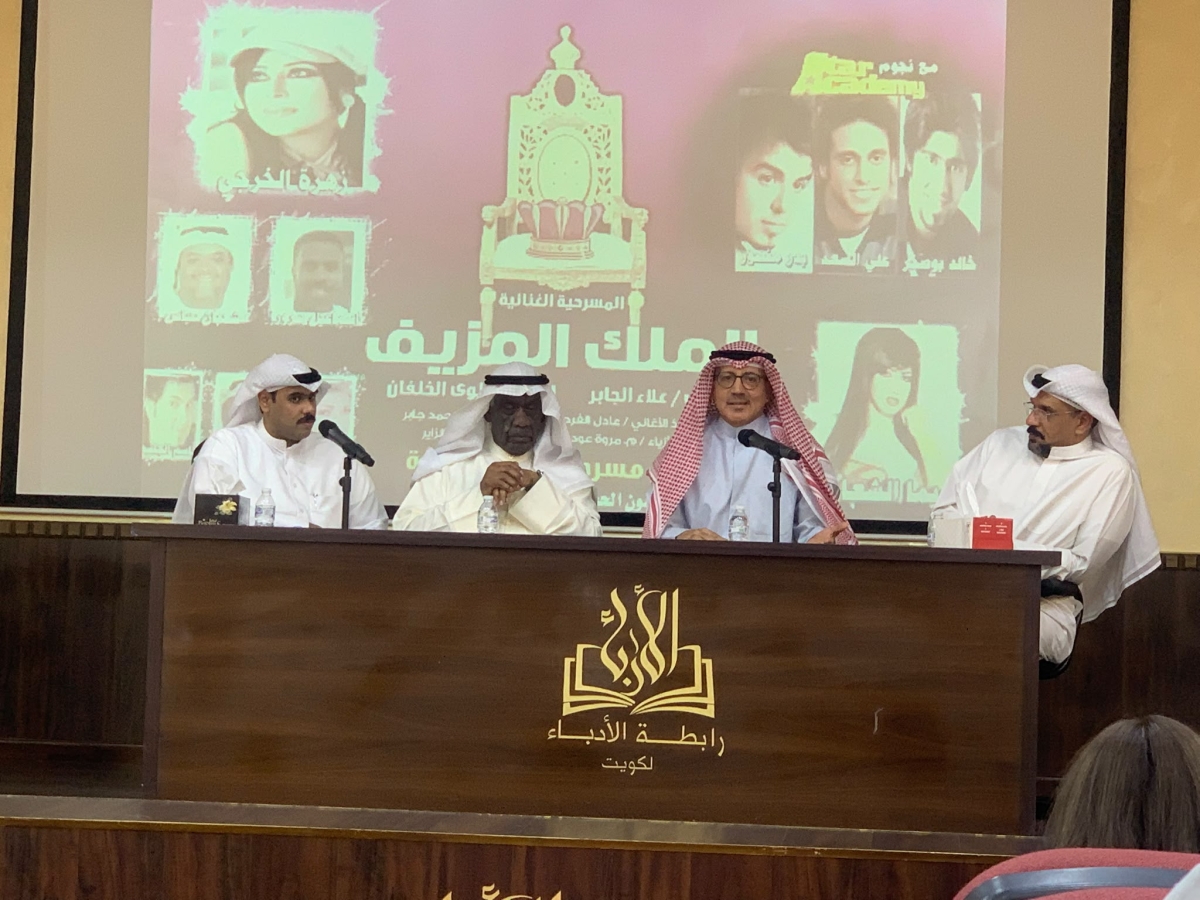
The Theater House at the Writers Association launches events to showcase the history of Kuwaiti theater and the contributions of pioneers
Translated by Qiyas from الجريدة — Original source
The first events of the Theater House at the Kuwait Writers Association launched with a cultural evening that recalled luminous milestones in the history of Kuwaiti theater and the contributions of its pioneers to enriching the Arab theatrical movement, during a dialogue session titled “From Kuwait to the Arab World: Pioneers Who Made Theater Great.”
At the outset, Dr. Bilal emphasized that Kuwaiti theater is closely linked to the identity of Kuwaiti society, noting that the beginnings of the theatrical movement started in 1911 with the establishment of Al-Mubarakiya School, and that the official launch of school theater dates back to 1939 with the staging of the play “Islam Omar,” which received historic support from the late ruler Sheikh Ahmad Al-Jaber Al-Sabah.
He pointed out that Al-Ahmadiya School witnessed the presentation of the play “Umm Anbar” in 1943, adding that in the mid-1950s, specifically in 1955, the real phase of establishing official theater troupes began, such as the Popular Theater and the Arabian Gulf Theater.
He said that Kuwaiti theater, by pursuing two parallel lines that combine the local dialect and Modern Standard Arabic, has solidified its pioneering position as an accurate mirror reflecting the issues and aspirations of Kuwaiti society across different eras.
Regarding children’s theater in Kuwait, Bilal explained that it represents an independent foundational pillar; indeed, it is an art form in its own right, with its own prerequisites and fundamental necessity, constituting an essential addition to the Kuwaiti theatrical scene. He stressed the great importance of the presence and continuity of a children’s theater that is aware of its role and status.
In his reading of the trajectory of Kuwaiti theater and the reasons for its brilliance, Al-Jaber affirmed that the pioneering status reached by theater in Kuwait is the fruit of a forward-looking vision characterized by leading figures and artists during the foundational stage. He praised the role of the first generation of pioneers and shed light on the pivotal role of the late actor Hamad Al-Rajab in attracting prominent Arab artistic figures, foremost among them the theater pioneer Zaki Talamat, and his role in establishing the first nucleus of modern theater in Kuwait.
Al-Jaber explained that Kuwait managed to create a “unique success formula” through which it surpassed other Arab experiences. This formula rested on three main pillars: the passion of youth, attracting expertise, and institutional support.
Regarding children’s theater in Kuwait, he said it is distinguished by a unique condition, completely different from other theaters in the Arab world, noting that Kuwait’s pioneering role in this field did not come out of nowhere, but is the fruit of a long journey.
Meanwhile, Al-Shatti reviewed luminous milestones in the trajectory of Kuwaiti theater, affirming that the launch of school and improvisational theater stemmed from the efforts of the pioneer of Arab theater, Zaki Talamat, during his visit to Kuwait. He spent months overseeing and monitoring artistic activity comprehensively, observing school theater, folk troupes, and others.
He continued: “This oversight resulted in a detailed report that diagnosed the reality of the artistic movement, revealing a flourishing school theater alongside an improvisational theater. These readings had their conclusions and texts later exported beyond school walls. These reports culminated in the presentation of the play ‘Saqr Quraish,’ whose rehearsals began in 1961, and which was officially presented to the public in 1962.”
He noted that with Kuwait’s independence and the establishment of modern constitutional institutions (1961), the theatrical movement entered a new and intensive phase on both artistic and academic levels. He mentioned that this period witnessed the official launch of the Arabian Theater Troupe and the announcement of its start, as the theatrical project attracted the first Kuwaiti women in the field of acting: Mariam Al-Saleh and Mariam Al-Ghaddan.
