Gulf Ministerial Committee Condemns Houthi and Iranian Attacks, Affirms Gulf Security is Indivisible
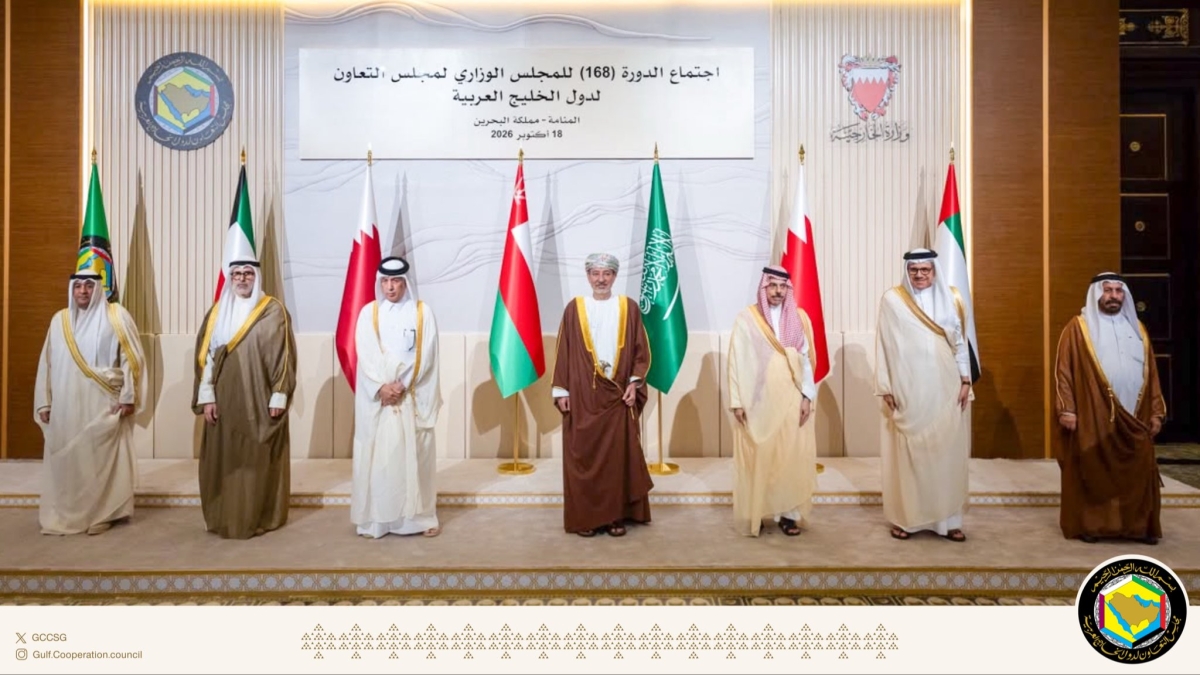
Gulf ministers affirmed their full solidarity with Saudi Arabia against Houthi and Iranian attacks, calling on the UN Security Council to take firm measures to ensure security and stability in the region.
Translated by Qiyas from الجريدة — Original source
Amid the ongoing Houthi escalation, Saudi Arabia received significant support yesterday from the Gulf Cooperation Council (GCC) countries in taking all necessary measures to safeguard its security and sovereignty. At the same time, Egypt’s National Defense Council, led by President Abdel Fattah el-Sisi, decided to provide all forms of necessary support to the Kingdom to protect its territory, including military intervention.
This Gulf support for the Kingdom came during the 168th GCC Ministerial Meeting held yesterday in Manama, as well as during the Ninth Strategic Dialogue between the foreign ministers of the Gulf states and Russia, which took place on the sidelines of the same event.
At the GCC Ministerial Meeting, GCC Secretary-General Jassem Al-Buainain affirmed that “Saudi Arabia’s security is an integral part of the security of the GCC states.” He stated that the insistence of these militias on repeating their crimes necessitates effective international action to halt their aggression, hold those responsible accountable, and prevent their threats to regional security and stability.
Al-Buainain described the heinous attacks by the terrorist Houthi militia against Saudi Arabia as “a deliberate criminal behavior that disregards the sanctity of human life, the safety of civilian facilities, and the consequences of escalation on the security and stability of the region.” He reiterated his unequivocal condemnation of these attacks and emphasized the “rejection of the continued targeting of airports, civilian facilities, and energy installations, as well as the terrorization of the population and endangerment of travelers and workers.”
Regarding Iran, which allies with the Houthis, Al-Buainain reminded that Gulf facilities have been targeted by approximately 7,000 ballistic missiles since last February. He stressed that the repeated Iranian attacks on GCC states cannot be overlooked, as they constitute a blatant violation of their sovereignty and territorial integrity and pose a direct threat to their security and stability. Furthermore, he highlighted Iran’s dangerous and ongoing practices targeting the security and safety of navigation in the Strait of Hormuz, and its attempts to use it as a tool for pressure and threats, thereby exposing international trade and global energy supplies to serious risks. He reiterated his unequivocal condemnation of these attacks and unacceptable practices.
Al-Buainain called for compelling Iran to adhere to the principles of international law and the UN Charter, and to fully implement UN Security Council Resolution 2817, ensuring freedom of navigation and safe passage through the strait without any restrictions or threats. He emphasized the responsibility of the international community, particularly the Security Council, to take a firm stance that guarantees the protection of regional security and stability and safeguards international sea lanes from any practices threatening regional and international peace and security.
For his part, Bahrain’s Foreign Minister condemned the continued Houthi attacks on Saudi Arabia, considering any attack on the Kingdom as an attack on all Gulf states.
Al-Zayani stressed that the Kingdom’s security is “an integral part” of Gulf security, and that an attack on it is an attack on everyone. He added, “We are in solidarity with Saudi Arabia and support any measures it takes in self-defense.”
He warned that freedom of navigation in the Strait of Hormuz and the Bab al-Mandab represents a “fundamental pillar for the stability of the global economy, energy security, and supply chains,” condemning attacks targeting commercial ships in both straits.
During the Ninth Strategic Dialogue between the foreign ministers of the Gulf states and Russia, Al-Buainain announced the GCC’s hope for an active Russian role in pressuring Iran to comply with Resolution 2817, halt its attacks, and respect freedom of navigation. He urged Iran to engage in serious dialogue based on the principles of good neighborliness, respect for sovereignty, and non-interference in internal affairs.
Al-Buainain expressed the GCC states’ hope to enhance joint cooperation with Russia, emphasizing the importance of regional security and stability in light of recent developments.
He pointed out that Houthi attacks targeted civilian and energy facilities in Saudi Arabia, affirming support for the Kingdom in all measures it takes to protect its security.
In its final statement, the Gulf Foreign Ministers’ meeting affirmed that the security of the Gulf Cooperation Council (GCC) states is indivisible, and that any attack on any member state constitutes a direct attack on all GCC states. It reiterated its full solidarity with the Kingdom of Saudi Arabia in confronting Houthi attacks, and condemned the continued Iranian missile and drone attacks on GCC states and Jordan. It emphasized the right of GCC states to take all necessary measures to defend their sovereignty, security, and stability, and to protect their citizens and residents on their territories.
The Foreign Ministers’ meeting stressed the necessity for the international community, particularly the UN Security Council, to fulfill its responsibilities in halting attacks targeting countries in the region, ensuring respect for the sovereignty and territorial integrity of states, and protecting international waterways and freedom of maritime and air navigation. At the same time, it called for a return to dialogue and diplomacy to overcome the current crisis and prevent the region from sliding into further tension and instability.
The Council strongly condemned the ongoing attacks launched by the terrorist Houthi militia against Saudi Arabia, including targeting the Two Holy Mosques and their surrounding areas, attacking civilian airports and vital facilities, and the resulting casualties and injuries among civilians.
It stressed that the security of GCC states constitutes a single, indivisible security system, and that any attack on one member state is considered a direct attack on all GCC states, in accordance with the Joint Defense Agreement, thereby consolidating a unified Gulf position in facing security threats and challenges.
It affirmed the inherent right of GCC states to defend themselves, individually and collectively, based on Article 51 of the UN Charter, and to take all necessary measures to protect their citizens and residents, and to preserve their sovereignty, security, stability, and interests.
The Foreign Ministers’ meeting called for the full implementation of UN Security Council resolutions issued regarding Yemen and the Houthi rebellion, particularly Resolution 2216 (2015), adopted under Chapter VII of the UN Charter, and Resolution 2722 (2024) concerning attacks on ships in the Red Sea.
It also called on the UN Security Council, especially its permanent members, to assume their responsibilities in maintaining international peace and security, enforcing the Council’s resolutions, and treating freedom of maritime and air navigation as a shared international interest that does not permit selective application of international resolutions and measures.
The Council called for designating the Houthi militia as a terrorist organization and dealing with it in accordance with the mechanisms and procedures adopted by the international community in confronting terrorist groups that threaten security, peace, development, and prosperity.
It stressed the necessity of halting all forms of support that enable the militia to possess missiles and drones.
It renewed its support for efforts aimed at reaching a comprehensive political solution to the Yemeni crisis through dialogue and understanding, based on the three references: the outcomes of the Comprehensive National Dialogue in Yemen, the Gulf Initiative, and relevant UN Security Council resolutions.
The Foreign Ministers’ Council condemned the continued Iranian missile and drone attacks on GCC states and Jordan, whether directly or through Iran’s proxies in the region.
He clarified that these attacks targeted civilian facilities, service sites, residential areas, and diplomatic missions, resulting in significant material damage, as well as posing a direct threat to the security and safety of citizens and residents.
He held Iran fully responsible for the attacks targeting the Gulf Cooperation Council (GCC) countries and Jordan, and for all resulting repercussions and damages.
He emphasized that ensuring the security of these waterways, the safety and freedom of navigation within them, constitutes a shared international interest and responsibility, requiring the cooperation of the international community to maintain the smooth flow of shipping and protect global trade from any threats or disruptions.
The Council warned that closing these waterways, obstructing navigation within them, targeting commercial ships and their crews, laying naval mines, or imposing illegal fees or restrictions on transit constitutes a threat to international peace and security.
He affirmed that such practices expose global energy, food, pharmaceutical supplies, and trade to serious risks, the effects of which could impact the economies, security, and stability of countries worldwide, not just those in the region.
The Council announced its rejection of any attempt to subject the right of innocent passage in international waterways to prior authorization, or to impose specific routes on ships in violation of the provisions of the 1982 United Nations Convention on the Law of the Sea and customary international law rules.
He stressed the necessity of restoring the security and freedom of maritime navigation, and the return of conditions in the Strait of Hormuz to what they were before February 28, 2026.
The Council expressed its support for the mediation efforts and diplomatic initiatives undertaken by regional countries, as well as sister and friendly nations, with the aim of reaching a political solution that prevents the region from sliding into further tension and undermining security and stability.
The Council stressed that any future political understandings or settlements must address all outstanding issues related to regional security and stability, foremost among them the Iranian nuclear file, its ballistic missile program, drones, and support for proxies in the region.
It also emphasized the necessity of involving GCC countries in any negotiations or arrangements concerning their security and interests, as they are a primary party directly concerned with any understandings or measures affecting the security and stability of the region.
The Council affirmed that achieving regional security and stability requires addressing all issues affecting the security of regional countries and their interests through dialogue, understanding, and commitment to international law, thereby preserving the sovereignty of states and enhancing opportunities for peace, stability, development, and prosperity for the peoples of the region.
In a related development, the National Defense Council, after holding a meeting at the Presidential Palace chaired by Egyptian President Abdel Fattah el-Sisi yesterday, decided to provide all necessary and possible forms of support to Saudi Arabia to defend its security and stability, safeguard its resources, and protect its territorial integrity and Islamic holy sites.
The spokesperson for the Egyptian Presidency, Mohamed El-Shenawy, said in a statement that the National Defense Council adopted three decisions: first, standing firmly and showing full solidarity with the Kingdom, based on the historical relations and strong ties with Egypt, considering them the heart of the Arab nation, and believing in the link between Saudi national security and Egyptian and Arab national security. Second, providing all necessary and possible forms of support to Saudi Arabia to defend its security and stability, safeguard its resources, and protect its territorial integrity and Islamic holy sites. Third, continuing and intensifying political and diplomatic efforts, in coordination with relevant regional and international parties, to contribute to de-escalation across the entire region and the peaceful resolution of crises affecting the area.
The Egyptian parliament began yesterday discussing President Abdel Fattah el-Sisi’s request for authorization to provide defensive military support to Saudi Arabia, with parliamentary sessions expected to continue until tomorrow, Tuesday, amid expectations that a vote on the resolution will take place at the conclusion of the debates.
In Yemen, Turki Al-Maliki, spokesperson for the coalition supporting legitimacy, announced yesterday the interception and destruction of three drones—two over Riyadh and the third in the Eastern Province—as well as the interception of two ballistic missiles launched by the Iran-backed Houthi militia toward the province of Khamis Mushait.
Amid escalating clashes in Taiz and the Bab al-Mandab strait, Al-Maliki revealed that Apache helicopters will soon enter the battlefield in Yemen, posting a photo of the aircraft in response to claims by the Houthi militia’s spokesperson that one had been shot down near Najran. He stated, “They claim they shot it down. It will enter the battlefield soon. Remember its appearance, and don’t forget it.”
For his part, Al-Maliki said that an AH-6i reconnaissance helicopter belonging to the Saudi National Guard crashed in the Najran region due to a technical malfunction, resulting in the deaths of its two-officer crew.
In a notable meeting, UAE President Sheikh Mohamed bin Zayed Al Nahyan and his deputy, Sheikh Mansour bin Zayed Al Nahyan, discussed bilateral relations and ways to enhance joint cooperation across various fields with Saudi Defense Minister Khalid bin Salman, who visited Abu Dhabi yesterday, as well as recent developments in the regional situation.
