Al-Badawi: Al-Qaeda's Atrocious Attacks Against Saudi Arabia Are Deliberate Criminal Acts Requiring International Action
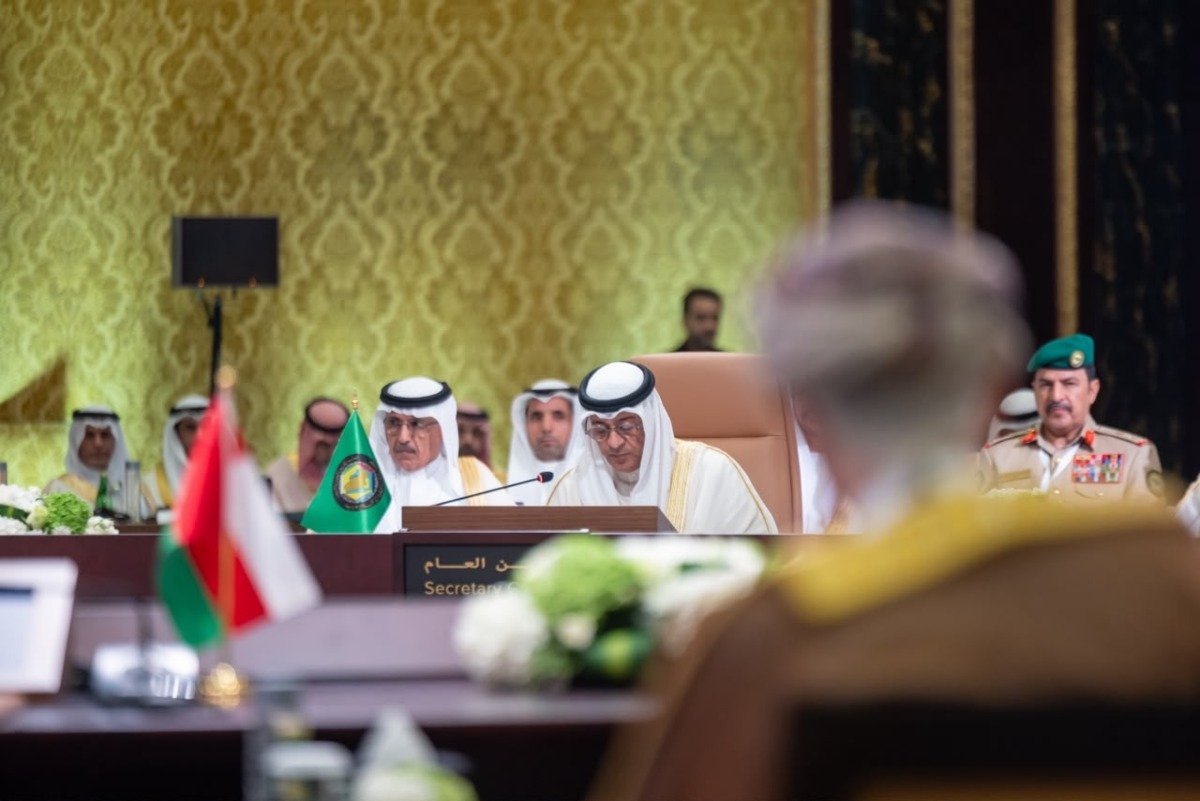
Al-Badawi condemns Houthi attacks on Saudi Arabia and Iran, emphasizing the strengthening of Gulf integration and international partnerships.
Translated by Qiyas from الجريدة — Original source
This came during the convening of the 168th meeting of the GCC Ministerial Council, held today, Sunday, in the Bahraini capital of Manama, presided over by Bahrain’s Foreign Minister, Dr. Abdul Latif bin Rashid Al Zayani, who holds the current chairmanship of the Ministerial Council, and attended by the foreign ministers of the GCC member states.
In his speech, Al-Bedaiwi stressed that the heinous attacks carried out by the terrorist Houthi militia against the Kingdom of Saudi Arabia place us before a deliberate criminal behavior that disregards the sanctity of human life, the safety of civilian facilities, and the consequences of escalation on the security and stability of the region. We renew our unequivocal condemnation of these brazen attacks and reject the continued targeting of airports, civilian facilities, and energy installations, as well as the terrorization of civilians and endangerment of travelers and workers.
He emphasized that the militia’s insistence on repeating its crimes necessitates an effective international response to halt its attacks, hold those responsible accountable, and prevent its threats to security and stability. He expressed sincere condolences and sympathy to the families of martyrs and victims of these attacks, praying to Almighty God to have mercy on the martyrs and the deceased, and to grant the injured swift recovery.
In the same context, Al-Bedaiwi added that the repeated Iranian attacks on GCC member states cannot be overlooked, as they constitute a blatant violation of their sovereignty and territorial integrity, and a direct threat to their security and stability. Furthermore, he pointed to Iran’s dangerous and ongoing practices targeting the security and safety of maritime navigation in the Strait of Hormuz, and its attempts to exploit this vital international waterway as a tool for pressure and threats, thereby exposing international trade and global energy supplies to serious risks. We renew our unequivocal condemnation of these unacceptable attacks and practices. We stress the necessity of Iran’s commitment to the principles of international law and the UN Charter, and the full implementation of Security Council Resolution 2817, ensuring freedom of navigation and safe passage through the Strait of Hormuz without any restrictions or threats. We also emphasize the responsibility of the international community, led by the Security Council, to take a firm stance that guarantees the protection of the region’s security and stability, and safeguards international sea lanes from any practices that threaten regional and international peace and security.
He noted that the leaders of the GCC member states, during their 19th consultative meeting held in Jeddah on April 28, 2026, directed the establishment of important priorities to enhance integration among GCC states, accelerate work on joint Gulf projects, and develop their capacities to confront crises, manage challenges, and transform them into opportunities. These efforts aim to raise the efficiency of GCC economies by consolidating logistical connectivity, the water linkage project, expanding electrical interconnection capacities, and strategic storage projects, along with other important topics, thereby fulfilling the aspirations of their peoples for development and prosperity.
He also affirmed that the General Secretariat has, during the recent period up to the present day, maintained close follow-up with the GCC member states, in addition to holding a number of meetings of the relevant ministerial and technical committees, tracking remaining steps and timelines, and building on the outcomes of meetings and workshops, in order to complete the implementation of the high directives. He commended the cooperation of the GCC member states and the efforts of their representatives in various committees and working groups, as well as the contributions they make to advance these files, noting that the GCC has been and remains a reliable international partner. The General Secretariat, with the approval and guidance of the GCC member states, continues to strengthen the circle of regional and international partnerships and open new fields of cooperation, in a manner that serves the interests of the GCC states and enhances their presence and influence on the international stage.
In the same context, Al-Badawi mentioned that a number of joint ministerial meetings were held with several countries and organizations, in addition to the signing of memoranda of understanding with the Italian Republic, the Portuguese Republic, and the Kingdom of Thailand, and the signing of an annex to the memorandum of understanding previously concluded with the World Customs Organization, to establish a framework paving the way for developing cooperation in areas of mutual interest. He also noted that the Kingdom of Bahrain hosted the first edition of the “Made in the Gulf 2026” forum and exhibition, which comes within the framework of joint Gulf efforts to enhance industrial integration among the GCC states, support the industrial economies of the GCC countries, and elevate the competitiveness of Gulf industries in regional and global markets. Regarding free trade agreements, the joint statement announcing the successful conclusion of negotiations on the free trade agreement between the GCC and the United Kingdom was signed, marking a qualitative leap in relations between the two sides.
