Iran Restructures Assassination Unit '840' and Renames It '600'
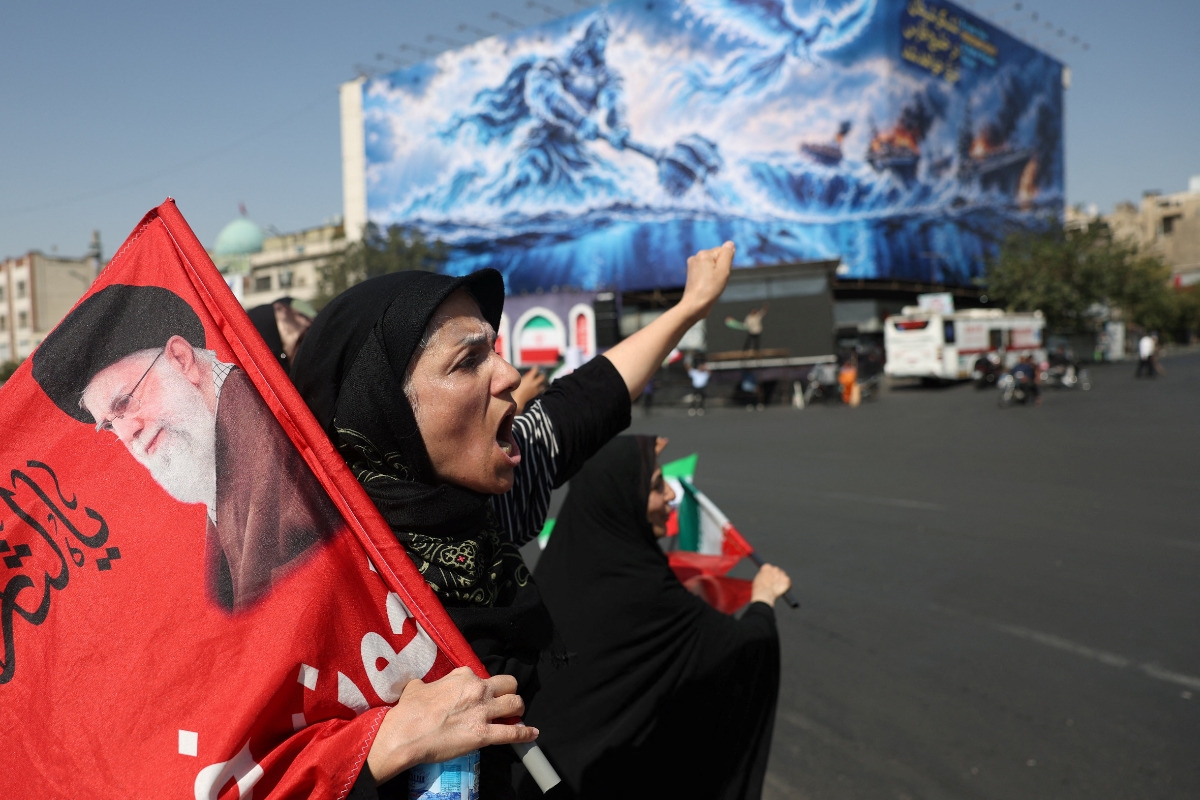
Iran restructures its assassination unit and changes its name to 600.
Translated by Qiyas from الجريدة — Original source
The former commander of this unit, Yezdan Mir, known as “Hajj Asghar Bagheri,” was killed in an Israeli attack targeting him on April 6.
Hagh Lisan, 64, previously served as head of the intelligence department within the unit.
Mohsen Boroujeni heads the special operations department for the United States and Europe, while Morteza Babaei leads the special operations department for the Middle East and Africa. Javad Sharafaei, meanwhile, manages the special operations department for Asia.
The plan identifies Meysam Sahraei as one of the operatives responsible for carrying out attacks in Africa and India. It also names Gholam Hossein Hosseini and Mohammad Hossein Pour as prominent figures in this department, who play a role in executing terrorist activities.
Two sources told Iran International that the reliance on individuals who previously held positions in the unit reflects, on one hand, a leadership crisis following the targeting of senior commanders of the Islamic Revolutionary Guard Corps (IRGC), and on the other hand, it raises doubts among “Quds Force” members regarding the effectiveness of the IRGC.
Unit 840 was one of the most active operational units within the IRGC’s Quds Force over the past decade.
The unit was formed in the first half of the second decade of the current millennium, by order of the former commander of the Quds Force, Qasem Soleimani, who was killed in a U.S. airstrike in Iraq in January 2020. It was established after splitting from Unit 400, a special covert operations unit with close ties to Hezbollah.
A photo of former Unit 840 commander Yezdan Mir alongside former Hezbollah Secretary-General Hassan Nasrallah, IRGC commanders in Lebanon and Syria Mohammad Reza Zahedi, and former deputy commander of the Quds Force Mohammad Hossein Zadeh Hejazi illustrates the nature of these connections.
Four years ago, the U.S. Department of Justice announced that Shohram Poursaafi, an IRGC member, was plotting to assassinate John Bolton, National Security Advisor during Donald Trump’s first presidential term, under the direction of Unit 840’s deputy commander, Mohammad Reza Ansari.
In Germany, Ramin Yektaberest, an Iranian-German citizen and member of the “Hell’s Angels” motorcycle club, carried out two attacks on synagogues in the cities of Bochum and Essen, at the behest of the Quds Force.
He was also behind the scenes in a failed plot to assassinate Iranian rapper Shahin Najafi in Berlin.
On April 28, 2024, Yektaberest was shot four times in Tehran and killed. Following rumors about Israeli Mossad involvement in his death, the Iranian Tasnim News Agency denied his connection to the IRGC, stating that he was killed during a dispute over “personal matters.”
However, his death announcement described his killing as a “martyrdom,” and he was buried in Section 19 of Behesht-e Zahra cemetery in Tehran, reserved for IRGC and Basij casualties.
In Britain, Unit 840 of the Quds Force executed a conspiracy code-named “Wedding,” targeting the assassination of two Iran International journalists for 200,000 pounds sterling. However, a smuggler dealing with the Quds Force turned out to be a double agent, thwarting the plot.
The Quds Force’s Unit 840 suffered severe damage between 2020 and 2022, after being infiltrated by Israeli intelligence agency Mossad.
In May 2022, Mossad released a video recording of the interrogation of its asset Mansour Rasouli, an Iranian smuggler from Urmia who collaborated with Unit 840.
Rasouli admitted in the recording that he was tasked with assassinating an Israeli citizen in Turkey, a senior U.S. general in Germany, and a journalist in France.
Two weeks later, Hassan Sayyad Khodayi, one of the senior commanders of Unit 840, was assassinated in the heart of Tehran. Days later, The New York Times quoted a senior intelligence official as saying that Israel had informed the United States that it was responsible for his killing.
These successive failures ultimately led to the dismissal of Hossein Taeb, then-head of the Islamic Revolutionary Guard Corps’ intelligence agency.
However, a month later, Mossad operatives interrogated Yadollah Khedmati, a commander in the IRGC’s logistics and support division, near Tehran, and released a video recording of the interrogation.
The latest operations attributed to this unit, which have come to light, include an attempt to sabotage the Baku-Tbilisi-Ceyhan oil pipeline and attacks on the Israeli embassy and Jewish centers in a neighboring country last April. The attempt was thwarted and some of those involved were arrested.
The United States, Britain, and the European Union have imposed sanctions on the commander of Unit 840 and several of its members, accusing them of participating in plots to assassinate American officials and Iranian regime opponents around the world.
According to Iran International sources, Unit 840 has remained without a leader since the killing of Yazdan Mir in mid-April last year.
They identified U.S. President Donald Trump, Israeli Prime Minister Benjamin Netanyahu, and the American and Israeli pilots who participated in the attack on the first day of the recent 40-day war as potential assassination targets.
At the same time, the Iranian regime launched a system known as “Treatment” to gather information on Iranian opponents abroad, identify them, and report them.
Against this backdrop, the reactivation of the Quds Force’s special operations unit, according to Iran International, is part of a new campaign by the Iranian regime to carry out assassination and sabotage operations targeting its opponents and Israeli interests.
