Wajhat Watan: I Asked You, My Love, Where Are We Heading?!
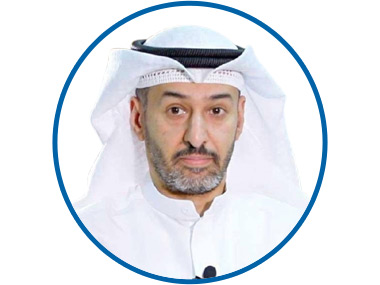
A comparison between IMF and World Bank forecasts for the Kuwaiti economy, alongside an analysis of security and political risks in the Gulf.
Translated by Qiyas from الجريدة — Original source
I recalled the opening lines of this song when I read the International Monetary Fund’s forecast that Kuwait’s economy would record the region’s highest contraction rate in 2026, at 16.7 percent, due to the repercussions of the regional war, while the World Bank predicted that Kuwait’s economy would register the second-highest growth in the region after Qatar in 2027, at 22 percent.
The difference between these forecasts is that the IMF’s negative outlook is closer to reality nine months into this year, whereas the World Bank’s positive projections are forward-looking and contingent on an easing of tensions in the region—namely, the cessation of the regional war, the reopening of the Strait of Hormuz, the resumption of oil exports and revenues, and the return of supply and trade flows to their pre-February 28 levels. Consequently, these projections represent a hypothesis of a rebound in growth rates compared to a difficult year of contraction.
I am not inclined to debate the IMF’s or the World Bank’s forecasts, as they reflect rapidly changing assessments of improvement or deterioration in the conditions of the Gulf region, which is facing its most severe challenge since the occupation of Kuwait in 1990. However, what matters most is discussing current developments and assessing Kuwait’s capacity to manage them and mitigate their repercussions.
For months, the region has been experiencing exceptional and unstable conditions ranging from Iranian attacks on Gulf Cooperation Council (GCC) states to a draining stalemate of “neither peace nor war” that is straining the economies of Arab Gulf states and pressuring their security. This is occurring alongside the growing capabilities of irregular armed groups, which have become increasingly able to inflict damage on military, economic, and civilian infrastructure in GCC countries.
At the same time, Zionist efforts to achieve a breakthrough in the region are intensifying, while a state of “dissonance”—if we wish to describe it in highly diplomatic terms—dominates the visions of GCC states, rendering their policies unrepresentative of what they are supposed to embody as part of a unified regional framework.
This war has demonstrated that the United States, particularly under its Trump era, has become more of a burden on the Arab Gulf region than a guarantor of its security. This is precisely an indicator that warrants in-depth analysis, potentially leading to fundamental shifts in the nature and form of relations among regional states in the medium term.
At the very least, we must ask ourselves locally: Are we addressing the region’s severe security risks by tolerating the division of society through racist, sectarian, and factional rhetoric? Or are we containing the economic repercussions of sharp contraction by expanding borrowing channels without implementing preventive economic reforms? Have Kuwait’s executive officials—ministers and senior leaders—prepared multiple scenario forecasts for the challenges we may face across various domains if tensions in the region persist for one, two, or more years? Or are they preoccupied with inaugurating electronic “bread ovens,” central hospital kitchens, and gas stations?
Do we have the freedom to discuss the risk of “dissonance” among GCC states—a factor that was a cornerstone in liberating Kuwait from Iraqi occupation? Or is this topic among the increasingly prohibited subjects, even for academics, specialists, and experienced individuals?
When Fairuz asked, “Where are we going?” she did not seek a definitive answer. However, we cannot afford to confront the region’s risks and their repercussions on us with such a high degree of questioning and uncertainty.
