Tehran Speaks of New American Superweapon Against Fortifications
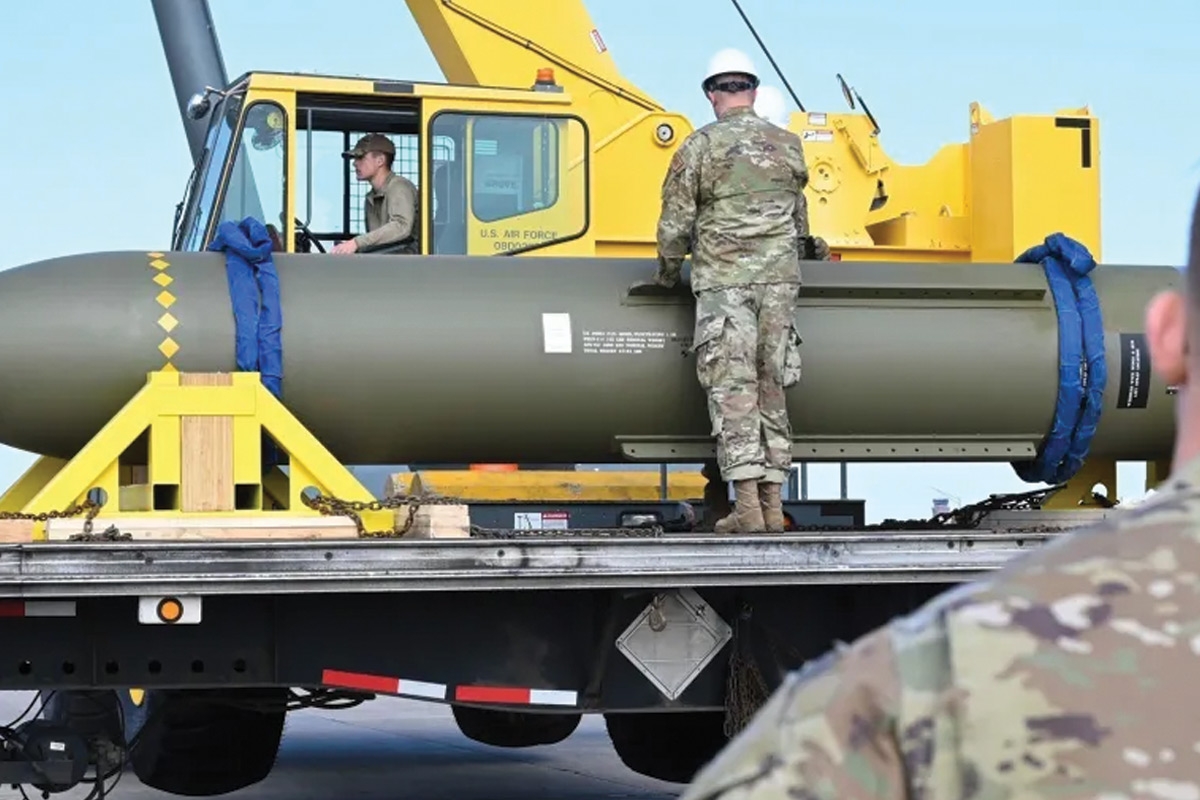
An Iranian defense source revealed expectations of a US strike using Tomahawk missiles equipped with developed warheads capable of penetrating fortifications, noting a delay in the attack due to production shortages.
Translated by Qiyas from الجريدة — Original source
An Iranian Defense Ministry source told Al-Jarida that the latest Iranian intelligence assessments anticipate a swift U.S. strike targeting nuclear and military facilities and infrastructure in the coming days, rather than after the U.S. midterm congressional elections scheduled for November 3.
The source stated that what is currently delaying the U.S. attack is the U.S. defense industry’s work on installing advanced armor-piercing warheads on Tomahawk cruise missiles, ensuring deeper penetration and more powerful explosions. He described the new weapon as a combination of the Tomahawk missile and GBU-57 bunker-buster bombs designed for air launch.
He added that the U.S. attack would require approximately 40 such missiles, while only about a quarter of that quantity has been produced so far.
While depleted uranium, known for its high density, is used in some penetrator munitions, the source claimed the new weapon might contain quantities of low-enriched uranium, typically used as nuclear fuel. However, this claim raises technical doubts, as the function of this material in enhancing explosive power or penetration capability in a conventional warhead is not known.
Talk of new Tomahawk warheads is not new; it refers to a program known since 2009 called the Joint Multiple Warhead System (JMEWS). What is new is the disclosure that the program has moved from the engineering development and manufacturing phase to production.
The U.S. news network CNN previously reported that sources familiar with the matter stated the U.S. military has drawn up new plans to direct strikes against Iran, including the possibility of using the bomb known as the "Mother of All Bombs" (GBU-43/B), the largest non-nuclear weapon in the U.S. arsenal, to target Iran’s energy infrastructure and nuclear sites, if President Donald Trump orders a resumption of combat operations, whether before or after the midterm elections.
The key difference between the GBU-57 and the GBU-43/B is that the former is designed to penetrate fortifications and deep underground facilities, while the latter is designed to create a massive above-ground explosion and destructive blast pressure over a wide area.
For his part, the source said the Iranian Defense Ministry has produced large quantities of a material described as "elastic cement," claiming it reduces the effectiveness of bunker-buster weapons, although the nature and mechanism of the material could not be independently verified.
