Alberta votes on initiating separation proceedings from Canada
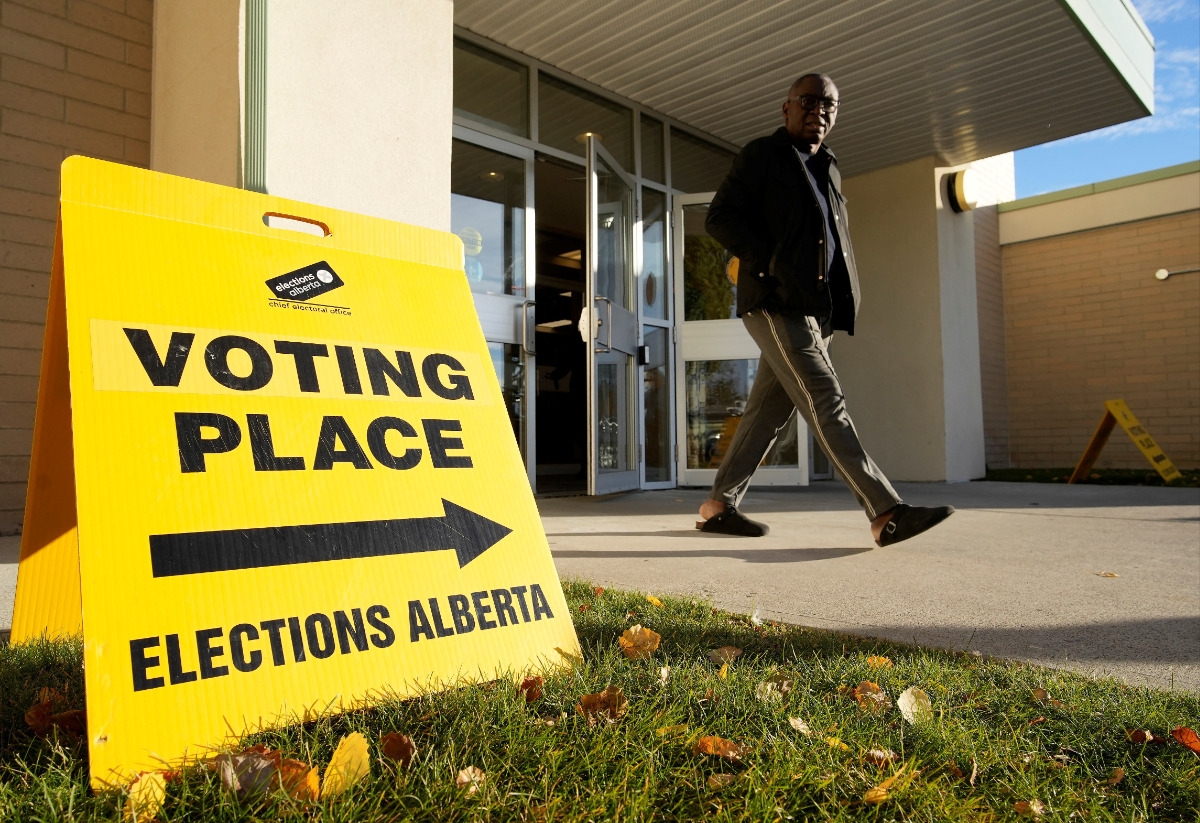
Alberta votes on potential separation from Canada, posing a challenge to Prime Minister Mark Carney and raising questions about the impact of oil and relations with the United States
Translated by Qiyas from الجريدة — Original source
Voters in Alberta will decide on Monday whether to initiate a process for secession from Canada, in a referendum that poses a challenge to the country amid a trade dispute with the United States.
Recent polls in the oil-rich western province suggest that independence advocates represent less than 25% of its five million residents, but supporters of the project remain confident that the outcome has not yet been decided.
Mitch Sylvester, who heads the pro-independence advocacy group Alberta Prosperity Project, told AFP on Tuesday, “I wouldn’t be surprised if we win this referendum.”
He added, “It would be truly remarkable if we received less than 40% of the vote.”
This will be a non-binding preliminary referendum in which Alberta voters will decide whether to authorize the provincial government to organize a future referendum on the province’s independence.
The vote poses a personal challenge to Prime Minister Mark Carney, who grew up in Alberta and is campaigning for Canadian unity.
He views the province’s oil resources as essential to reducing the country’s dependence on the United States.
Speaking at his former elementary school in Edmonton on Canada Day, Carney said on Monday that a pipeline project designed to export oil from Alberta to Asia would generate “prospects for the future and prosperity... in this province and across the country.”
He warned that “we will not be able to achieve any of that if we are divided.”
The dominance of energy and oil issues in the secession debate highlights the unique nature of the independence demands in this province.
While secessionists raise common conservative concerns such as immigration and individual freedoms, their grievances focus particularly on the government’s management of the oil sector, diverging from the national or linguistic aspirations that typically drive separatist movements.
This makes the movement for Alberta’s independence “a largely isolated case,” according to Ryan Griffith, a professor specializing in separatist movements at Syracuse University.
He noted that while separatist movements often exhibit “economic motivations,” these demands are generally coupled with linguistic or national elements.
While acknowledging that there is no definitive definition of a nation, he argued that the call for a state in Alberta presents a case difficult to justify, unlike other separatist movements in Catalonia, Scotland, or even Canada’s French-speaking province of Quebec.
A spokesperson for CBC last week said, “When you have a federal government trying hard to eliminate your main industry, it has a real impact on people.”
She confirmed that if a majority of residents support secession from Canada, the legal process to achieve it will begin. However, if supporters of remaining in the country prevail, no further referendum will be held.
U.S. Treasury Secretary Scott Bessent described Alberta as a “natural partner” of the United States and held several meetings with leaders of the Alberta Prosperity Project at the U.S. State Department.
However, the independence leader insisted that U.S. interests “play no role” in his province “until we win and become a government,” at which point he would work to ensure barrier-free trade with the United States.
He said, “There is no hostility toward America here, and I see no reason why we should stop trading with the world’s largest economy.”
