Hijab ban for girls under 14 sparks protests in Austria
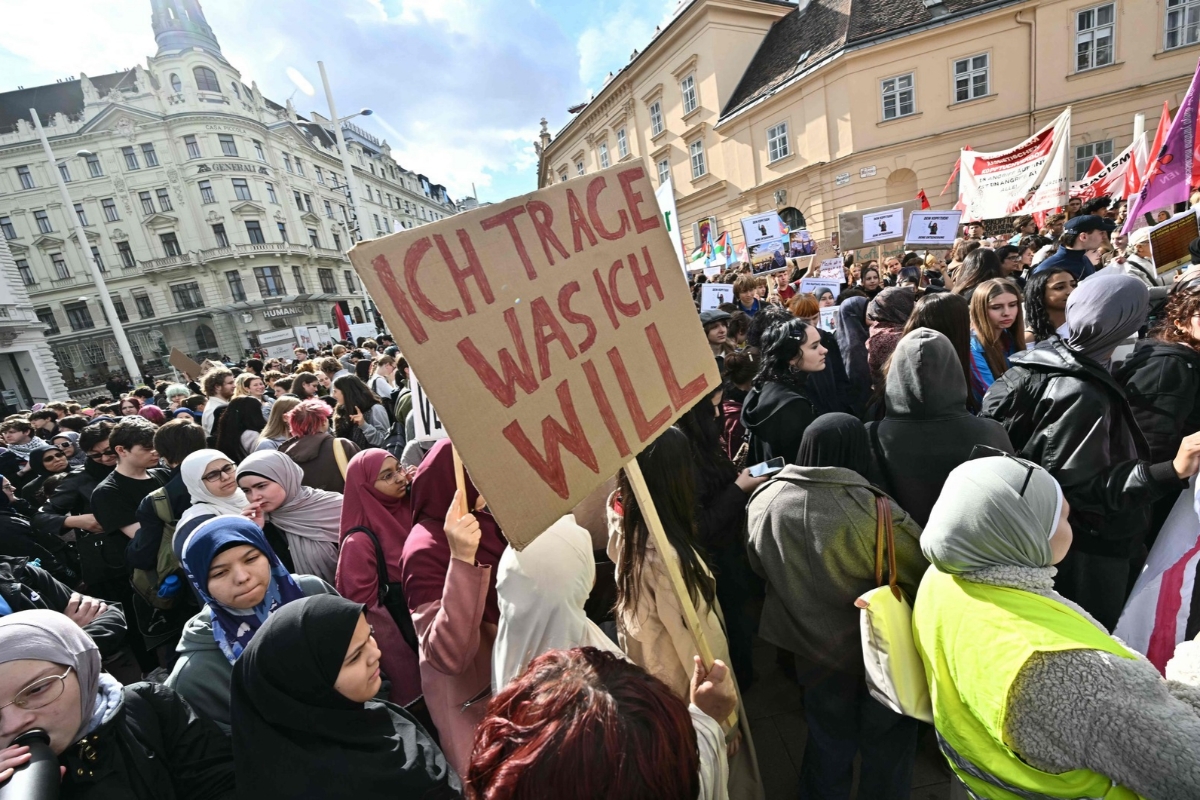
Austria's law banning hijabs for girls under 14 faces widespread resistance and legal challenges from Muslims and religious bodies.
Translated by Qiyas from الجريدة — Original source
Since the start of the school year in Austria, the ban on headscarves for female students under the age of 14 has sparked protests in the streets and within school classrooms, with dozens refusing to comply.
The law, which entered into force on September 1 and was approved by the conservative-led government, aims to promote gender equality and protect Muslim girls from “discrimination and harassment.”
Critics, however, argue that the law disproportionately targets Muslims, violates freedom of religious belief, and forces young girls to wear clothing that makes them uncomfortable.
The Ministry of Education reported that school authorities across the country conducted 127 interviews with parents and filed 52 complaints regarding potential violations of the law since the beginning of the school year.
In response, opponents of the law organized demonstrations in several cities across the country.
During one demonstration in Vienna, Zahra (37), who preferred not to be identified by her full name, said her two daughters, aged nine and 13, feel “sad and angry” about the ban.
Sandy (12) said, “I place great importance on the religion I follow and I want to be able to practice it,” adding that she decided to wear the headscarf about a year ago.
After discussions with the school administration, she was eventually allowed to wear a head covering, but she still prefers wearing the headscarf, she said.
Muslims make up about 8% of Austria’s population of nine million, according to government statistics from 2021. According to a report published in 2024 by the European Union’s Fundamental Rights Agency, Austria records the highest rates of racism and discrimination against Muslims in the EU.
In the 2024 legislative elections, the far-right Austrian Freedom Party came first for the first time but failed to form a government.
A previous attempt to ban headscarves in schools, led by a coalition government of conservatives and the Austrian Freedom Party in 2019, was rejected a year later by the Constitutional Court, which ruled that the ban amounted to discrimination.
The Islamic Religious Community in Austria, which is supporting a legal challenge against the new ban, said it had received around 70 complaints from families regarding difficulties in implementing it.
In a statement, the organization said, “A law that presents itself as protecting the psychological and physical well-being of children is specifically placing these children under pressure in schools.”
The Constitutional Court confirmed to AFP that it had received a legal challenge against the law, with a ruling expected in the first half of 2027.
If a student refuses to comply with the law, the school administration must interview her and her parents before referring the case to the educational authorities. Parents who insist on non-compliance face a fine.
Minister of Education Christoph Eho, in a statement to AFP, said that the fact that only 127 interviews had been conducted so far indicates that “the vast majority of students and their parents are cooperating.”
He added that “the figures also show that discussions with the parents of students involved in cases of law violations mostly lead to positive outcomes.”
However, school authorities in Vienna, where most violations were recorded, offer a different assessment of the students’ motivations, stating that “discussions held so far show that the girls wish to wear the headscarf of their own free will.”
A teacher who accompanied two students in Vienna to AFP confirmed that he had not observed any signs of coercion in their decision to wear the headscarf. He expressed regret that they had to spend weeks trying to adapt to the ban or seeking acceptable alternatives to the headscarf.
