Iran employs new tactic in 'Hormuz' to pressure midterm elections
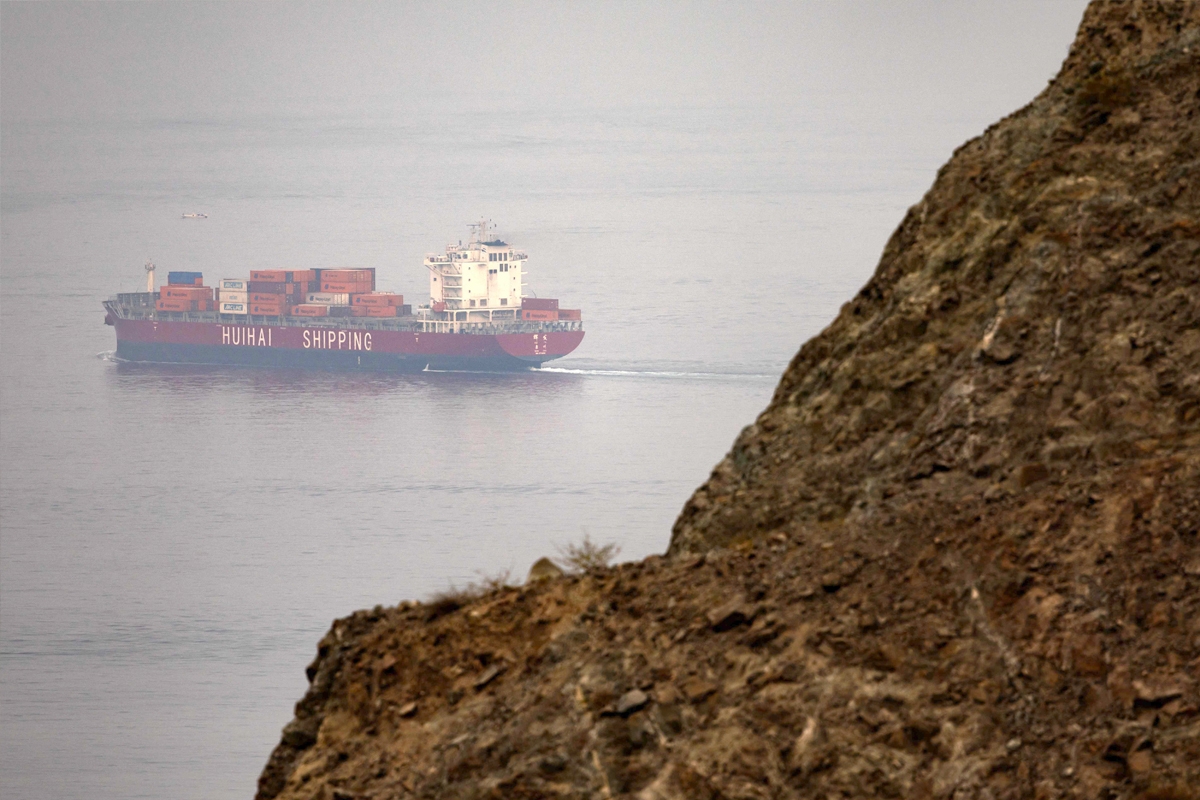
Iran is using new tactics in the Strait of Hormuz to drive up oil prices and influence the US elections, amid regional escalation and diplomatic talks.
Translated by Qiyas from الجريدة — Original source
Iran has continued to escalate its actions against ships attempting to navigate the Strait of Hormuz, employing new tactics, according to two senior Iranian officials speaking to Reuters, in an effort to keep oil prices high and influence the U.S. midterm elections scheduled for November 3.
The two officials stated that the decision to adopt the new strategy was made at the highest levels of Iran’s leadership and was fully coordinated across various pillars of the country’s ruling system.
They added that the new aggressive tactic, introduced about 10 days ago, involved changes in the type and frequency of attacks, clarifying that one of Tehran’s objectives was “to thwart efforts by the United States and its allies to lower global oil prices.”
Sources in the maritime security sector said yesterday that a container ship sank near Hormuz after being hit by a projectile, and another dry bulk cargo vessel was reported sinking following damage from a previous attack. Over the past ten days, more than 18 ships have been targeted.
U.S. President Donald Trump accused the Yemeni Houthi militia two days ago of deliberately raising oil prices by attacking Saudi Arabia under Iranian instigation, asserting that he would not forget this stance after the elections.
While Trump stated that patience with Iran had run out and warned Iranians of a harsh lesson, Iranian Revolutionary Guard Corps (IRGC) spokesperson Hossein Dehghan did not rule out the possibility of the United States launching attacks on Iran before the elections, describing it as a “realistic possibility.”
For his part, Israeli Prime Minister Benjamin Netanyahu ruled out a military confrontation with Iran before the Knesset elections on November 27. Netanyahu warned Tehran, saying, “If you try to attack us, you will face a response you cannot even imagine.” Responding to opposition claims that he was seeking a military confrontation before the elections for political reasons, Netanyahu said, “In my view, this is not suitable for us.”
Meanwhile, Omani Foreign Minister Badr Al Busaidi said yesterday that reaching an agreement on the Strait of Hormuz with Iran was contingent on the results of talks between Tehran and Washington.
Al Busaidi added, during a joint press conference with Pakistani Deputy Prime Minister and Foreign Minister Muhammad Ishaq Dar in the Pakistani capital, Islamabad, that talks on a Hormuz agreement had concluded, but finalizing the arrangements depended on the outcomes of discussions between Iran and the United States, as well as other outstanding issues.
For his part, Ishaq Dar emphasized the importance of restraint, de-escalation, encouraging dialogue and diplomacy, and ensuring the safety of navigation in the Strait of Hormuz and the Bab al-Mandab, expressing his country’s condemnation of the recent Houthi attacks.
In a separate development, a police officer and a commander in the IRGC’s Basij militia were killed yesterday in two separate attacks carried out by gunmen in Sistan and Baluchestan province in southeastern Iran, according to a state media outlet.
Clashes between security forces and militants have increased in recent weeks in this region, which is one of Iran’s poorest provinces and has a large Baloch population, most of whom belong to the Sunni sect, in a predominantly Shia country.
Iranian Foreign Ministry spokesperson Esmaeil Baqaei said a few days ago that “terrorist groups active in eastern Iran are operating within plans devised by Israel and the United States to destabilize the country’s borders.”
