'Health': 90.1% of registered breast cancer cases are still alive
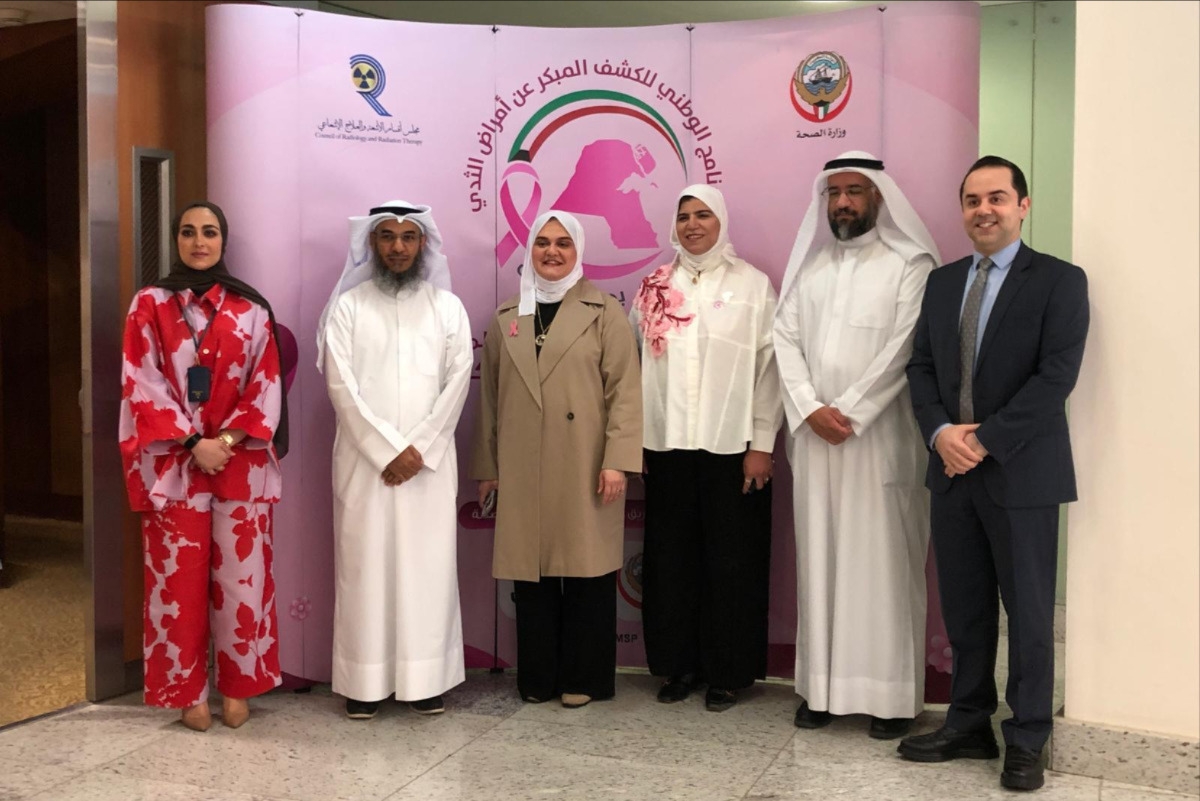
The Deputy Minister of Health launched an awareness campaign for early breast cancer detection, emphasizing the importance of interdisciplinary collaboration and improving treatment prospects.
Translated by Qiyas from الجريدة — Original source
The Ministry of Health revealed, according to data from the National Early Detection Program for Breast Cancer, that the age-standardized incidence rate reached 70.1 cases per 100,000 population among Kuwaiti women, compared to 45.7 cases among non-Kuwaiti women. The proportion of registered cases still alive stood at 90.1%.
The data indicated that the average age at breast cancer diagnosis was 56 years for Kuwaiti women and 51 years for non-Kuwaiti women. Meanwhile, the percentage of registered cases among women under the age of 40 was 8.9% among Kuwaitis and 13.1% among non-Kuwaitis, underscoring the importance of disease awareness and not neglecting symptoms that may warrant medical examination.
This information was presented during an awareness event launched by the Deputy Minister of Health for Technical Affairs, Dr. Abdulrahman Al-Mutairi, in the presence of the Deputy Minister of Health for Public Health Affairs, Dr. Munder Al-Hasawi, at Jabir Hospital. The event aimed to enhance early detection of breast cancer under the theme “Specialties in Integration.. For Her.. Together to Enhance Early Detection of Breast Cancer.”
For her part, Dr. Bathineh Al-Kandari, Chair of the Council of Radiology and Radiotherapy Departments at the Ministry of Health and Head of the Radiology Department at Jabir Hospital, confirmed that the event was jointly organized by the Council of Radiology and Radiotherapy Departments and the National Early Detection Program for Breast Diseases.
She added that the event coincided with Breast Cancer Awareness Month and aimed to raise awareness about the importance of early detection, highlight the role of radiology in detecting and diagnosing breast diseases, and strengthen cooperation and integration among various medical specialties to improve the quality of healthcare.
Dr. Al-Kandari stated that the event targeted medical and technical personnel from various specialties, recognizing their crucial role in educating women and encouraging them to undergo preventive screenings, and guiding them toward early detection services in accordance with approved medical guidelines.
She further noted that the event sought to introduce the services of the National Early Detection Program for Breast Diseases and emphasize the importance of coordination among health authorities to support efforts in detecting the disease in its early stages, thereby improving treatment outcomes and recovery chances.
During an awareness lecture within the event, Dr. Asma Hussein Al-Filakawi, Head of the Radiology Department at Al-Amiri Hospital and Head of the National Early Detection Program for Breast Cancer, affirmed that breast cancer is the most common type of cancer among women globally, with approximately 2.3 million new cases recorded annually, representing nearly 25% of all cancer cases among women. She pointed out that the age-standardized incidence rate in Kuwait exceeds the global average, based on data presented during the lecture.
Dr. Al-Filakawi stressed that the primary objective of early detection programs is to reduce mortality caused by the disease and improve treatment outcomes by identifying it in its early stages, when treatment success rates are higher and the need for extensive surgical interventions and more aggressive treatments may be reduced.
She clarified that screening mammography is performed for asymptomatic women, while diagnostic mammography is used to evaluate symptomatic cases, such as feeling a breast lump, regardless of age. She emphasized the necessity of informing the physician about medical history and symptoms to ensure accurate assessment.
She added that the presence of symptoms warrants further examinations even if the mammogram results are normal, as ultrasound or tissue biopsy may be required depending on the case, to reach the correct diagnosis and avoid overlooking any indicators that necessitate follow-up.
She emphasized the importance of detecting tumors before they reach advanced stages, as this plays a key role in curbing the spread of the disease and improving recovery prospects. She called for strengthening public awareness of the importance of early screening and correcting misconceptions that may lead some women to postpone or neglect examinations.
Al-Filakawi noted that Kuwait launched the National Early Detection Program for Breast Cancer on April 1, 2014, as part of efforts to enhance early detection and improve treatment outcomes.
She added that by the end of 2015, 12 radiologists and 7 specialized breast imaging technicians had completed a six-month training program at Memorial Sloan Kettering Hospital in New York, as part of initiatives to develop medical and technical expertise in this field.
She stressed that integrating efforts across medical specialties, along with sustained awareness campaigns and encouraging women to undergo regular screenings, constitutes a fundamental pillar in the fight against breast cancer. She pointed out that early detection is not limited to merely performing the examination, but represents a crucial step toward timely diagnosis and better treatment opportunities.
