Questions raised about the legal qualifications of the new White House spokesperson
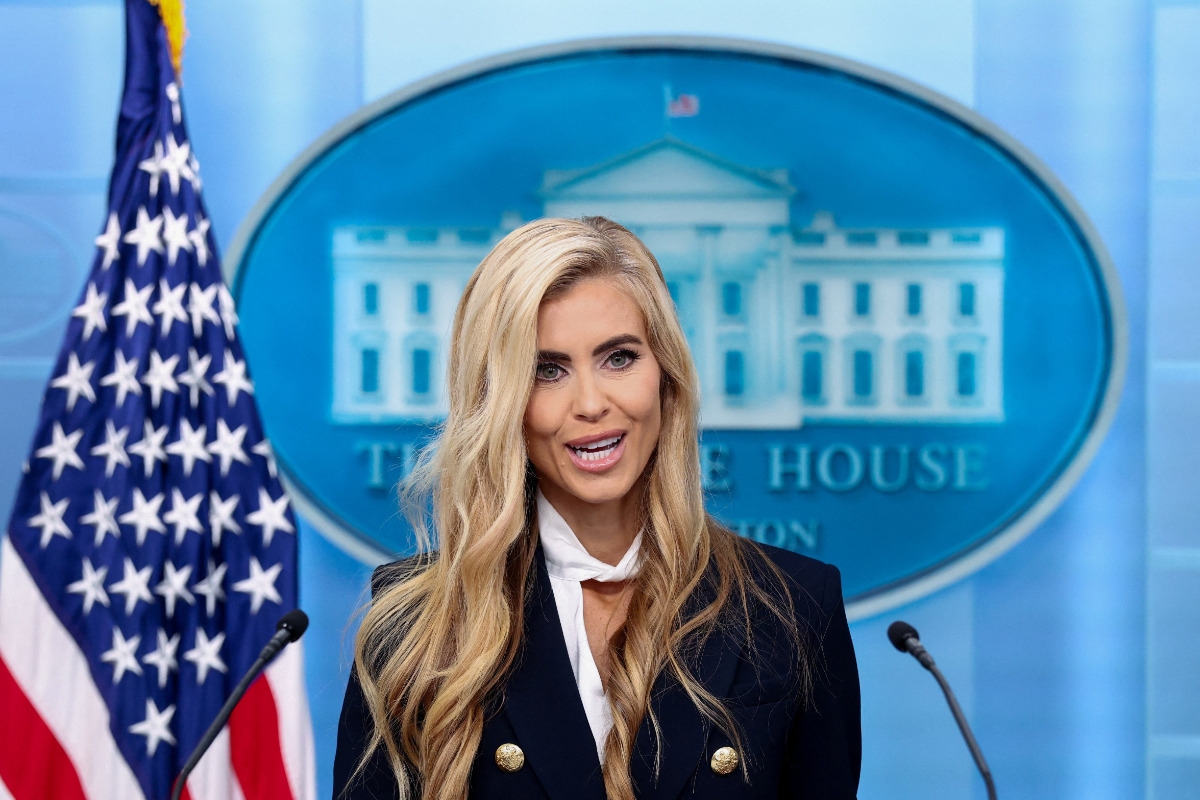
The legal qualifications of the new spokesperson, Katie Zakharia, have sparked widespread questions, especially after her claim of passing the bar exam in China, amid criticism of her performance before journalists.
Translated by Qiyas from الجريدة — Original source
The debut appearance of White House Press Secretary Karoline Leavitt raised questions about her legal qualifications after she claimed to have passed the bar exam in China, amid criticism of her performance before journalists and responses from the U.S. administration clarifying her professional background.
During a press conference on Tuesday, Leavitt was asked which authority granted her a license to practice law. She replied that she had taken the exam in China, not in any U.S. state or the District of Columbia, where a professional license is required to work as a lawyer.
U.S. President Donald Trump had described Leavitt as a lawyer when announcing her appointment last Friday. Her LinkedIn profile also indicates that she served as general counsel for Fix California, a nonprofit organization founded by Rick Green, one of Trump’s prominent advisors.
The White House has not clarified whether Leavitt holds a license to practice law in the United States. In a statement, it said, “Katie moved to China with her husband after her graduation due to his work at a U.S. private investment firm, while she was working in the field of international transactional law.”
Pepperdine University confirmed that Leavitt earned a law degree in 2011. Independent journalist Jad Lubom was the first to raise questions about her bar membership, noting that she was not admitted to the State Bar of California.
Leavitt’s statements have sparked questions about the nature of the exam she claimed to have passed in China, particularly because China’s legal qualification rules impose nationality-related requirements.
U.S. political activist John Cooper noted that in 2011, the year Leavitt graduated from law school and moved to Beijing, the Chinese Ministry of Justice required applicants for the National Judicial Examination to hold citizenship of the People’s Republic of China. He sarcastically commented on what he considered a contradiction in her account.
For his part, U.S. political activist Casey Allen pointed out that Leavitt had previously described herself as a lawyer during television appearances, but said there is no record proving she passed a bar exam or obtained a license to practice in any U.S. state. He added that holding a law degree does not necessarily mean possessing a professional license.
In the same vein, U.S. journalist Edward Wong expressed interest in learning more about the period Leavitt spent in China and the nature of her legal work there, considering the matter worthy of clarification within her professional background.
Activists noted that foreigners working in Chinese companies may provide advice on foreign laws and international transactions, without necessarily holding a license to practice law before Chinese courts.
Criticism of Leavitt was not limited to her legal qualifications; it extended to her performance during her first appearance in the White House press briefing room.
The new press secretary answered only three questions from journalists after reading a pre-prepared statement, in an appearance described by observers as awkward and raising questions about her readiness for the role.
Trump had announced her appointment via his platform, Truth Social, describing her as a “loyal supporter and member of the MAGA movement,” and also presented her as a lawyer.
U.S. writer and influencer Bree Walsh remarked that words fail to describe the scene, adding that some situations seem to write themselves, in a sarcastic comment on the controversy surrounding the new press secretary.
Activists also questioned the criteria used to select individuals for prominent positions in the Trump administration, expressing surprise at Zakraja’s appointment amid ongoing questions about her professional background.
In response, some commentators argued that the confusion during her first public appearance was not sufficient on its own to judge her competence, noting that speaking in public can be challenging even for experienced individuals.
A blogger wrote that she understood the feelings of nervousness and difficulty breathing when speaking in public, based on her own experience, adding that moving directly from the greeting to the core of the speech could have helped Zakraja maintain her initial momentum and avoid confusion.
While criticism has focused on her performance before journalists, questions continue to circulate about her legal qualifications and the nature of her previous work in China, pending more specific clarifications regarding the exam she claimed to have passed and the professional license she holds.
