Arab League Secretary-General: Transition from Reaction to Initiative Essential for Shaping a More Stable Arab Future
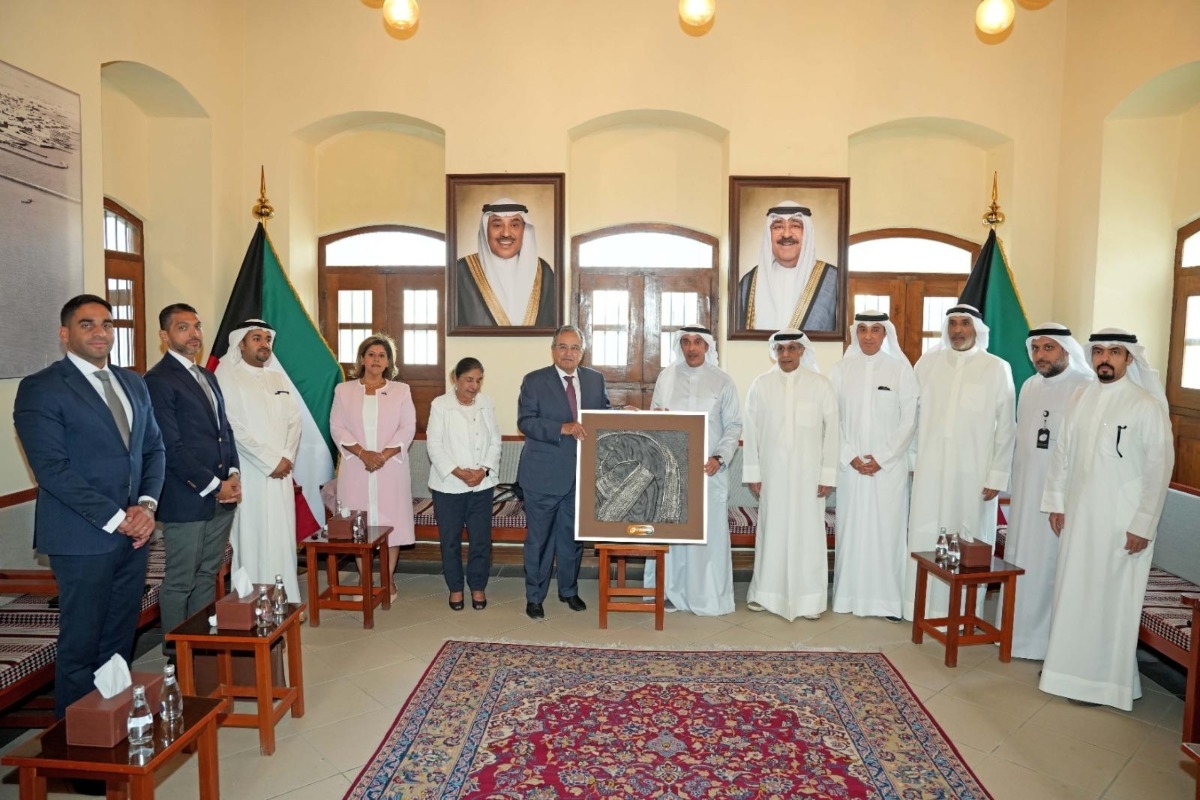
The Arab League Secretary-General emphasized the necessity of shifting Arab joint action from a reactive policy to initiative and action to achieve stability.
Translated by Qiyas from الجريدة — Original source
Secretary-General of the Arab League, Dr. Nabil Fahmy, emphasized the necessity of shifting joint Arab action from a reactive policy to one of initiative and action, by formulating a clear Arab vision for the region’s future based on strengthening self-capabilities, coordinating positions, and confronting regional and international challenges. He stressed that restoring confidence in joint Arab action cannot be achieved through speeches and slogans, but rather through tangible achievements and executable decisions that serve the interests of Arab states and peoples.
This came during a lecture delivered by the Secretary-General of the Arab League at the Kuwaiti Saud Al-Nasser Diplomatic Institute, titled “The Arab Situation: Present and Future,” as part of his official visit to Kuwait. The event was attended by Deputy Minister of Foreign Affairs Ambassador Hamad Sulaiman Al-Mushaan, along with senior officials from the Ministry of Foreign Affairs, accredited diplomatic corps members, and representatives of international organizations. The dialogue was moderated by Kuwait’s Permanent Representative to the Arab League, Ambassador Talal Khalid Al-Mutairi.
Fahmy stated that the international system established after World War II was based on the UN Charter and two fundamental principles: the non-use of force except within legal frameworks defined by Security Council resolutions or the right to self-defense, and respect for the sovereignty of nation-states. He noted that the world is witnessing rapid transformations that signal a shift from a system based on the “rule of law” to one governed by the “law of force.”
He clarified that the tools of conflict are no longer limited to traditional military means, but have extended to the economy, trade, and international waterways, with unilateral measures whose repercussions may affect states not party to the conflicts.
He added that technological developments, particularly drones and artificial intelligence applications, have accelerated the pace of military decision-making and increased the complexity of conflicts, amid growing targeting of civilian sites.
Fahmy stressed that the Arab region lies at the heart of international transformations, making isolation from its regional and international environment an unrealistic option. He pointed out that most Arab states are classified as small and medium-sized compared to major powers, which necessitates enhanced coordination and integration to confront challenges collectively rather than individually.
He highlighted the importance of adopting the concept of “political deterrence” as a key pillar for protecting Arab interests, explaining that it relies not only on defensive capabilities but also on building self-capabilities, diversifying political and international relations, expanding strategic options, and efficiently managing relations with neighboring countries to preserve national sovereignty and enhance regional stability.
He affirmed that the required Arab shift is from passively awaiting and reacting to events to actively participating in shaping them, through proposing initiatives and alternatives and developing proactive visions for the region’s future.
He noted that positive competition among Arab states can serve as a catalyst for development and progress, provided it does not come at the expense of any Arab state’s national security. He emphasized that shared strategic interests among Arab states outweigh temporary differences and divergences.
Fahmy outlined his vision for developing joint Arab action, which rests on three main pillars: effectively addressing crises through Arab solutions to Arab issues; continuous development in preparation for future transformations; and enhancing sustainable development as a cornerstone for stability and the advancement of societies.
He reiterated the centrality of the Palestinian cause in joint Arab action, emphasizing the importance of adhering to international law and the Arab Peace Initiative adopted by the Arab Summit in 2002, which is based on ending the occupation and establishing a Palestinian state according to the two-state solution.
Regarding regional challenges, Fahmi affirmed that the national security of Arab states is closely linked to regional security, stressing that relations with neighboring countries must be based on respect for state sovereignty, non-interference in internal affairs, and commitment to the principles of international law.
He also stressed the importance of preserving the state and the unity of its institutions in Sudan, Libya, Syria, and Yemen, considering this a necessary foundation for achieving stability and addressing the crises facing these countries.
Fahmi addressed the developmental challenges facing the Arab world, foremost among them issues concerning youth, water security, and food security. He noted that youth constitute more than 65 percent of the Arab population, a fact that necessitates investing in their capacities and providing opportunities that enable them to participate in development and shape the future.
He clarified that the Arab region is among the most affected by water scarcity in the world, making enhanced Arab cooperation in water and food sectors a strategic imperative. He highlighted the importance of leveraging the expertise available in Arab countries in irrigation technologies and water desalination, as well as exchanging successful experiences.
In response to audience questions, Fahmi revealed that the decline in confidence in the efficacy of joint Arab action represents one of the most prominent challenges he faced upon assuming his position. He affirmed that addressing this challenge requires moving beyond issuing statements and decisions to achieving tangible results that Arab citizens can feel.
He pointed to the importance of starting with files that offer real opportunities for success, thereby contributing to gradually building trust, before moving on to more complex and sensitive issues.
He explained that the fundamental challenge facing the Arab League is not necessarily related to the provisions of its charter, but rather to working mechanisms and practical implementation. He emphasized the importance of formulating clear, specific decisions that have implementation and follow-up mechanisms ensuring the achievement of desired outcomes.
Regarding the relationship between the Arab League and the Gulf Cooperation Council (GCC), Fahmi affirmed that it is based on complementarity and cooperation, not competition. He highlighted the importance of enhancing institutional coordination between the two sides to serve shared Arab interests.
Fahmi addressed a message to the new generation of Arab diplomats, emphasizing that diplomatic work is not merely a job, but a national responsibility and professional trust that requires precision, objectivity, and the ability to accurately read and convey developments.
He stressed the importance of active listening and adherence to professional guidelines, while ensuring the provision of a comprehensive and candid picture of reality to decision-makers, free from flattery or concealment of facts. He affirmed that the success of diplomatic work is linked to the quality of information and analyses upon which decision-making is based.
Al-Hajri clarified that such lectures contribute to deepening the understanding of diplomatic cadres of the political and strategic transformations witnessed by the region and the world. They provide participants with the opportunity to directly access the visions and experiences of prominent diplomatic figures, thereby supporting the development of their professional and analytical capacities and reinforcing the Institute’s role in preparing and qualifying Kuwaiti diplomatic cadres.
