Riyadh: No Room for Fear in Our Lexicon; We Will Overcome Any Crisis
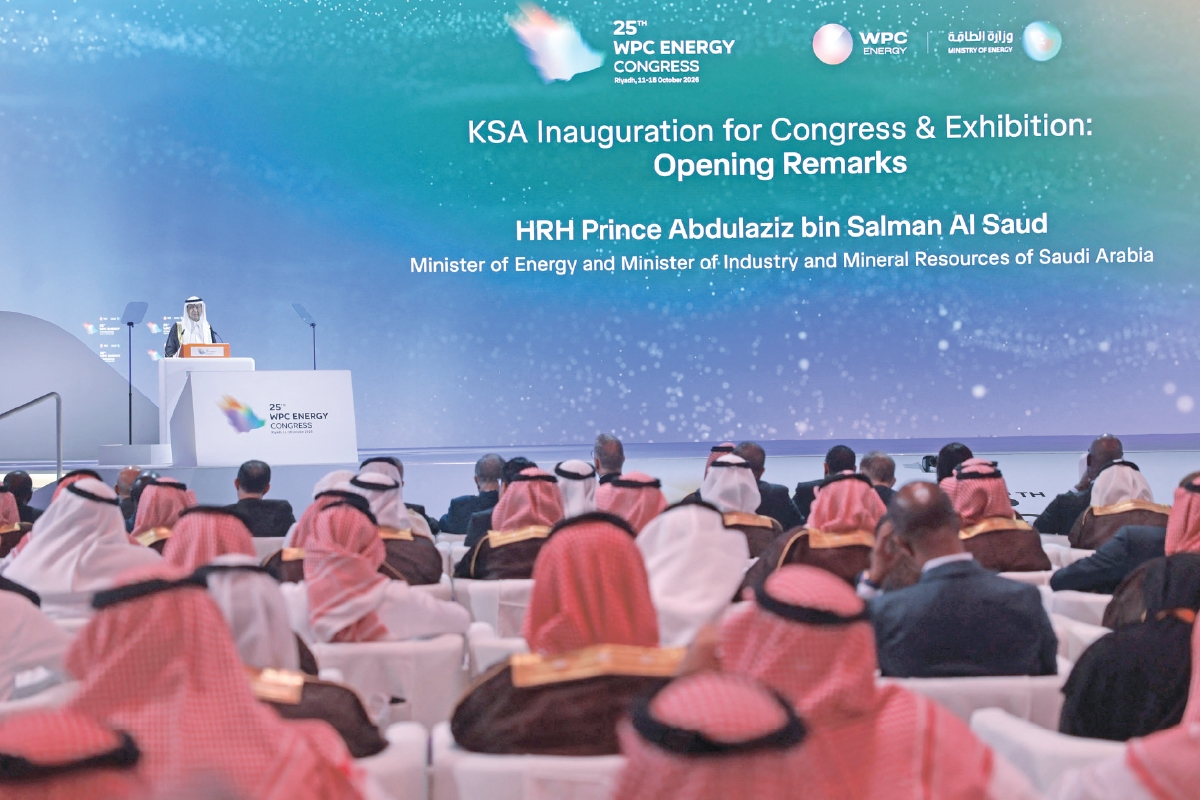
The Saudi Minister of Energy stressed that there is no place for fear, amid Houthi attacks on airports and US and Kuwaiti support for the Kingdom.
Translated by Qiyas from الجريدة — Original source
As the Iran-backed Houthi militia continues its aggression against the Kingdom’s airports, vital energy facilities, and civilian infrastructure, causing the death and injury of hundreds of civilians of various nationalities, Saudi Energy Minister Prince Abdulaziz bin Salman stressed yesterday that “fear has no place in the Saudi dictionary,” affirming that “the events of the past few weeks were severe, and the Kingdom’s response must be of equal severity.”
Speaking at the opening of the World Energy Conference in Riyadh yesterday, Prince Abdulaziz noted that Saudi Arabia has faced significant challenges throughout its history but has always demonstrated its ability to overcome them with determination and resolve. He added that the Kingdom will surmount any difficulties it faces and will continue its transformation journey, achieving the goals of “Vision 2030” and building a more prosperous future for coming generations.
For his part, U.S. Energy Secretary Chris Wright, in a video address to the conference, affirmed Washington’s “steadfast” support for Saudi Arabia and its rejection of the “cowardly attacks” against the Kingdom, its infrastructure, and its citizens. He emphasized that the United States stands by its allies and partners in the Gulf region and values working with their leaders amid unprecedented energy security challenges.
The coalition announced the interception and destruction of a ballistic missile launched by the Houthi militia toward the Asir province, specifically Khamis Mushait. It also previously reported the destruction of a drone in the Eastern Province.
In a related development, the General Authority of Civil Aviation announced that King Fahd International Airport in Dammam was attacked the day before yesterday. It also announced yesterday the extension of the suspension of operational activities at King Khalid International Airport in Riyadh.
These developments follow a Saturday attack on the airport that killed 12 people, with the toll rising to 13 after the death of an injured victim. Among the deceased was Mufti and preacher Nasrullah al-Badr, a Bangladeshi national, whose death was documented in video footage released by media outlets showing the moment he died as a result of the Houthi attack while he was en route to perform Umrah.
Meanwhile, the Kuwaiti Ministry of Foreign Affairs expressed its strong condemnation and rejection of the ongoing terrorist and criminal attacks by the Houthi militia against Saudi Arabia. It affirmed that targeting civilian airports and vital infrastructure constitutes a serious escalation and a direct threat to civilian lives and air navigation safety, as well as a violation of the Kingdom’s sovereignty and a breach of international law and international humanitarian law. Kuwait called for a firm international stance to halt these attacks and hold those responsible accountable.
Kuwait reaffirmed its absolute solidarity with Saudi Arabia and its full support for all measures taken to protect the Kingdom’s security and stability and safeguard its sovereignty. It emphasized that the security of Saudi Arabia is an integral part of the security of Kuwait and the Gulf Cooperation Council (GCC) states. Kuwait also extended its condolences to the victim’s family and wished the injured a speedy recovery.
While Iranian officials praised the Houthi attack on Yemen’s western coast last month, with some going so far as to claim Tehran’s control over the Bab al-Mandab Strait alongside the Strait of Hormuz, Iranian media reported that Foreign Minister Abbas Araghchi expressed Tehran’s readiness to help “initiate talks between Saudi Arabia and Yemen” during a phone call with his Saudi counterpart, Prince Faisal bin Farhan.
This framing ignores the existence of a legitimate, internationally recognized Yemeni government and overlooks Tehran’s role in supporting and inciting the Houthis, thereby presenting itself as a mediator in a crisis it helps fuel.
The Saudi Energy Minister affirmed yesterday that the Kingdom is moving to expand international participation in pipeline projects, encompassing ownership, operation, design, and financing, noting Kuwait’s involvement in these initiatives.
During his participation in the conference, Prince Abdulaziz explained that the concept involves establishing pipelines with broad international participation, featuring multiple stakeholders, including operating entities, rather than being limited to a single country, noting that lessons learned underscore the importance of such participation.
He said that the Kingdom aims to increase the total capacity of the East-West pipeline to 10 million barrels per day within two to three years, through the enhancement of pumping stations and the preparation of one of the gas pipelines for oil transportation when needed.
He pointed out that the pipeline could enable the transport of approximately 2.1 million barrels of oil per day over a period ranging from seven to eight weeks, with the potential to raise its capacity to 3 million barrels per day through additional investments.
