Research Center Highlights Kuwait in the Mid-1950s
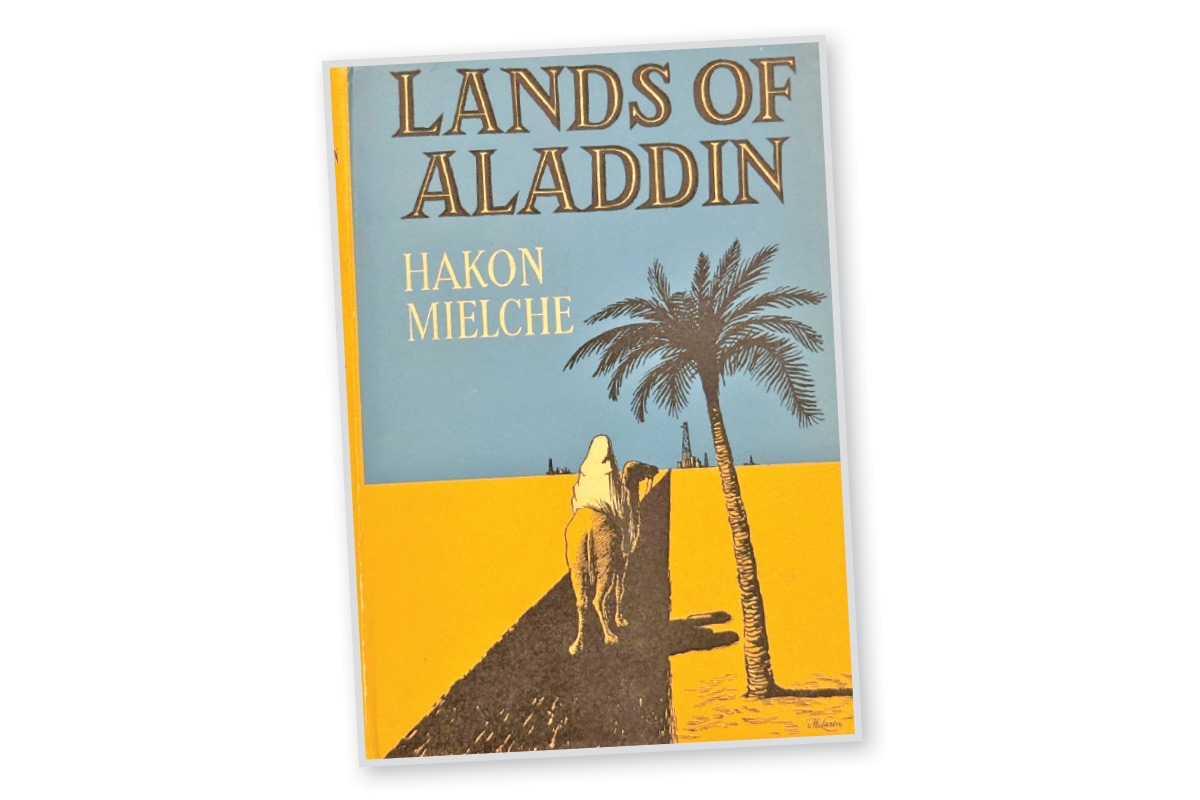
Report on Milche's observations regarding economic and educational development in Kuwait
Translated by Qiyas from الجريدة — Original source
Milchah begins his account of Kuwait from the sea, moving from pearl diving and Gulf vessels to shipyards, where he records the names of several ship types as he heard them: baghla, umm, galbot, sambuk, and shu’i.
He notes that the term “dhow,” which became common in European writings, fails to convey the distinctions known to seafarers regarding ship types, sizes, and uses.
Teak wood imported from India was part of the Kuwaiti shipbuilding industry he observed, and he was struck by the way the shipwrights worked without engineering plans in the European sense. He recounts that a European once asked a shipbuilder to show him a ship design; the craftsman took a piece of chalk and drew a few lines on a teak plank. Milchah comments: “The ship is built, so to speak, by eye, supported by expertise spanning five or six thousand years.”
He also noted the navigators’ knowledge of the sea. The sailing vessel he described carried no modern navigation instruments; the navigator relied on his experience with coastlines, winds, currents, and stars.
From the maritime world, Milchah moves to a story he saw as evidence of integrity in commercial dealings. A ship from Bombay arrived in Kuwait carrying two gold ingots, and a boy from the crew was tasked with delivering them. Milchah describes him: “He carried them uncovered on his shoulders and proceeded to the city, making his way through the market crowds until he reached the merchant’s house on the main street.” Finding no one at home, he left the ingots at the door. When the homeowner returned and weighed them, he realized the shipment was not for him, so he took them to another merchant who was expecting gold of that weight.
Milchah chose to recount this incident in the early pages of his book, presenting it as one of the scenes that shaped his impression of the trust that governed part of the commercial interactions between Kuwaiti merchants and seafarers.
During his visit to Kuwait, Milchah captured several color photographs, accompanying them with brief comments that highlight what caught his attention in daily life. The images depict shipbuilding, vegetable vendors, market traders, the fish market, and one of the modern schools, providing readers with visual material parallel to his textual records. He selected a Cadillac as the prominent image on his book’s cover, writing about the symbolic figure he calls “Aladdin” that “his car is a Cadillac, nothing less, and perhaps one of the latest models.” He saw the American car as a clear sign of the rapid changes brought by oil revenues to daily life.
In the following pages, his description of Kuwait expands to include the city of Ahmadi and its port, where he observed modern housing, roads, oil facilities, and gardens beginning to appear in the desert.
From Ahmadi, he moved to the port, tanks, pipelines, and the sea jetty, where he saw oil tankers that linked Kuwait to distant markets. These installations appeared to him as part of a broader transformation that extended beyond the car he had chosen for his book’s cover.
When discussing the benefits of oil, Milchah clearly praises Sheikh Abdullah Al-Salim Al-Sabah, writing: “His Highness Sheikh Abdullah Al-Salim Al-Sabah would review the management of the millions arriving from oil, allocating a portion to advance his country materially and intellectually, and investing the remainder in the City of London, with the aid of the best professional advice.”
He followed the impact of this spending on people’s lives, noting that the problem of drinking water was a pressing issue in Kuwait as he knew it before the expansion of desalination. He had personally witnessed water vendors and read about ships that brought water from the Shatt al-Arab. Upon arriving at the desalination plant, he wrote: “They have now solved the drinking water problem. After centuries of relying on wells that yielded only brackish, salty water, they have spent a portion of their oil revenues to build the world’s largest water desalination plant.” At that time, its capacity reached approximately one million gallons per day, with plans to increase production.
The development of health services also captured his attention. He mentioned the hospital that existed at the time, along with expansion projects, clinics, and services extending to desert areas, adding: “Medical services in Kuwait developed at the same pace as everything else.”
Education clearly arrested his attention. He began his account from the pre-oil era, then moved on to the schools of the 1950s. He wrote about three major schools built with oil money and designed by British architects, noting that the cost of each was one million pounds. He added: “No schools in Europe can compare with them, and perhaps none in the United States match them in their grandeur and spacious facilities.”
He also recorded another aspect of student welfare, writing: “The educational system in Kuwait provided fourteen thousand free meals daily in city schools.”
After observing the scale of spending on education, he wrote about Sheikh Abdullah Al-Salem with great admiration: “It is Kuwait’s good fortune to have a ruler who is not stinting in anything.”
He quoted Sheikh Abdullah Al-Salem as saying: “When oil ceases to flow, or is replaced by something else, the people of Kuwait will have reached a level of culture that elevates them high above many peoples of the Middle East. They will become the Phoenicians of the Gulf, trading in foreign countries with the products of other nations. Kuwait will become a Hanseatic city of the Arab world, leaving heavy industry to others and trading in manufactured goods.”
Milsha accompanied his Palestinian driver, Adnan Ataatout, to the outskirts of Al-Miqwa, where they stopped at a Bedouin tent. Milsha wanted to take pictures of the tent’s owner and his family. Adnan offered him money in exchange for the photos, but the man refused. When Adnan tried to persuade him by saying that Milsha had photographed well-known figures, the man replied: “That may suit them. If so, turn your car around and go photograph them as you wish. But not here.”
The incident left a clear impression on Milsha, who saw in the man’s refusal of money a sense of self-respect that poverty could not diminish. After leaving, he wrote that some situations make the traveler feel ashamed of himself, and he described what he encountered as something authentic that cannot be bought, no matter the price.
During his visits to the tents, he lingered over coffee and the etiquette of serving it, writing: “For the Bedouin, coffee was not merely a fitting conclusion to a meal; it was a sign that the guest was welcome and that peace remained with him as long as he stayed in his host’s tent.” He explained the method of preparing and serving it according to age and status.
Upon departure, he recorded another custom that pleased him: “Gifts are accepted from guests when they leave, but they carefully distinguish between a gift and charity.”
As his stay drew to a close, Milche returned to Kuwait City at dusk. Its gates glowed with a reddish-golden hue, and from the desert, herds of sheep and goats streamed into the narrow alleys, their bleating mingling with car horns. A traffic policeman, clad in white, stood on his platform trying to regulate the flow. Some sheep and goats broke away from the herd upon reaching their owners’ homes, climbed the stairs, and entered through doors where their families waited. They were then milked in preparation for the evening meal. Above, the call to the Maghrib prayer echoed from mosque loudspeakers across the rooftops. That evening, Milche saw Kuwait as a city where the familiar ways of its people blended with the new urban landscape that was expanding before him, year after year.
He departed Kuwait aboard Iraqi Airways Flight 218 bound for Basra. As the plane ascended and circled over the city, he cast one final glance upon it and wrote: “Kuwait City appeared as an intricate fabric of old houses, interspersed with a few imposing modern buildings, most of them still encircled by scaffolding.”
