Oil Prices Fluctuate Amid Regional Attacks and Russian Diesel
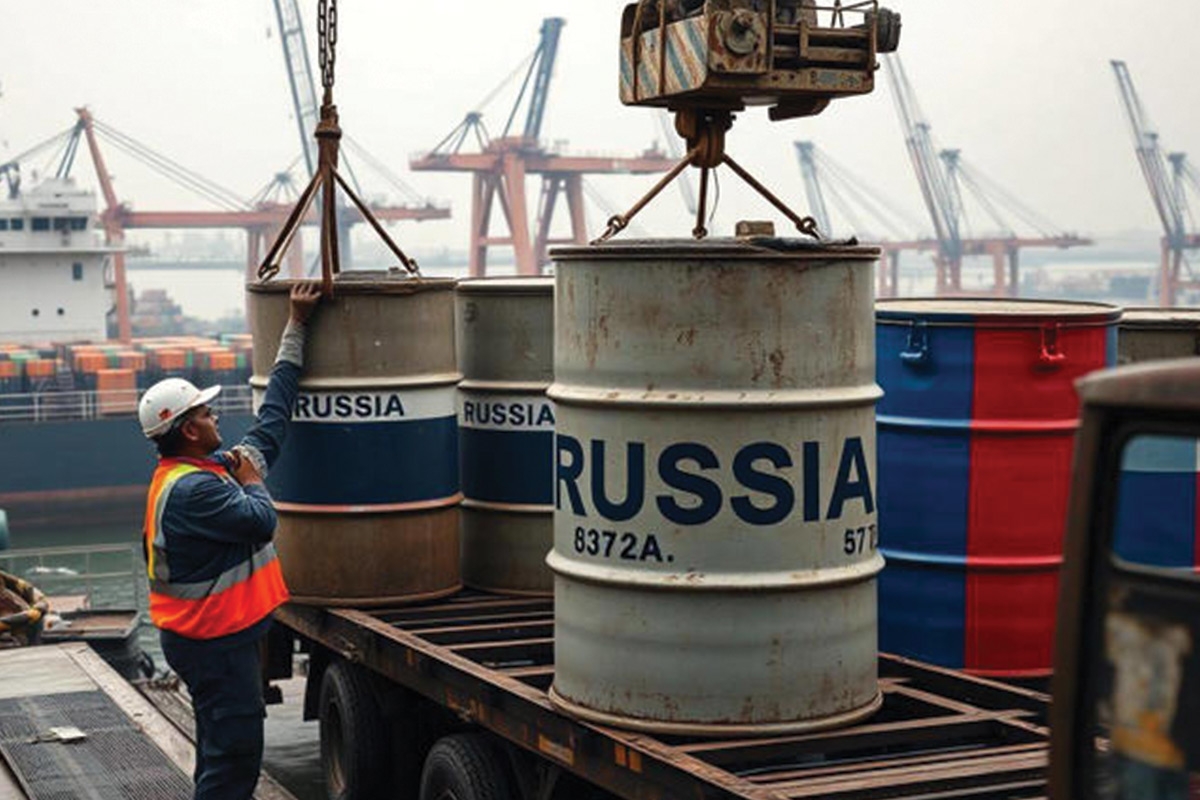
Oil prices fluctuated today as markets assessed the likelihood of increased supplies following praise by US President Trump for new Russian diesel exports, while simultaneously weighing signs of reduced supply after major attacks on Saudi Arabia. The losses were offset by...
Translated by Qiyas from الجريدة — Original source
Oil prices fluctuated today as markets weighed the prospect of increased supplies following praise from US President Donald Trump for new Russian diesel exports, while simultaneously assessing signs of a shrinking supply following major attacks on Saudi Arabia.
Brent crude futures recovered earlier losses, rising 69 cents, or 0.7 percent, to $105.41 per barrel, while US West Texas Intermediate (WTI) crude rose 57 cents, or 0.6 percent, to $92.42 per barrel.
Additionally, further attacks were reported on oil tankers transiting the Strait of Hormuz so far this month, threatening to undermine the recovery in crude oil exports from the Middle East seen in September.
The UK Maritime Trade Operations agency reported that an oil tanker was attacked by a drone near a port in Sur, Sultanate of Oman, while another suffered damage from an unidentified projectile while transiting the Strait of Hormuz.
In a note, Goldman Sachs raised its forecast for Brent crude in December to $90 per barrel from $85, estimating a risk premium of slightly more than $20 per barrel.
“We expect the average price of WTI crude, which is trading at unusually low levels compared to Brent due to high shipping costs between the US and Europe, to reach around $81 per barrel in December 2026 and $73 in 2027,” it said.
In the Gulf of Mexico, major energy companies Shell, Chevron, and BP sought to redeploy workers and restore production from their offshore platforms following the landfall of Hurricane Isaac last Saturday.
Futures for gasoil on the Intercontinental Exchange fell 4.3 percent to $1,419.5 per ton after a statement from Trump last Friday indicated that Russia would immediately supply the US and global markets with more than 300,000 tons (2.25 million barrels) of diesel.
Trump also unexpectedly announced yesterday that Ukraine and Russia had agreed to a ceasefire on energy facilities, but Ukrainian President Volodymyr Zelensky said he was still awaiting details of the ceasefire in the energy sector, while Russia had not commented on the matter.
Fatih Birol, Executive Director of the International Energy Agency, said yesterday that all members should assess whether it is necessary to release additional quantities of diesel, and that countries that have not yet fully delivered their previously pledged quantities should accelerate the delivery of the remaining amounts, prioritizing diesel.
Saudi Energy Minister Prince Abdulaziz bin Salman confirmed today that the Kingdom aims to increase the total capacity of the East-West Pipeline to 10 million barrels per day within two to three years, by improving pumping stations along the line and preparing one of its gas lines for oil transportation when needed.
Speaking at the 25th edition of the World Energy Conference in Riyadh, Minister Abdulaziz said the ministry is working with Aramco to prepare one of the gas lines for dual use, enabling it to transport either oil or gas depending on circumstances and needs.
He noted that the line could facilitate the transport of approximately 1.2 million barrels of oil per day within seven to eight weeks, with the potential to increase its capacity to three million barrels per day with additional investments. He clarified that its use for oil transport would be tied to seasonal needs, with plans to clean and return it to gas transportation in preparation for the summer season.
He added that these projects, along with the upgrade of pumping stations on the East-West pipeline, could enable a total capacity of 10 million barrels per day to redirect oil supplies to alternative destinations within the next two to three years.
Saudi Aramco CEO Amin Nasser warned today that pressures on crude oil supplies pose a serious global threat.
Speaking at the World Petroleum Congress in Riyadh, Nasser noted that the sharp rise in refined fuel prices is exacerbating challenges in energy markets.
He said that commercial land-based inventories have fallen below six billion barrels, becoming the last line of defense against supply disruptions, while noting that the vast majority of these barrels are not available for actual use.
