Dar Al Sanaik: Gold Awaits Inflation Data and US Interest Rate Path
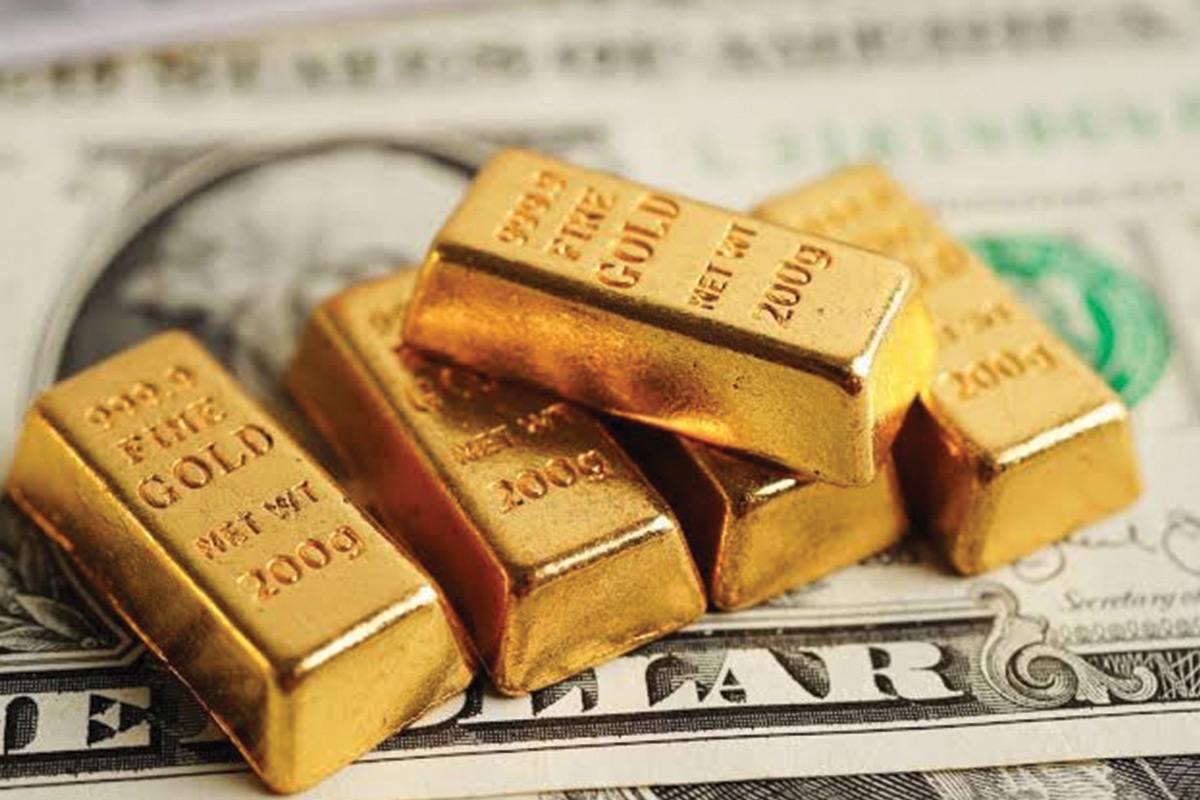
Gold prices ended last week’s trading session higher at $4,195 per ounce, posting weekly gains after a wave of declines that had pushed prices to lows near $4,000 per ounce, amid market anticipation of US inflation data and the trajectory of interest rates.
A report issued today by Kuwaiti Mint Company stated that gold’s recovery was supported by buying activity aimed at capitalizing on the price drop, alongside improved investment demand as US Treasury yields fell during some trading sessions and the US dollar weakened modestly.
The report clarified that investors continued to assess the likelihood of the US Federal Reserve holding interest rates steady at its October meeting, while bets persisted on the possibility of another rate hike in December.
It added that gold experienced volatile movements last week, facing selling pressure at the start of trading due to rising US yields and renewed concerns about the persistence of tight monetary policy, before rebounding toward the end of the week.
The precious metal rose more than 1.40 percent during Friday’s trading, after hitting its intraday low of around $4,130 per ounce, before approaching $4,207 and closing at approximately $4,195.
The report noted that this performance reflected a return of buying activity at lower levels, but instability above the $4,200 mark keeps the possibility of continued volatility alive in the coming period.
It pointed out that gold’s recovery coincided with the release of US data showing a decline in consumer confidence, as the University of Michigan’s consumer confidence index fell to 46.3 points in October, down from 48.1 in the previous reading and below market expectations of 47.6 points.
It added that this reading reflects growing pessimism among US households regarding economic conditions, which could affect consumer spending levels in the near future.
The report mentioned that the data contributed to strengthening demand for gold, as investors turned to assess the likelihood of a US economic slowdown and its impact on the Federal Reserve’s decisions.
It further stated that this could lead the Fed to pause in its upcoming interest rate decisions, while continuing to monitor labor market developments, energy prices, and new economic data.
It noted that the trajectory of US interest rates remains one of the key factors determining gold’s direction in the coming phase, as market pricing indicates an approximately 81 percent probability of a rate hold at the October meeting, with rates expected to remain in the 3.75 to 4 percent range.
Meanwhile, markets still price in an approximately 81 percent chance of a 25-basis-point rate hike in December, according to data referenced in last week’s end-of-week trading.
The report highlighted that the minutes of the latest Federal Open Market Committee meeting revealed divergent views among officials regarding the path of monetary policy, despite a general inclination to keep the option of a rate hike open if economic conditions warrant it.
It added that some officials believe any additional increase could be a precautionary measure to address inflation risks, while others view it as the beginning of a new phase of monetary tightening.
It clarified that rising US Treasury yields remain one of the most significant pressure factors on the precious metal, as higher yields increase the opportunity cost of holding gold, which is a non-yielding asset.
He emphasized that although yields experienced a relative decline during some sessions of the week, their persistence at elevated levels reflects investors’ concerns regarding inflation, financing costs, and the trajectory of monetary policy. He added that the rebound in yields toward the end of certain trading sessions capped gold’s gains, while their decline during other periods supported recovery attempts.
He noted that the US dollar continued to influence the precious metal’s movement, as its relative weakness during part of Friday’s trading enhanced gold’s appeal to investors using other currencies.
He further stated that the dollar’s subsequent rise limited gains, underscoring gold’s ongoing sensitivity to any shifts in expectations for US interest rates and yields.
The report forecast that the relationship between the dollar and Treasury yields would remain among the key short-term determinants of gold’s direction, particularly with the upcoming release of US inflation data, which could reshape market expectations regarding monetary policy.
It highlighted that geopolitical developments in the Middle East remain a crucial factor in shaping global market trends, given persistent concerns related to the conflict between the United States and Iran, as well as security tensions in strategic maritime passages, including the Strait of Hormuz and the Bab al-Mandab.
It clarified that the escalation of these risks could boost demand for gold as a hedge asset during periods of uncertainty, in addition to its potential impact on oil supplies and global trade flows.
It pointed out that energy price increases resulting from these developments could intensify inflationary pressures, prompting central banks to keep interest rates elevated for longer, which might limit gains in the precious metal.
It explained that under such conditions, gold could benefit from growing demand for hedging against inflation and economic risks; however, this support could wane if rising energy costs reinforce expectations of monetary tightening and push up real bond yields.
It noted that investors’ attention this week, running from October 12 to 16, is focused on a range of important US economic data, led by the Consumer Price Index for September, alongside the Producer Price Index, retail sales, initial jobless claims, and industrial production data.
It added that these data points could influence global growth expectations and the movement of currencies and commodities, including gold, particularly if they indicate continued economic slowdown or heightened inflationary pressures in major economies.
From a technical perspective, the report stated that gold faces $4,200 per ounce as a major barrier to further recovery, noting that a breakout and sustained trading above this level could bolster the chances of regaining upward momentum.
It clarified that if this occurs, attention may shift to the $4,260 per ounce level, which aligns with the 100-day simple moving average, followed by $4,335, corresponding to the 50-day moving average, and then $4,500.
It highlighted that technical indicators show limited improvement in buying momentum, but the Relative Strength Index (RSI) remaining below the neutral 50-point level suggests that the downward trend has not entirely lost its influence, and that sustained recovery requires confirmation through a breakout above key resistance levels.
He added that the price of 24-karat gold reached approximately 42.290 dinars (about $137) per gram, while 22-karat gold recorded around 38.760 dinars (approximately $125) per gram. Meanwhile, the price of a kilogram of silver stood at roughly 671 dinars (about $2,177).
