Regional War and Debt Dominate IMF and World Bank Meetings
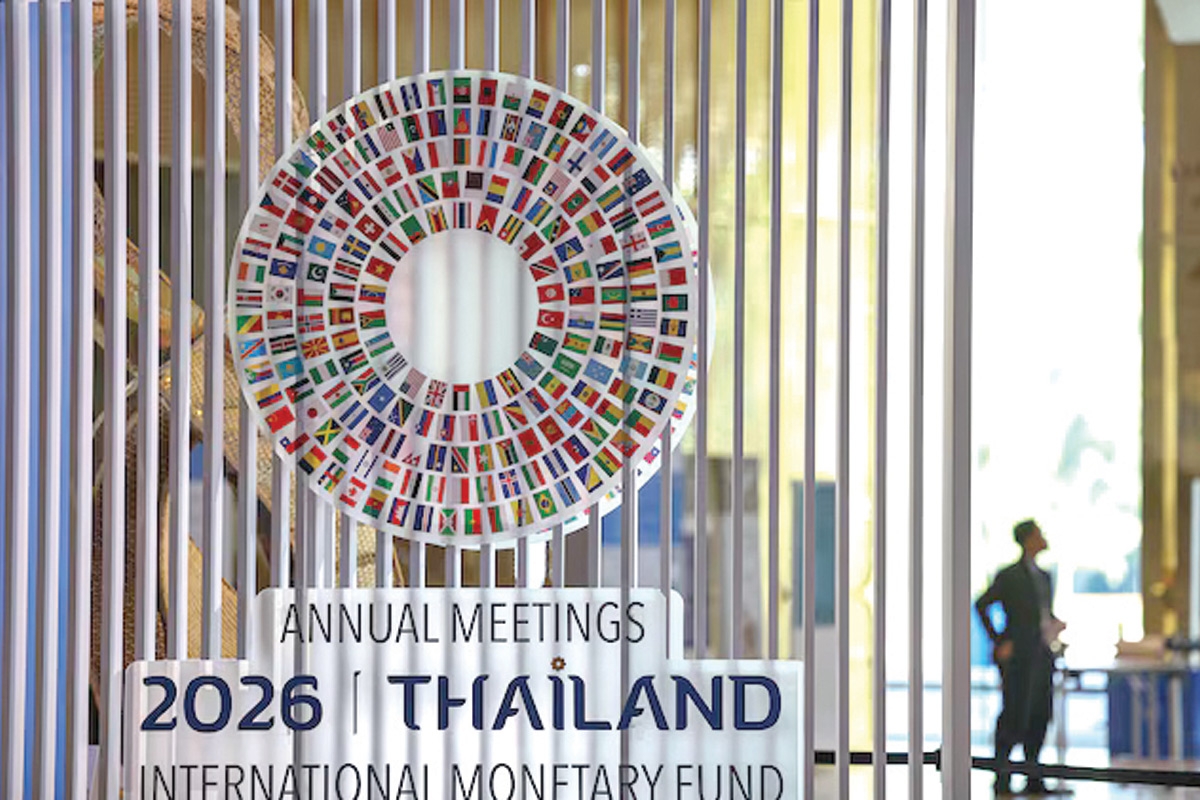
Financial officials gather in Thailand to discuss the risks of war with Iran, energy prices, and global debt.
Translated by Qiyas from الجريدة — Original source
Finance officials from around the world are gathering in Thailand this week amid a widening war in the Middle East, the largest energy supply shock in history, and rising interest rates—factors that collectively pose serious risks to an already slowing global economy.
The US-Israeli war against Iran, now in its eighth month, along with the inflation and cost-of-living hardships it has caused, are expected to dominate the agenda and side discussions at the annual meetings of the International Monetary Fund and the World Bank, held outside Washington for the first time in three years.
A notable absentee will be US Treasury Secretary Scott Bessent, who has sent senior officials to represent him while he handles “domestic engagements,” according to a US official.
Bessent’s decision to skip this high-profile gathering and the G20 meeting, which the United States chairs this year, could irritate his counterparts amid rising tensions over the Iran war, the Russia-Ukraine war, and the US decision to impose sanctions on the International Criminal Court.
World Bank President Ajay Banga told Reuters that while global growth held up better than expected when Iran closed the Strait of Hormuz, halting about 20 percent of global oil supplies, pressures are beginning to mount again.
Banga added that the sharp rise in diesel and fertilizer prices, alongside the expected super El Niño phenomenon—which experts say could cause 450,000 deaths from extreme heat—is occurring simultaneously.
Under pressure from US President Donald Trump, who is seeking to lower gasoline prices ahead of November elections that could see his Republican Party lose control of Congress, G7 countries agreed to release 100 million barrels of emergency diesel and crude oil reserves.
Trump announced last Friday that an agreement had been reached with Russia to pump more diesel into global markets, along with a temporary exemption from US sanctions aimed at depriving Moscow of the revenue funding its war in Ukraine. The move drew swift criticism from Ukrainian President Volodymyr Zelensky.
Since the war began on February 28, more than one billion barrels of oil have been withdrawn, mostly from land-based commercial stocks. However, energy sector executives say that the volume of oil actually available to global markets is beginning to decline, increasing market fragility and putting upward pressure on prices.
Banga said the World Bank does not currently intend to lower its global growth forecasts but is monitoring developments closely.
He noted that “the real issue is not just El Niño, but the combination of factors... What is happening to fertilizer prices? What is happening to energy costs? What is happening to debt? The convergence of these factors creates its own challenges. I think this will require all of us to be more cautious as we prepare for the coming months.”
The IMF has ruled out a significant change to its 2026 global economic growth estimate of 3 percent, though it may slightly raise its forecast for next year.
However, some countries will see their growth forecasts downgraded, including Ukraine, which is entering the fifth year of its war against the Russian invasion, and Gulf states affected by Iranian strikes and a sharp decline in energy exports.
The growing burden of public debt constitutes one of the biggest challenges for policymakers, as it weakens economic growth and increases inflationary pressures. The International Monetary Fund (IMF) says public debt has reached its highest level since World War II and will exceed 100 percent of GDP before 2030.
Advanced economies, led by the United States, have the highest debt-to-GDP ratios, but emerging markets and low-income countries remain the most vulnerable to risks amid a combination of challenges, including capital outflows seeking higher returns in the US, the impacts of El Niño, and weak investment in artificial intelligence technologies that have helped mitigate the effects of negative supply shocks in the US and other wealthy countries.
Interest payments already account for more than 10 percent of revenues in developing countries on average.
In the early stages of the COVID-19 crisis, G20 leaders announced a debt service suspension for the poorest countries, but diplomats from G20 member states say enthusiasm for taking a similar step is now virtually nonexistent, as high debt levels and political pressures pose greater obstacles this time.
Many low-income countries are concerned about new IMF recommendations on lending programs, which call for fewer but deeper reforms as a condition for loan approval—a change many fear will lead to painful austerity measures.
Yolanda Fresno, who works on debt justice at Eurodad, said: “Countries are already cutting spending due to rising debt payments and IMF conditions... We fear this review of conditions will worsen the situation.”
She added that Kenya avoided debt restructuring by cutting public spending and attempting to raise taxes, but these changes sparked widespread protests, especially among youth.
She said the IMF risks losing credibility unless it acknowledges the scale of the crisis facing many developing countries.
Flight routes to Bangkok often pass through the Middle East, posing direct security challenges for more than 10,000 participants flocking to the Thai capital, home to about nine million people, following the latest attacks on some Saudi airports.
Josh Lipsky, deputy head of the International Economy program at the Atlantic Council, noted that after three years, the link between national security and international finance has become clear, although financial officials at the time dismissed the Hamas attack as having no economic dimensions.
Lipsky said: “The global repercussions were clearly massive... What we are currently witnessing with Iran and the closure of the Strait of Hormuz is directly linked to what happened three years ago.”
He added that policymakers need greater flexibility in handling geopolitical crises in an increasingly interconnected world, stating, “They must act proactively and recognize that they no longer live in the world they used to know.”
