Iran's Negotiating Mindset: Between Institutions and Foreign Ministers' Memoirs
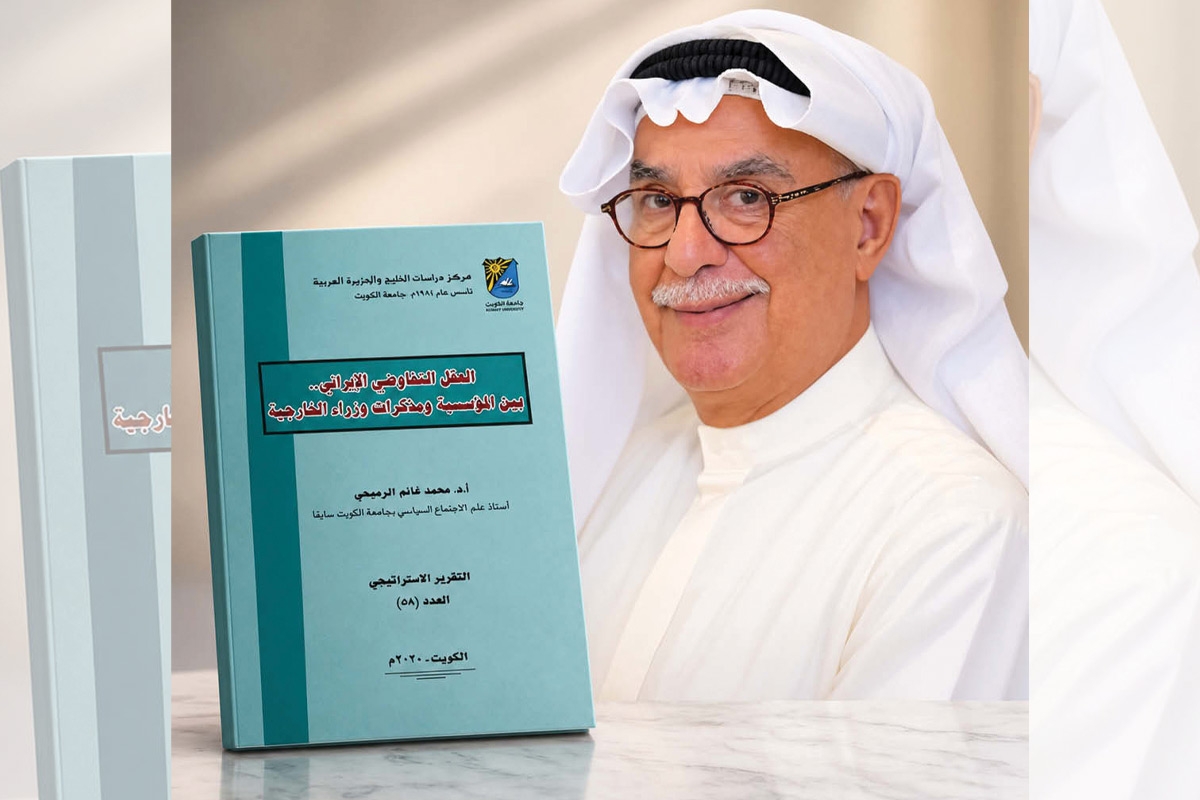
An analysis of Iran's negotiating behavior focuses on the role of domestic institutions and their impact on negotiators' final decisions.
Translated by Qiyas from الجريدة — Original source
Dr. Mohammed Ghanem Al-Rumaihi presents an analytical study to understand Iranian negotiating behavior, emphasizing that it requires moving beyond following officials’ statements and negotiation outcomes to studying the institutions that set objectives, grant authority, and make final decisions. He notes that the Iranian negotiator does not represent himself and cannot necessarily make a final decision, even when he appears to possess broad powers.
The study, issued as part of Strategic Report No. 58 by the Center for Gulf and Arabian Peninsula Studies at Kuwait University in 2026, confirms that the Iranian Ministry of Foreign Affairs is not the sole body responsible for determining foreign policy. Instead, there is an overlapping network of institutions, the most prominent being: the Supreme Leader, the Supreme National Security Council, the Islamic Revolutionary Guard Corps, the Presidency, and the Ministry of Foreign Affairs. The roles and influence of these institutions vary according to the nature of the issue at hand.
Dr. Al-Rumaihi argues that understanding Iranian negotiating behavior requires moving beyond monitoring officials’ statements and negotiation results to examining the institutions that define goals, delegate authority, and make final decisions. He points out that the Iranian negotiator does not act on his own behalf and may not have the authority to make binding decisions, even when he seems to wield extensive powers.
From this, the importance of distinguishing between three levels becomes evident. This distinction helps explain part of the apparent contradiction between Iranian officials’ statements and their political behavior.
The study reaffirms that the Iranian Ministry of Foreign Affairs is not the only entity responsible for shaping foreign policy; rather, a complex web of overlapping institutions exists, including the Supreme Leader, the Supreme National Security Council, the Islamic Revolutionary Guard Corps, the Presidency, and the Ministry of Foreign Affairs. The roles and influence of these institutions differ depending on the specific issue. Al-Rumaihi notes that disagreements among these institutions do not necessarily indicate a breakdown in decision-making unity; rather, they may reflect differences in means and priorities, while shared strategic objectives remain intact. A key conclusion is that securing the Iranian negotiator’s approval is insufficient to guarantee agreement implementation; it is essential to assess the extent to which influential institutions within the system accept the agreement’s content.
The researcher links Iranian negotiating behavior to a long historical accumulation, beginning with the Persian imperial experience, continuing through the Safavid and modern state periods, and culminating in the 1979 Islamic Revolution. According to the study’s analysis, this history has contributed to a political worldview centered on state preservation, identity protection, avoiding isolation, and seeking to expand the sphere of influence. The Iran-Iraq War and international sanctions have also left clear marks on crisis management and negotiation styles.
The study indicates that the Iranian experience has produced a combination of rhetorical rigidity and tactical flexibility, with a tendency to offer phased concessions when circumstances demand. It is crucial here to distinguish between the stability of strategic objectives and the changing methods used to achieve them.
The study dedicates significant space to the experience of Iranian Foreign Minister Abbas Araghchi, one of the key participants in the nuclear negotiations. Through this experience, several characteristics emerge:
* Patience and long-term perspective: Treating negotiation as a cumulative process that may span years.
* Tactical flexibility: Changing means and methods without necessarily abandoning core objectives.
However, Al-Rumaihi warns against considering Jafari’s memoirs as a sufficient source for understanding Iranian policy, as they present the experience of one participant and do not necessarily reveal all the considerations governing decision-making. He emphasizes the importance of comparing them with official sources, historical facts, and testimonies from other officials.
The study presents a conception of Iranian negotiation based on several interrelated elements. First, negotiation is a means to achieve state objectives, not an end in itself. Second, time is a significant factor in the negotiation process; Iran may use it to alter the balance of power or wait for changes in political, economic, and international conditions. Third, the continuity of communication channels does not necessarily indicate proximity to a final agreement. Fourth, hardline political rhetoric may coincide with ongoing practical negotiations, without necessarily constituting a contradiction.
The study also stresses the importance of not closing all doors to negotiation simultaneously, even during periods of escalation. However, the researcher does not consider these traits exclusive to Iran; rather, he clarifies that other countries employ similar tactics, and that the specificity of the Iranian case stems from the interaction of these tactics with the nature of its political system and the regional environment.
The study uses the 2015 nuclear agreement to test its interpretation of Iranian behavior. It demonstrates that nuclear negotiations revealed Iran’s ability to manage complex technical and political files while maintaining the cohesion of its negotiating team within the limits set by state institutions. However, progress on the nuclear file does not necessarily imply a change in Iranian policy on regional issues. According to the study, relations with Gulf states involve considerations of maritime security, energy, regional influence, and international balances. Furthermore, developments in Iraq, Syria, Lebanon, and Yemen directly or indirectly affect Iran’s negotiating stance. Consequently, completely separating diplomatic negotiations from the regional environment may lead to inaccurate assessments.
This part is among the most important sections of the study from my perspective, as it shifts the research from analyzing Iranian behavior to how to deal with it, highlighting several practical orientations:
1. Building institutional negotiating expertise: The study emphasizes that negotiation success should not rely solely on individual skills, but on institutions capable of retaining and developing expertise. Hence, the importance of training specialized cadres, documenting past experiences, and developing research and analysis centers.
2. Linking politics, security, and economics: Iran cannot be dealt with by treating negotiations as purely diplomatic matters. Iranian positions are influenced by security, economic, and regional considerations, which requires comprehensive preparation by relevant authorities.
3. Maintaining communication channels: The study stresses the importance of not closing dialogue, even during periods of disagreement and escalation.
4. Understanding institutions before evaluating statements: One should not rely solely on statements by Iranian officials, but rather analyze the institution issuing them and its influence on final decisions.
This section is my analytical reading in light of the study, and not a direct translation of the author’s recommendations.
First, maintaining diplomatic relations and communication channels with Iran represents an important interest for Kuwait, even when political or security differences arise.
Second, understanding the nature of the Iranian system helps Kuwait to assess positions more accurately and avoid basing its policies on individual statements or temporary changes in rhetoric.
Third, Gulf cooperation in strategic studies, information exchange, and building negotiating expertise can enhance the Gulf Cooperation Council (GCC) states’ capacity to handle complex regional dossiers.
In this context, it would be beneficial for Kuwait to support specialized studies on Iranian affairs and to leverage the expertise of the University of Kuwait and Gulf research centers.
Dr. Al-Rumaihi’s study is distinguished by its attempt to explain Iranian behavior from within the structure of its political system, rather than limiting itself to evaluating the outcomes of negotiations. This is an important approach, as it distinguishes between the personality of the negotiator and the authority they represent. Moreover, the use of Abbas Araghchi’s experience adds a practical dimension to the analysis. However, three issues deserve further discussion:
First: To what extent can one speak of a stable Iranian negotiating rationality, given the political and security transformations Iran has undergone?
Second: Is the use of time and the prolongation of negotiations a deliberate Iranian strategy in all cases, or could it sometimes be the result of internal disagreements and external pressures?
These questions do not detract from the value of the study; rather, they open the door to developing its ideas and testing them in light of political developments.
The core message of the study can be summarized as follows: understanding Iran begins with understanding the state behind the negotiator, rather than merely studying the negotiator themselves. As presented by Al-Rumaihi, Iranian negotiating behavior is the product of the interaction of history, institutions, ideology, interests, and domestic and external pressures.
The study does not assume that this behavior is fixed under all circumstances; rather, it emphasizes the importance of monitoring shifts in the balance of power and the regional and international environment.
As for the Gulf states, the most prominent lesson is that effective engagement with Iran requires deep institutional knowledge, long-term negotiating preparedness, and the ability to combine dialogue with the protection of national interests.
In my view, the fundamental value of this study lies in its call to move from reacting to Iranian policy to understanding the mechanisms that produce that policy. This transition is essential for any state seeking to build a realistic and balanced foreign policy.
