In the Spotlight: The 30 Challenge... A Kuwaiti Pride
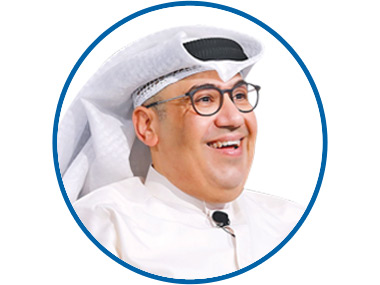
Not all achievements require massive budgets, nor do all successes need giant institutions to see the light of day. Sometimes, a clever idea, a mind that knows how to leverage it, and the will to believe that Kuwaiti youth are capable of making a difference when given or creating their own opportunities are enough. This is precisely what the “Thirty Challenge” program offers us, having reached its third edition.
The story began with a simple idea from its owner, presenter, and rights holder, Mosaad Al-Fawzan. It took the form of a football knowledge challenge among social media celebrities, testing their information and response speed in a race against time. At first glance, the concept seemed limited, but it quickly evolved, shifting from social media influencers to the general public, transforming into a sports media experience that gained popularity and a reputation surpassing the borders of the Arab world.
With the third edition, “Thirty Challenge” is no longer just an entertainment program testing football trivia; it has become a media project with its own presence, audience, and distinct imprint. The program has evolved into a product that has garnered popularity and a reputation exceeding the Arab world. Even the performance trials used to select participating names have become part of the landscape, overseen by a jury comprising Mosaad Al-Fawzan and his partners, Abdulaziz Al-Koot and Mohammed Al-Suhail. This experience confirms that success does not come by chance but requires effort, development, and continuity.
What is most remarkable about this experience is that it provides a practical model of Kuwaiti youth’s ability to create events, transforming a simple idea into a sports media product bearing Kuwait’s name and granting it a space for presence and distinction. It is worth noting that we are not discussing an achievement realized with open-ended budgets or facilities costing millions of dinars, but rather an idea that was wisely invested and hard work that carved out a place for itself in a crowded media landscape. This is the crux of the matter and the lesson that officials in charge of sports and media in Kuwait should reflect upon. Sports and media are two sides of the same coin, and their relationship can create achievements that transcend the boundaries of stadiums, provided there are those who know how to utilize and invest their potential. Indeed, successful projects can become sources of income and financial returns, provided they are well-planned, managed, and marketed.
The problem is not always a lack of resources, but rather how to invest them and the ability to transform ideas into successful and sustainable projects. Perhaps “Thirty Challenge” poses an awkward question: How many ideas could be born here if we gave youth space to work instead of drowning them in procedures and waiting? The answer holds the most important message: We do not necessarily suffer from a lack of funds, but rather from a weakness in converting them into influential and sustainable projects. Millions are spent on sports and media activities, yet the impact of some ends with the occasion, while youth initiatives succeed in building an audience, reputation, and identity for a product that can be developed, marketed, and turned into a revenue stream.
Bravo to Mosaad Al-Fawzan, Abdulaziz Al-Koot, and Mohammed Al-Suhail. You have presented a Kuwaiti model worthy of praise and a sports media product we are proud of on the global stage. Most importantly, you have proven that creating success does not always require someone to open the vaults of wealth, but rather someone who knows how to open the doors of ideas.
Some projects require millions of dinars to get moving, while others need an idea that moves millions. Between the two, it seems the problem is less about a lack of money and more about a lack of ideas worth investing that money in.
