Eritrea and Ethiopia Exchange Accusations of 'Blatant Aggression' and 'Unjustified War'
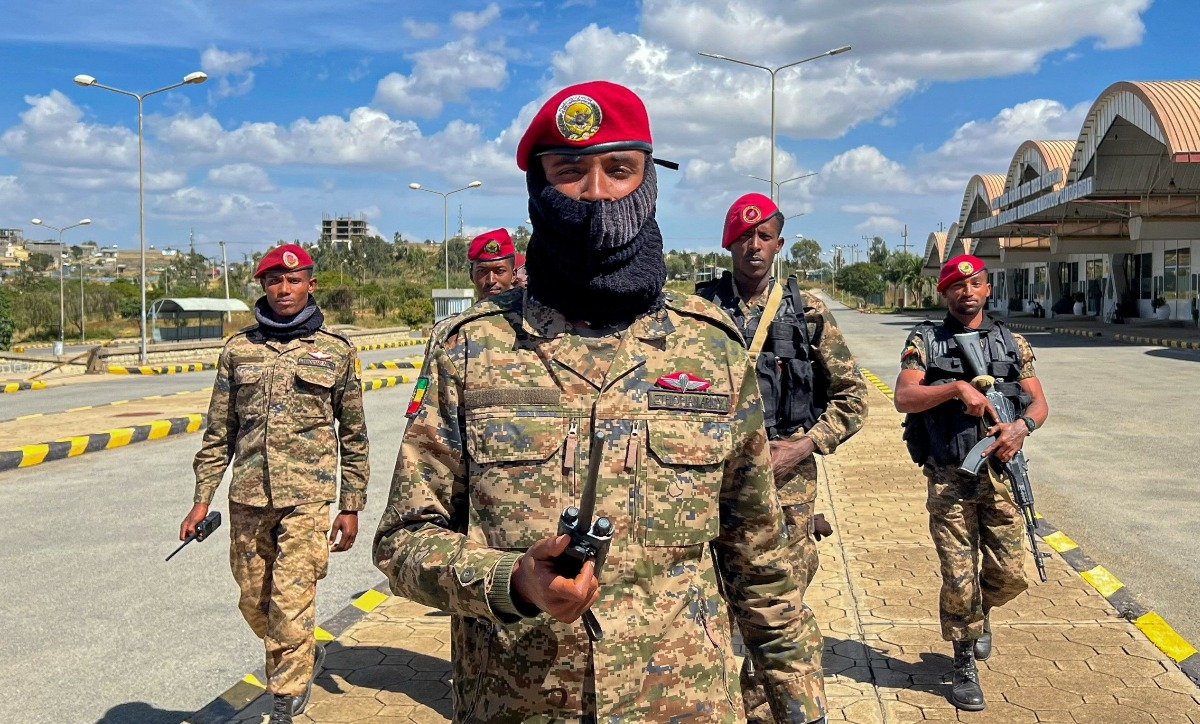
Relations between Ethiopia and Eritrea deteriorated following mutual accusations of aggression, with Eritrean forces in Tigray and military escalation by Ethiopia.
Translated by Qiyas from الجريدة — Original source
Relations between the two neighboring countries, which fought a border war between 1998 and 2000, have sharply deteriorated in recent weeks.
An security source, who requested anonymity, stated that Eritrea deployed “between five thousand and eight thousand” soldiers in Tigray.
In light of this, Ethiopia accused its neighbor Eritrea of committing a “blatant act of aggression” and said it was forced to exercise “legitimate self-defense,” according to a letter addressed by Ethiopian authorities to members of the UN Security Council, which was reviewed by AFP on Friday.
Ethiopian Foreign Minister Gideon Timothewos, in a letter to the French mission at the United Nations whose authenticity was confirmed by a diplomatic source, condemned the presence of Eritrean forces at a depth of 30 to 60 kilometers inside Tigray, describing it as a “blatant aggressive act that justifies Ethiopia’s inherent right to legitimate self-defense.”
Last week, the Ethiopian army forced rebels of the Tigray People’s Liberation Front (TPLF) to retreat and seized their capital, Mekelle. Ethiopian Airlines announced it would resume flights to the city starting October 11.
Witnesses told AFP on Friday that rebels had lost control of two other cities in Tigray: Shire and Adigrat.
“Looters are active in the city; four people were killed and 11 injured in a shootout following looting incidents,” a witness added, noting that pro-government forces had not yet entered the city.
Eritrean troops were seen in Adigrat in recent days before being targeted by Ethiopian drone strikes, according to a conflict monitor and witnesses.
Rebels were retreating toward Shirearo, a town near the Eritrean border, according to a Tigrayan official belonging to a faction split from the TPLF.
Chetel Tronvoll, a regional expert at Oslo New University in Norway, told AFP that the TPLF is “eroding,” amid declining morale and dissatisfaction among its fighters with their leadership.
He expressed concern that Ethiopian Prime Minister Abiy Ahmed “will not stop at the border” but will continue his offensive into Eritrea.
Ethiopia, a landlocked country, has repeatedly emphasized its right to direct access to the sea, which Eritrea views as a threat of invasion and seizure of the port of Assab.
Eritrean Minister of Information stated, “The hysterical obsession with the Red Sea must also be viewed in light of previous intentions to launch an invasion war against Eritrea.”
Authorities in both countries did not respond to AFP’s requests for comment.
Eritrea gained independence from Ethiopia in 1993, and the two countries fought a bloody border war between 1998 and 2000.
Relations improved when Abiy Ahmed came to power in 2018, with Eritrea fighting alongside Ethiopia during the civil war it waged between 2020 and 2022 against the TPLF.
However, relations deteriorated after the war, as the manner in which it ended angered Eritrea, which now fears an Ethiopian invasion.
