Education Ministry: Discovered 12 interior design teachers at the Religious Institute where the subject is not taught
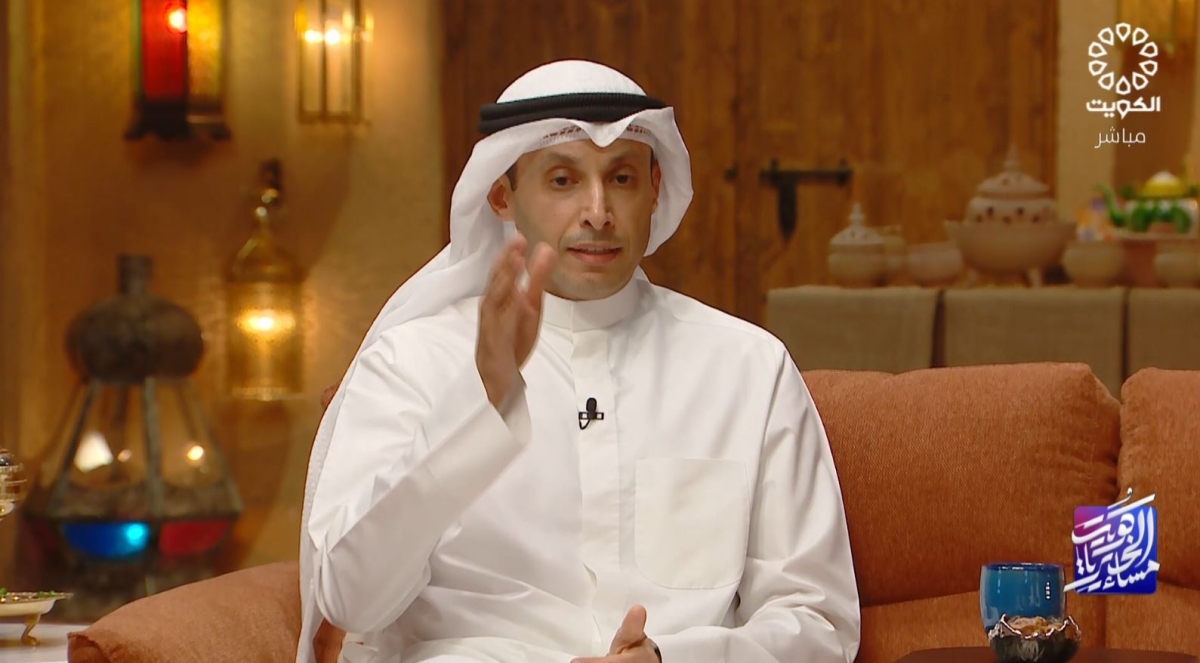
The Ministry of Education confirmed the discovery of surplus staff, such as 12 interior design teachers at the Religious Institute, pointing to redistribution efforts to achieve fairness.
Translated by Qiyas from الجريدة — Original source
Assistant Education Assistant Undersecretary at the Ministry of Education, Eng. Hamad Al-Hamad, confirmed that the process of redistributing teachers and the recent transfer decisions were made after thorough study and research into the numbers of teachers, schools, and students. He noted that when relevant authorities reviewed teacher headcounts, discrepancies were found across different ministry sectors. For instance, the number of teachers receiving salaries in the Finance Sector differed from the number registered in the Education Sector. This prompted further investigation, revealing a clear disparity in the number of educational staff among schools, which necessitated such measures.
In an interview with Kuwait TV, Al-Hamad stated that Minister of Education Eng. Syed Jalal Al-Tabtabaee, after reviewing the figures and statistics, directed the formation of a committee and teams to investigate the issue, determine accurate numbers, and find solutions for surpluses and the inequitable distribution of teachers across various specialties in different schools. He emphasized that the numbers were verified with precision and standardized across all ministry programs.
For example, he noted that one kindergarten had no technical supervisors, while another kindergarten in the same educational district had 12. They also identified a surplus of six Islamic studies teachers in one school, which was significantly higher than actual needs, necessitating corrective action.
He added that a review of files at the Religious Institute also revealed the presence of 12 decoration teachers, despite the fact that this subject is not taught at the institute. He pointed out that these discovered figures, identified during previous administrations, are not new developments. Therefore, a committee was formed to ensure fair redistribution, with efforts aimed at achieving balance among schools across various specialties.
He indicated that the redistribution process was carried out with precision. Accurate numbers were entered into a system linked to the teacher registry, which also contains data on the number of schools and students in each school. This provided a clear picture of the actual needs for each subject in every school.
He noted that the Ministry maintained a reserve ratio of 7% for male teachers and 20% for female teachers. He added, "There is another point I wish to mention regarding transfers in supervisory positions. We also found irregularities there; for example, one school had three department heads for the same specialty, which led to the transfer of two of them."
He stated that the Ministry’s plan helped raise the balance rate from 32%—the proportion of schools that were previously balanced—to 82% of schools that achieved balance after the redistribution process. The Ministry aims to reach 100% at some point.
Regarding transfer distances, he confirmed that the Ministry set an average distance of 11.2 kilometers between the original and new schools, with minor possible variations. He stressed that priority in transfers was based on fairness and transparency: newer appointees are transferred, while those who have been stable in their schools remain. He emphasized that student stability and interests, as well as teacher stability and interests, are priorities, which is why surpluses were addressed.
He affirmed that the impact of teacher disparities is evident, affecting the quality of education and teacher performance. Previously, transfers were done manually, causing imbalances in many schools. These are legacy issues inherited from previous administrations. He denied rumors about a secondary school teacher being transferred to a kindergarten, asserting that no one had been transferred to Al-Zahraa Kindergarten since the beginning of the academic year. He described these reports as false and urged everyone to avoid being misled by false news and to obtain information from the official Ministry website.
He emphasized that the Ministry has adopted governance and administrative decentralization. According to our organizational structure, there will be three assistant principals in each school and one department head for each subject, a framework that will be implemented. Regarding supervisory positions, we have set the criterion of seniority in promotion for transfers, which has already been applied in the transfer process.
With regard to exceptional cases involving long distances in the transfer of some teachers, Al-Hamad stated that Minister Al-Tabatabai directed that such humanitarian cases be reviewed. We have opened an electronic appeals channel, requiring applicants to submit their appeals along with supporting documents. All appeals will be reviewed, and appropriate decisions will be made, with special and humanitarian transfer cases receiving careful consideration and being addressed to the greatest extent possible. He added, “I wish to reassure parents that they will find a teacher in every classroom to teach their children,” noting that complaints had been received via the “Sahl” platform regarding the absence of teachers in some classrooms.
He pointed out that an electronic transfer system has been implemented. The system rejects transfer requests when there is a surplus of staff, and unlike the previous paper-based system, which was prone to errors, it is now difficult for mistakes to occur in transfers. He noted that the Ministry reviews staffing numbers at the beginning of each academic term.
He concluded by saying: “Our message to teachers and parents is that the goal of this process is to ensure a stable school environment. I believe there is a high level of awareness and adaptability to these reforms. The path of reform is long and requires patience. Thanks be to God, under the leadership of His Excellency the Minister and his commitment to reforming the educational system, God willing, this ship will sail safely to shore.”
