Al-Jum'an and Ibrahim Discuss 'Astronomy, Stars, and Their Relation to Our Maritime and Land Heritage'
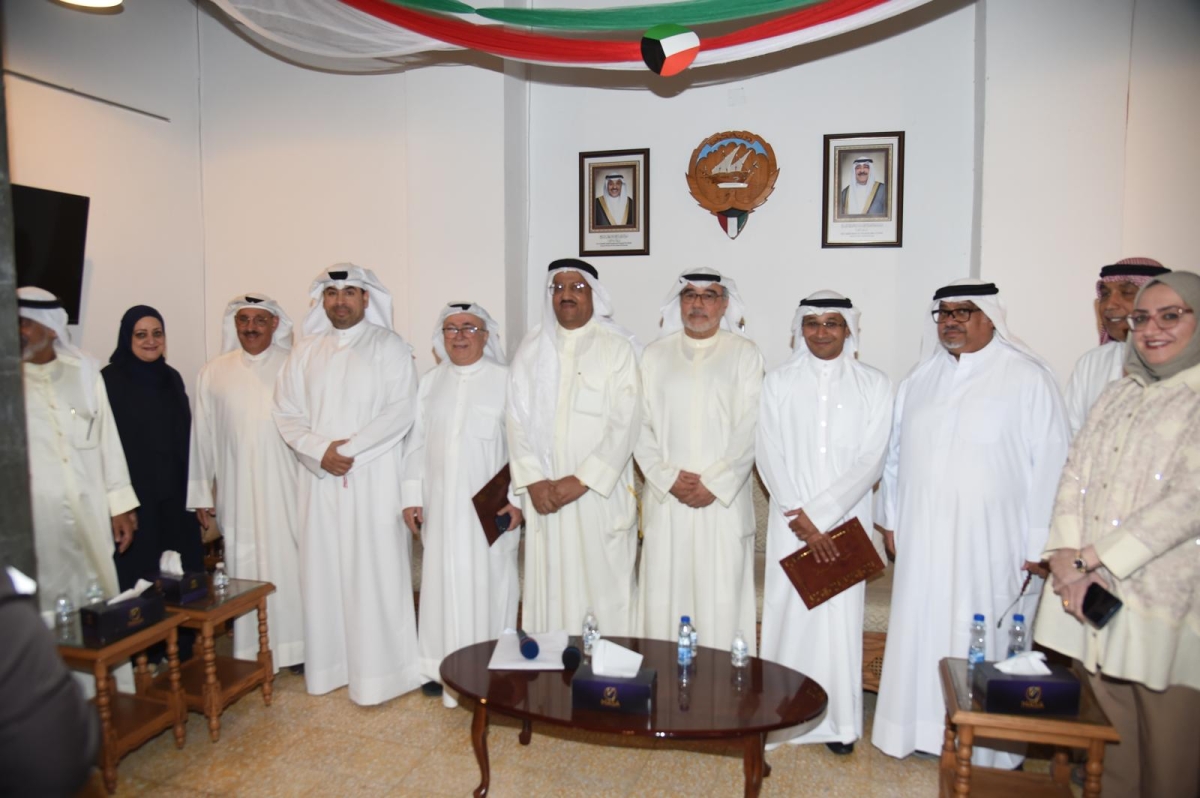
Discussion on astronomy and meteorology and their relationship to Kuwaiti heritage.
Translated by Qiyas from الجريدة — Original source
On the sidelines of the lecture, Ibrahim stated that his participation covered astronomy and meteorology and their relationship with Kuwaiti heritage, alongside aspects connected to people’s daily lives. He explained that understanding atmospheric movements and weather phenomena was not distant from the lives of Kuwaitis, particularly in an environment tied to both sea and land. Regarding the difference between astronomy and meteorology, Ibrahim clarified that “both are sciences, but each has a different field.” He noted that astronomy relates to the study of stars, planets, and celestial bodies located outside the atmosphere, while meteorology specializes in studying air and weather phenomena within the atmosphere, from the Earth’s surface up to its upper layers.
He pointed out that the role of meteorology extends to vital sectors, including aviation. He explained that relevant authorities provide aircraft with information regarding winds, weather conditions, regions, and airports along the flight route, which helps in selecting appropriate routes and managing weather conditions. This information is also taken into account when calculating aircraft weight and preparing it for the journey.
On the relationship between meteorology and heritage, Ibrahim noted that the environment has left a clear imprint on the details of human life, including clothing. He explained that the hot climate of the Gulf region influenced the styles of clothing people wore, such as the wide thobe, which suits the environment and facilitates air circulation and heat dissipation.
He emphasized that studying heritage through the surrounding environment reveals many details that may seem simple in daily life but are, in reality, the product of human interaction with climate and nature.
For his part, Al-Jam’an discussed the history of astronomy in the Kuwaiti environment and the practices and calculations associated with it among Bedouins and seafarers. He affirmed that astronomical knowledge in the region has deep historical roots, reflecting a dimension of the authenticity of the scientific and cultural heritage known to Kuwaitis.
Al-Jam’an said that the scientific calculations relied upon by seafarers, including those found in almanacs and the specific calculations of navigators (nakhudas), were not a product of a recent era but were based on an ancient body of knowledge.
He clarified that this astronomical heritage reached subsequent generations through two main channels: one was the oral history passed down from generation to generation among Kuwaitis, and the other was written history that preserved aspects of this knowledge and experience, particularly those related to the months of the navigators and their documentation of astronomical calculations and maritime seasons. Al-Jam’an added that the lecture also addressed old almanacs and the calculations of seafarers and Bedouins, highlighting the differences between them and the methods each group used to read the stars and calculate seasons and astronomical phenomena, in accordance with the nature of their lives and needs.
