Gold Stabilizes After Falling to Two-Month Low
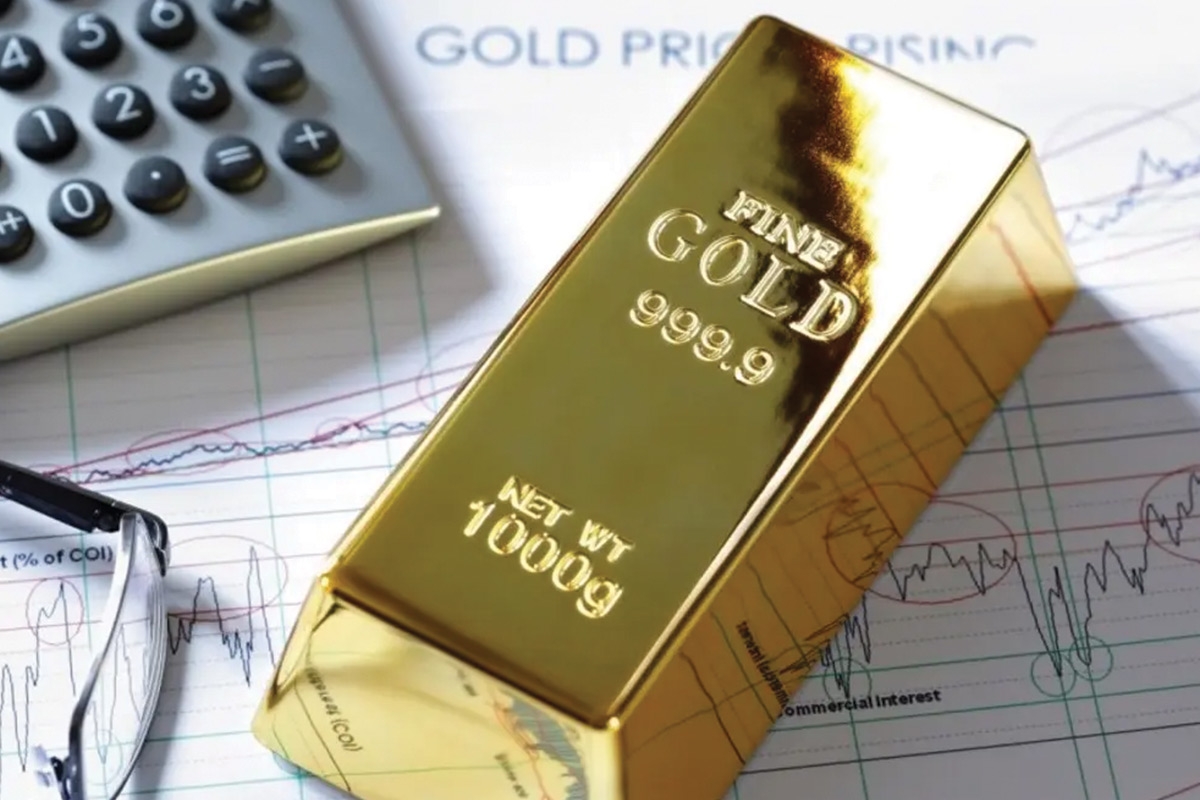
Gold stabilized after its decline, as investors await US interest rate decisions and record fund flows.
Translated by Qiyas from الجريدة — Original source
Gold prices stabilized today after touching a two-month low during the previous session, as investors weighed the likelihood of the Federal Reserve (the US central bank) raising interest rates again before the end of the year.
Spot gold recorded no significant change, trading at $4,116.67 per ounce. Prices hit their lowest level since August 5 on Wednesday, following the impact of a stronger US dollar and higher US Treasury yields on the market.
Chris Weston, Head of Research at Pepperstone, said: “The rationale for short-term gold investment still faces challenges. We need to break above the $4,275 level to become more optimistic about near-term upside prospects.”
He added: “If markets begin to interpret rising long-term bond yields as a reflection of sovereign credit and financial risks, rather than as evidence of strong economic fundamentals, gold may begin to decouple positively from bond yields, and currency-hedging trades could regain strength.”
Global gold exchange-traded funds (ETFs) recorded record inflows of $31 billion in the third quarter of 2026. UK-listed funds posted their strongest quarterly performance ever, surpassing their Chinese counterparts to become the largest source of inflows globally since the start of the year.
During the third quarter, total assets under management in global gold ETFs rose by 9%, while total holdings increased by 211 tonnes. Europe surpassed North America in terms of inflow volume for the first time since the second quarter of 2021.
European funds recorded record inflows of $14 billion in the third quarter. The UK remained the largest contributor, with funds there attracting $7.5 billion in inflows over 12 of the 13 weeks ending on September 25, marking the longest such streak since 2022.
North American investors poured $12 billion into gold funds during the quarter. This quarterly inflow marked a sharp turnaround from the weakness seen earlier in 2026.
Minutes from the Federal Reserve’s meeting revealed that policymakers were divided last month over the rationale for raising interest rates. Some argued that a rate hike was necessary to ward off the impact of energy price shocks and other disruptions, while a group leaning toward tighter monetary policy believed it was essential to protect against demand-driven emerging inflation.
Khaled Al-Khatib, Head of Global Market Analysis at MH Market, stated that recent gold price gains occurred despite ongoing expectations that US interest rates would remain high. He noted that markets had previously priced in two additional rate hikes during the year, one in October and another in December.
In an interview with Arabiya Business, Al-Khatib explained that market sentiment shifted following the release of the Federal Reserve meeting minutes and the latest US Personal Consumption Expenditures (PCE) index and labor market data. Expectations now lean toward a single rate hike in December.
He added that this shift in investor expectations helped support gold prices, despite the metal continuing to face pressure from the strong rise in US Treasury yields.
He clarified that high U.S. Treasury yields, geopolitical tensions in the Middle East, rising oil prices and their associated inflationary pressures represent short-term headwinds for gold.
Conversely, he said that purchases of gold-linked exchange-traded funds (ETFs), ongoing buying by central banks, along with concerns about U.S. debt levels and global uncertainty, are supportive factors for gold in the long term.
Al-Khatib predicted that downward pressure on gold would persist if current negative factors continue, including higher interest rates, rising bond yields, ongoing tensions, and elevated oil prices.
He noted that the first target level for gold, should these conditions persist, would be $3,950 per ounce.
He emphasized that reaching these levels would present suitable opportunities for long-term investors to build investment positions in gold.
Data from CME Group’s FedWatch tool shows that traders see only a 19% probability of an interest rate hike later this month, but an 86% probability of a hike in December.
International Monetary Fund Managing Director Kristalina Georgieva warned that the global economy faces threats from persistently high energy prices, record-high public debt levels, and risks stemming from the artificial intelligence investment boom. She urged governments to implement preventive fiscal and monetary policy measures.
