NATO: Looking forward to enhancing cooperation with Kuwait and GCC countries in four vital security areas
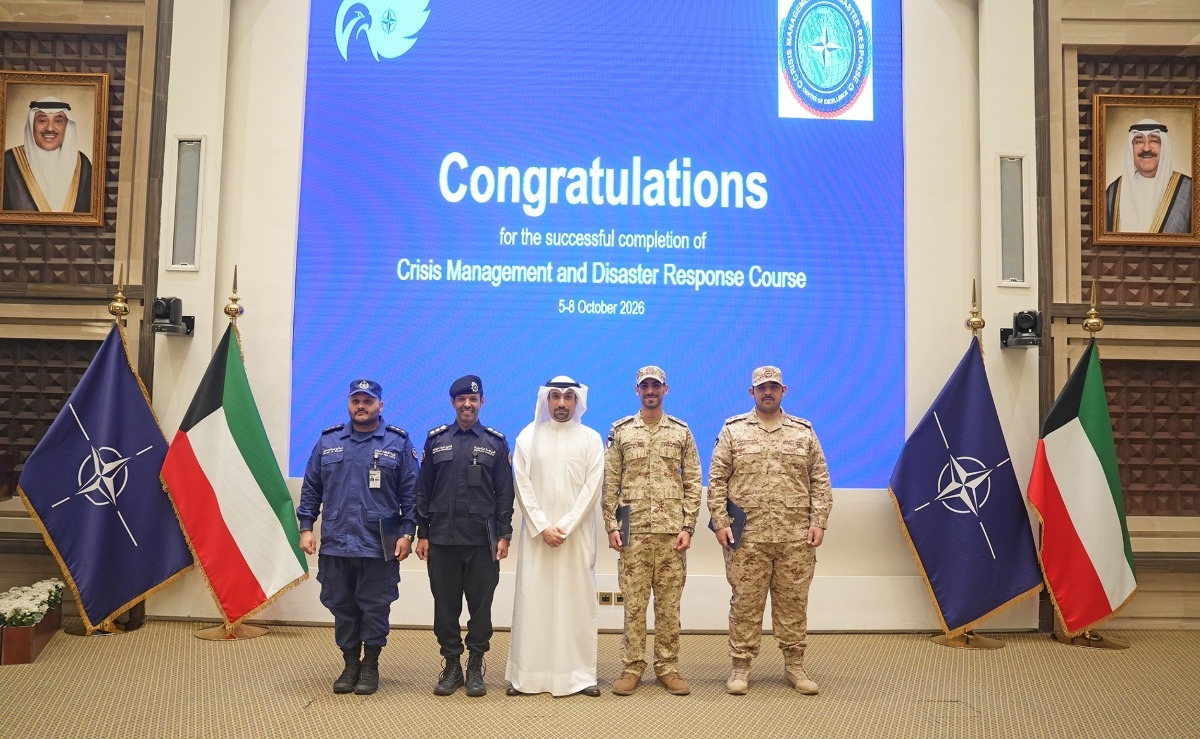
NATO reaffirms its commitment to expanding security cooperation with Kuwait and GCC countries in four vital areas during the crisis management cycle.
Translated by Qiyas from الجريدة — Original source
The head of the North Atlantic Treaty Organization (NATO) team at the NATO Regional Centre and Istanbul Cooperation Initiative (RCI) in Kuwait, Frans Bossmann, affirmed the Alliance’s commitment to expanding cooperation with Kuwait and the Gulf Cooperation Council (GCC) countries in four vital security areas.
Speaking to KUNA following the conclusion of the “Crisis Management and Disaster Response” course hosted by the Centre, Bossmann stated that these security domains include countering unmanned aerial vehicles (UAVs), counter-terrorism, maritime security, and defense against chemical, biological, radiological, and nuclear (CBRN) threats.
He added that the Alliance has begun implementing four major projects aimed at deepening security cooperation with countries in the region and enhancing the exchange of expertise in addressing common challenges. He noted that these projects align with the Alliance’s renewed approach to strengthening its partnerships with GCC states amid the evolving security developments and challenges facing the region.
Bossmann emphasized the importance of broadening cooperation to encompass all GCC member states, thereby serving the mutual interests of both sides. He highlighted Kuwait’s role in hosting the NATO Regional Centre and Istanbul Cooperation Initiative, describing it as a unique platform for enhancing dialogue, coordination, and the exchange of expertise between the Alliance and regional countries.
Bossmann noted that the Centre, which opened in 2017 and is preparing to celebrate its tenth anniversary next year, provides significant capacity to host experts and specialists from NATO and GCC countries, as well as to implement training programs and joint initiatives.
He affirmed that cooperation between the Alliance and GCC countries is based on the exchange of knowledge and the leveraging of accumulated expertise from both sides, pointing out that regional countries possess valuable experience in handling security challenges and managing crises, which can be utilized alongside the Alliance’s expertise.
He explained that the Centre seeks to enhance mutual understanding and exchange best practices through training courses, political dialogues, interactive exercises, and tabletop simulations, benefiting both parties.
Regarding the “Crisis Management and Disaster Response” course, Bossmann expressed his appreciation for the cooperation with the Bulgarian Centre of Excellence for Crisis Management and Disaster Response, which delivered the training program for the second time after its participation last year.
He stressed that crisis management and disaster response represent a priority for all countries worldwide, particularly GCC states, given current regional circumstances, emphasizing the importance of building capacities and enhancing readiness to deal with various emergencies.
For his part, Advisor Emad Al-Kandari, Director of the NATO Regional Centre and Istanbul Cooperation Initiative, told KUNA in a similar statement the importance of joint training programs in developing regional capacities and enhancing the exchange of expertise and knowledge in the fields of crisis management and disaster response.
Al-Kandari said that Kuwait’s hosting of these programs underscores its role as a key partner within the Istanbul Cooperation Initiative and reflects the Regional Centre’s commitment to supporting and developing capacities and enhancing cooperation with partner countries in various fields, keeping pace with developments and meeting needs.
He added that the “Crisis Management and Disaster Response” course, held from October 5 to 8 in collaboration with the Bulgarian Centre of Excellence for Crisis Management and Disaster Response, saw the participation of 31 trainees from the GCC countries.
He clarified that the course aimed to enhance participants’ skills in crisis management and disaster response through the exchange of expertise and practical experiences, as well as through discussions on planning and preparedness mechanisms, crisis handling, mitigating their impacts, and advancing to the recovery phase.
Al-Kandari praised the participants’ engagement during the course and their contributions to enriching the discussions and interactive exercises, noting that this interaction helped achieve the program’s objectives and foster shared expertise that adds value to participants and can be leveraged in their professional fields.
He emphasized the Center’s commitment to continuing to organize specialized training programs and activities in collaboration with relevant institutions in NATO member states, thereby contributing to enhanced cooperation and the exchange of knowledge and expertise with countries in the region.
The course is part of a series of activities and programs organized by the NATO Regional Cooperation Centre and the Istanbul Cooperation Initiative in Kuwait, aimed at strengthening partnership and developing shared capabilities in security, crisis management, and disaster response.
