Al-Zamil: Development of Dasma Theater Reflects Genuine Partnership Between National Council for Culture, Arts and Letters and Private Sector
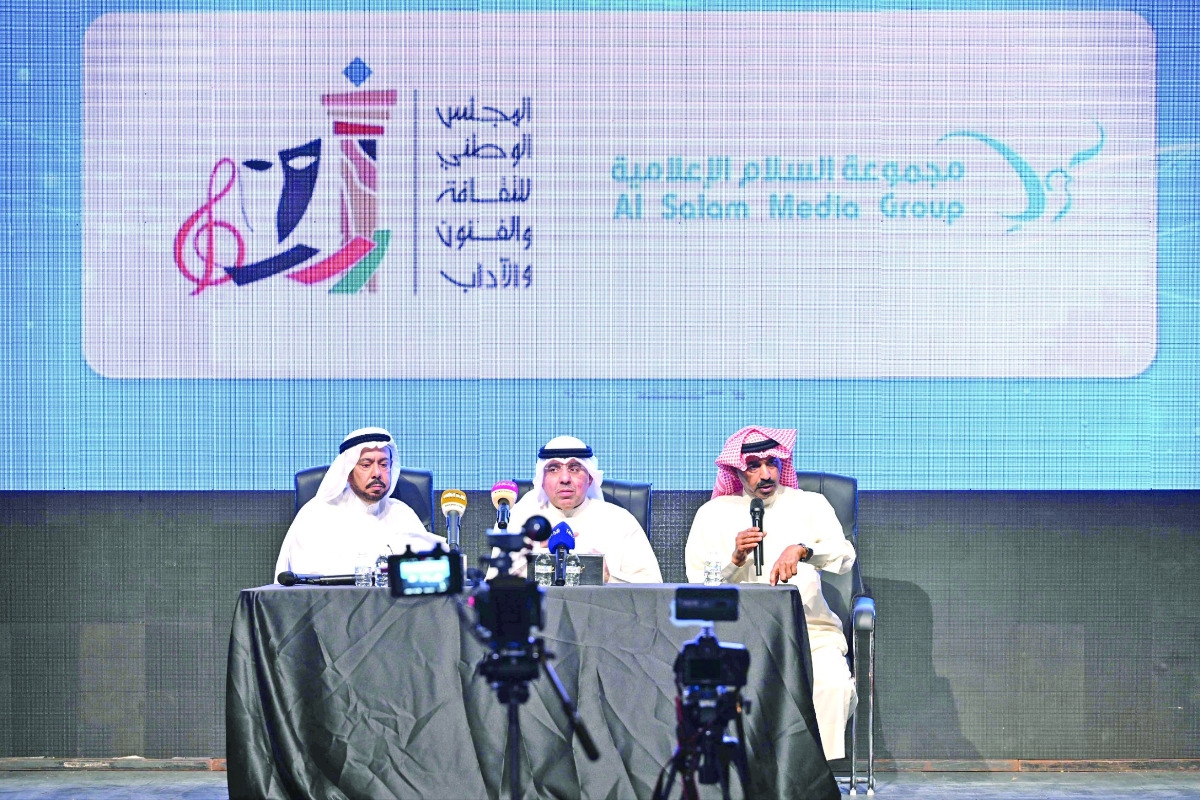
Al-Salam Media Group announces the imminent opening of the renovated Dasma Theater, attended by officials from the National Council for Culture, Arts and Letters.
Translated by Qiyas from الجريدة — Original source
The Al Salam Media Group held a press conference at the Dasma Theater, announcing the imminent opening of the venue following the completion of its development and rehabilitation works. The event was attended by Assistant Secretary-General for Financial, Administrative, and Supporting Artistic Affairs at the National Council for Culture, Arts and Letters, Muassad Al-Zamil, representing Council Secretary-General Dr. Mohammed Al-Jassar; Chairman of the Board of Directors of Al Salam First General Trading and Contracting Company and its subsidiary, Al Salam Media Group, Professor Dr. Abdulaziz Al-Musallam; artist Dr. Tariq Al-Ali; alongside representatives of local media and press.
The official opening of the theater is scheduled for the 29th of the current month, featuring the public performance “Al-Taqqa Noura – Jinn’s Wedding,” starring actress Huda Hussein.
At the outset, Al-Zamil emphasized that the Dasma Theater development project represents the fruit of institutional work and a genuine partnership between the National Council for Culture, Arts and Letters (“Al-Watani”) and the private sector. He clarified that six companies submitted bids, three of which met the requirements, before the contract was awarded to Al Salam First Company as the highest bidder that fulfilled the specified conditions and requirements.
He noted that this partnership was not built merely on the concept of entrusting the project to a traditional contractor, but rather on selecting an entity that combines executive capability with artistic and theatrical expertise.
He explained that the first challenge they faced at the time was hosting the Kuwait Theater Festival. Coordination was carried out with the General Directorate of Civil Defense to obtain temporary licenses, while fire trucks were provided throughout the festival period, given that the old theaters were not equipped with modern fire suppression systems.
He pointed out that holding events at the Jaber Al-Ahmad Cultural Center was one of the proposed solutions, but its cost drained festival budgets. This led to the consideration of a more sustainable model involving the specialized private sector in reviving and developing theaters, in accordance with state laws and regulations, and under the supervision of the National Council and its engineering sector.
He stated that he presented the idea to Dr. Mohammed Al-Jassar, and then to the former Minister of Information and Culture, Abdulrahman Al-Mutairi, where it received acceptance and support.
Al-Zamil stressed that offering the Dasma Theater for investment and development was a pivotal step in reviving theatrical facilities, expressing his satisfaction with what was achieved within three months.
For his part, Al-Musallam affirmed that the development of the Dasma Theater is not merely the reopening of a building, but the restoration of a cherished artistic and cultural memory, and the opening of a new chapter in the history of one of Kuwait’s most important theaters. He praised the vision of the political leadership and government in supporting culture and arts and enhancing partnerships between state institutions and the private sector, commending the efforts of the National Council for Culture, Arts and Letters under the leadership of its Secretary-General Dr. Al-Jassar, and the prominent role played by Assistant Secretary-General Al-Zamil in proposing, monitoring, and overcoming the project’s challenges.
He said that the Dasma Theater “does not belong to a specific entity, generation, or artist, but is part of Kuwait’s cultural memory.”
He noted that the Dasma stage hosted works firmly embedded in Kuwaiti and Gulf memory, including “Bye Bye London” and “Hello Bangkok,” as well as the first play performed after liberation (“Kuwait is Free”), alongside the two national plays: “Desert Storm” and “Sword of the Arabs.”
Following Kuwait’s liberation, Al-Muslem rekindled his historic relationship with the Dasma Theatre, personally funding and, in collaboration with steadfast Kuwaiti volunteers, overseeing its restoration, repairing its facilities, and rebuilding its infrastructure. He clarified that the current development project was completed in just three months, despite regional challenges, disruptions to some shipping and supply lines, delays in the arrival of certain materials and equipment, and exceptional conditions including high temperatures. He emphasized that the work team continued execution at an intensive pace.
He noted that the new operational vision extends beyond staging plays, aiming instead to transform the Dasma Theatre into a versatile cultural, artistic, and literary venue. He revealed that the official opening of the theatre will take place on the 29th of this month, with the premiere of the play “Al-Taqqaqa Noura – Jinn’s Wedding,” starring actress Huda Hussein. He confirmed that the performance will be presented in a new format that leverages advanced stage, sound, lighting, effects, and scenography capabilities, adopting an artistic and technical form that aligns with global theatrical productions.
For his part, artist Dr. Tariq Al-Ali began his remarks with his characteristic comedic spirit, saying, “As our Egyptian brothers say: We are living in a renaissance,” referring to the comprehensive renewal the theatre has undergone and the revival of its facilities and equipment.
Al-Ali stated that Dr. Al-Muslem played a prominent role in restoring the Dasma Theatre after Kuwait’s liberation and addressing the devastation left by the invasion. He affirmed that these efforts contributed to restoring morale among young and creative artists at the time.
The initiative returns one of the most important platforms for theatre to the cultural scene, at a time when producers face difficulties finding suitable, well-equipped venues for performances, prompting some to convert cinema halls and other locations into temporary theatres.
