Bahraini Minister of Oil and Environment discusses green manufacturing fundamentals and supply chain integration at 'Made in the Gulf 2026' forum
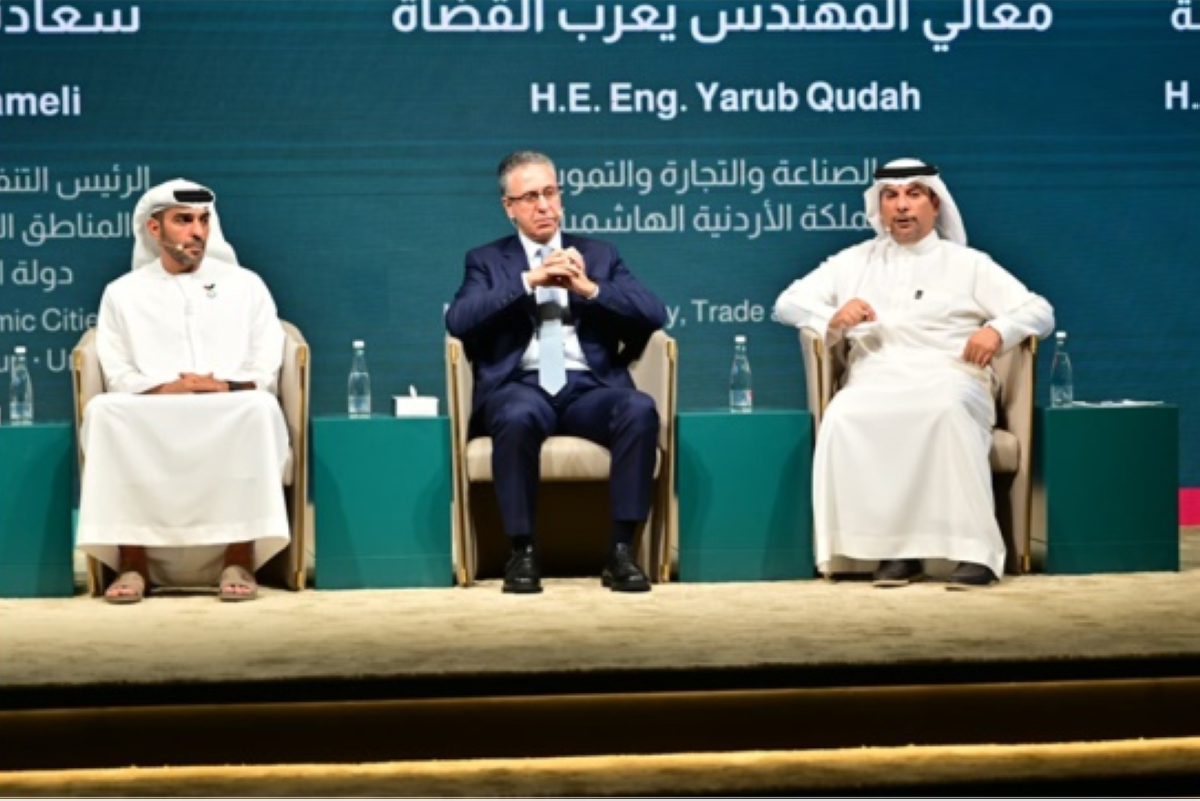
Dr. Mohammed bin Mubarak bin Deene, Minister of Oil and Environment and Special Envoy for Climate Affairs, affirmed that enhancing industrial integration among the Gulf Cooperation Council (GCC) countries constitutes a fundamental pillar for building a more competitive and sustainable economic system. He highlighted the importance of holistically leveraging manufacturing capabilities, economic zones, logistical infrastructure, and private sector investments to transform the comparative advantages enjoyed by the region’s countries into joint industrial partnerships and projects with added value.
This statement came during the Minister of Oil and Environment’s participation in the second dialogue session, titled “The Future of Green Industries through Regional Integration,” held today as part of the “Made in the Gulf 2026” Forum and Exhibition at the Bahrain World Trade Center. The session was attended by several ministers, officials, and decision-makers from the industrial sector in the region.
He noted that linking and integrating supply chains and value chains among GCC countries is a strategic necessity to enhance economic stability and expand access to global markets. He explained that regional integration in the energy and manufacturing sectors contributes to retaining added value within the region and creating more high-quality opportunities and joint investments.
He stressed the importance of the GCC adopting a strategy based on long-term strategic planning, thereby enhancing its ability to effectively handle crises and geopolitical shifts and to convert challenges into developmental and economic opportunities. He pointed out that disruptions affecting global supply chains can be leveraged as a catalyst for localizing industries and strengthening integration and mutual support among GCC member states.
In this context, he cited the Kingdom of Bahrain’s experience in proactive investment through the establishment of a liquefied natural gas (LNG) terminal, which has proven its vital role as an additional and secure outlet to enhance supply security and meet needs when necessary.
Bin Deene noted that Gulf Petrochemical Industries Company (GPIC) represents a successful model of strategic Gulf partnership, as its ownership structure includes Saudi Basic Industries Corporation (SABIC), Kuwait Petroleum Corporation (KPC), and Babcock & Wilcox Enterprises (Babcock Energy). He also highlighted the study of establishing an aromatics plant based on refinery outputs, as part of efforts to enhance manufacturing industries and expand into downstream industries with added value.
He added that this direction embodies an advanced level of Gulf integration in petrochemical value chains, by utilizing shared resources and expertise and developing strategic industrial projects that contribute to achieving sustainable growth and enhancing the competitiveness of the sector.
During his participation, the Special Envoy for Climate Affairs called for launching a unified regional initiative titled “Recycling in the Gulf,” aimed at treating industrial waste and residues as “secondary resources.” The initiative seeks to leverage the unified economic scale of the GCC countries to attract major investments and advanced technologies in material processing and recycling.
He concluded his remarks by emphasizing the importance of harmonizing environmental standards and developing a unified Gulf methodology. This would enhance the readiness of the Gulf industry and boost its competitiveness in the face of increasing global environmental requirements and regulations, while supporting the transition toward a more sustainable and efficient industrial economy.
