Iran Rejects Vance's Request for Prior 'Enrichment' Cuts to End War
Iran rejects Vance's request to reduce enrichment and threatens to close the Strait of Hormuz.
Translated by Qiyas from الجريدة — Original source
Israelis and Palestinians marked the third anniversary of the October 7, 2023 attacks today in a scene reflecting two entirely divergent paths. In Israel, the anniversary has become a pivotal electoral milestone, amid divisions over the future of Benjamin Netanyahu and his responsibility for the security failure that preceded the attack. Meanwhile, Hamas chose to commemorate the occasion by praising it as a "glorious day" and a "heroic epic," a stark contradiction to the massive destruction that has devastated Gaza and the losses that have weakened its capabilities and field control during the war.
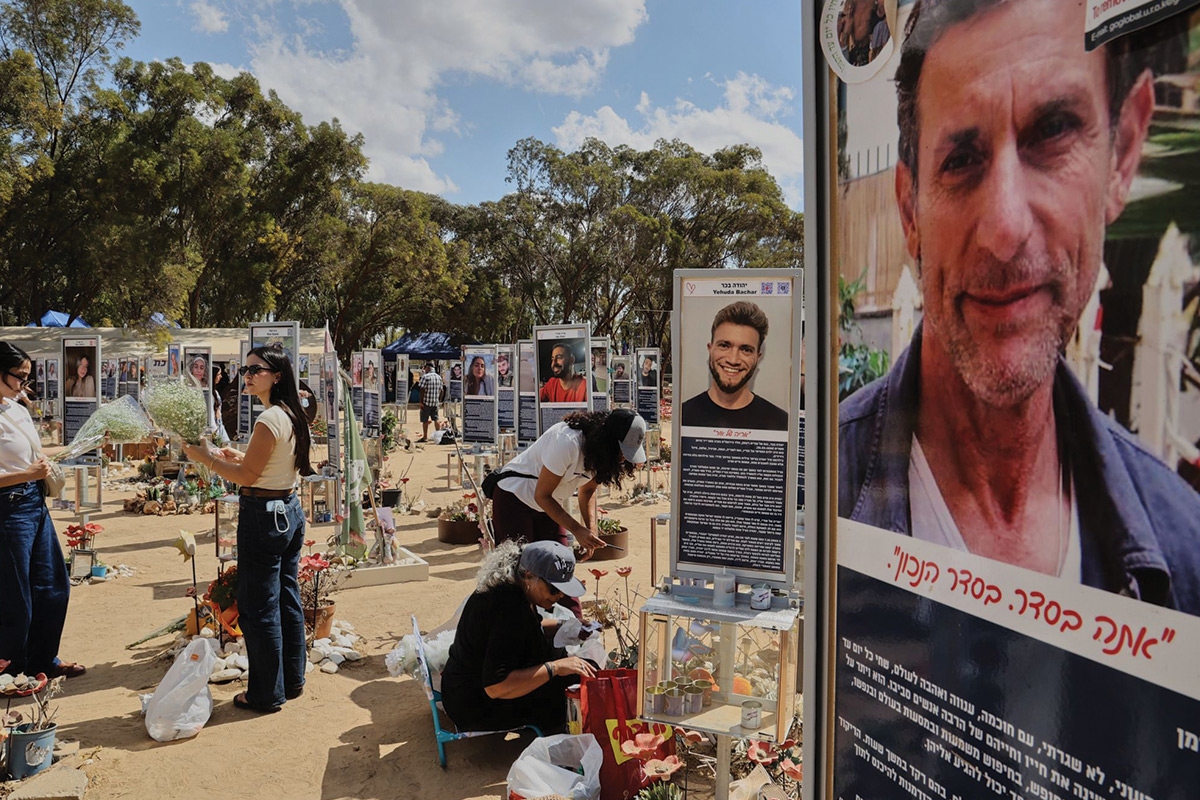
Israelis observed the anniversary at attack sites, including the Nova music festival site near the Gaza border, where 348 young people were killed, and at what has become known as "Hostages Square" in Tel Aviv. Hamas’s attack resulted in the deaths of more than 1,200 Israelis and foreigners, mostly civilians, and the abduction of 251 people to Gaza. This is the first anniversary since all hostages have returned to Israel, following the recovery of the remains of the last hostage in January.
The anniversary carries additional political weight, coming just 20 days before the elections scheduled for October 27, which are Israel’s first since the attack. October 7 has been prominent in election campaigns, speeches, and debates, with voters viewing it as a test of the government’s and military’s performance, as well as a measure of political responsibility for the largest security failure in Israel’s history. A poll by the Israel Democracy Institute showed that 68 percent of Israeli Jews consider the events of October 7 a major or somewhat major factor in their decision regarding which party to vote for.
The division centers particularly on Netanyahu, who was prime minister at the time of the attack and remains in office. His opponents hold him responsible for the security and political failures preceding October 7 and demand an independent investigation, while Netanyahu refuses to accept political responsibility for the failure. His supporters argue that the military and security establishment failed to assess the threat, and that the government led Israel toward recovery after its darkest days. Election polls indicate that neither of the competing camps appears capable of securing a governing coalition on its own, making the election result a test of Netanyahu’s political future.
In contrast, Hamas chose to mark the anniversary with a speech highlighting the discrepancy between its characterization of the attack and the reality in the Gaza Strip, where it waged war in its name. It described "Al-Aqsa Flood" as a "glorious day," a "dignified historical milestone," and a "symbol of a national epic," viewing the attack as the result of decades of occupation, siege, killing, and rights deprivation. However, this rhetoric comes as large parts of Gaza have turned to rubble, more than 74,000 Palestinians have been killed according to the Strip’s Health Ministry, and most of its population of around two million live in tents or destroyed buildings. Meanwhile, Hamas has lost most of the field control it held before the war.
At the same time, the movement reaffirmed its commitment to the ceasefire agreement that began a year ago and called on the United States, Egypt, Qatar, and Turkey to pressure Israel to fulfill its commitments and implement a roadmap approved by Hamas but rejected by Israel.
A year after the ceasefire, post-war arrangements remain stalled, particularly regarding Hamas’s weapons and the Israeli withdrawal. Israel ties its troop withdrawal to the complete disarmament of the movement, while Hamas states it agreed to a gradual disarmament process but refuses to relinquish its weapons amid ongoing Israeli attacks. Plans for rebuilding Gaza have also stalled, while large parts of the Strip remain under Israeli control.
The repercussions of the war have transcended Gaza’s borders, with the confrontation spreading to Lebanon, Yemen, and Syria, before later intersecting with the US-Iranian rivalry, making the October 7 war a pivotal turning point in the security and political landscape of the Middle East.
