Court of Appeal Rules in Favor of Funds for Minors and Orphans Affairs
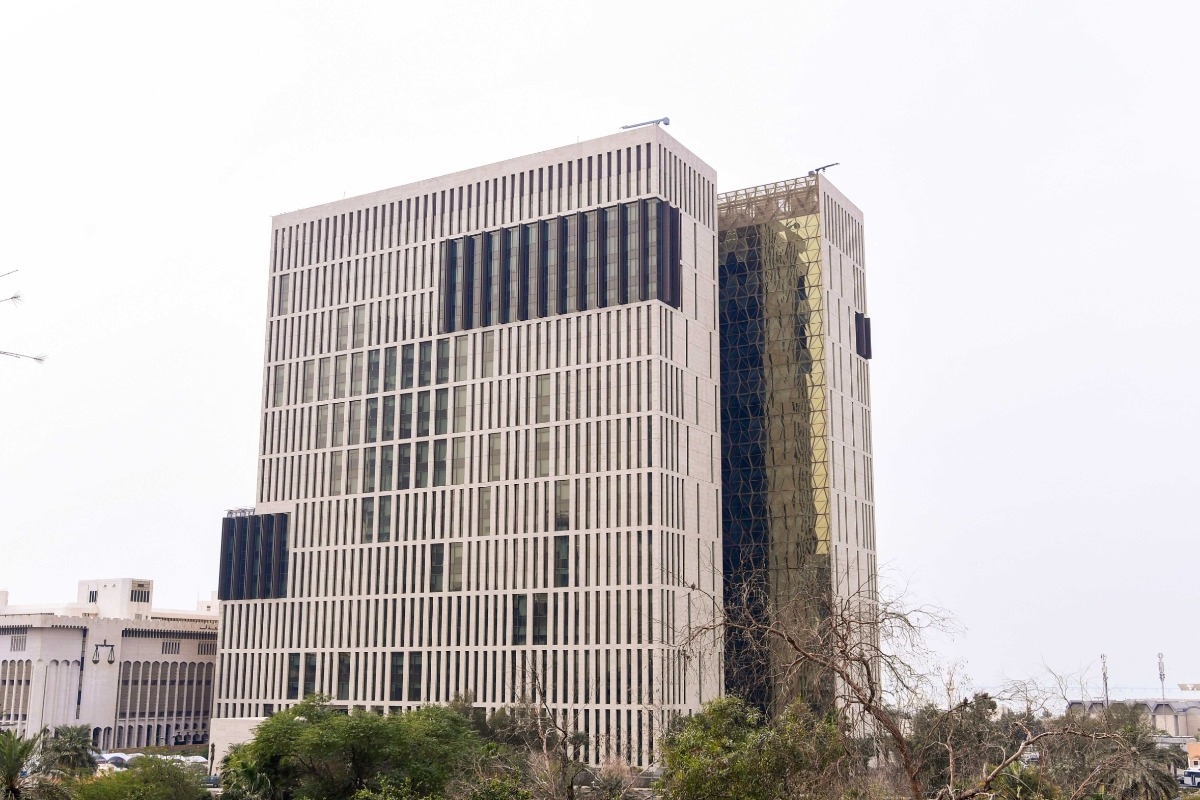
The Court of Appeal annulled the acquittal of three citizens, sentencing them to 10 years in prison and fines for embezzling funds from the General Authority for Minors' Affairs through forged real estate deals.
Translated by Qiyas from الجريدة — Original source
In a deterrent ruling for anyone daring to misappropriate funds belonging to “the Palace” and orphans, the Court of Appeal, presided over by Advisor Abdullah Al-Sanea and with advisors Saud Al-Mutairi and Bassam Al-Ghuwainem as members, overturned the acquittal of three citizens and sentenced them again to 10 years in prison, a fine of 9 million dinars each, and ordered them collectively to repay 4.5 million dinars. The first and second defendants were also dismissed from their positions.
The Public Prosecution had charged the first and second defendants, in their capacity as public officials; the first being the chairman of the board of directors of a company in which the General Authority for Orphans Affairs holds a direct stake of no less than 25% of its capital, and the chairman of its executive committee; and the second being a board member and member of its executive committee. They were accused of deliberately entering into a contract with an external company in 2017 in a manner that harmed the interests of their employer, which they were tasked with safeguarding. They succeeded in achieving their objective, with the intent of obtaining personal benefit, by contracting with a holding company in London to purchase a plot of land in the United Kingdom for 4,537,749 Kuwaiti dinars (four million, five hundred and thirty-seven thousand, seven hundred and forty-nine Kuwaiti dinars). They paid this amount using the funds of their employer’s company, fully aware that the contracting company did not own the subject property, again with the intent of securing personal benefit.
The first defendant forged a document stating that the subject property was registered in the name of his employer’s company in the United Kingdom. The third defendant conspired with the first and second defendants to commit the crime detailed in the first charge, and the crime was carried out pursuant to that agreement. This was substantiated by the complaints filed by the first complainant, the General Authority for Orphans Affairs, and the second complainant, a real estate company in which the state holds a stake. The latter is a Kuwaiti joint-stock company listed on the Kuwait Stock Exchange, targeting real estate investment, with its funds considered public funds and its employees regarded as public officials due to the direct 39.234% capital contribution by the General Authority for Orphans Affairs. The first defendant chairs the board of directors and its executive committee, with the second defendant serving as a board member and committee member, alongside others.
On June 4, 2017, the committee, chaired by the first defendant, approved the company’s purchase of a plot of land in the Aspley area of Kent, from the Darngford/SouzaCom sector in southeast Britain, from a British company for five million Kuwaiti dinars. The committee also approved that company (...) serve as the intermediary in this transaction and provide real estate consulting services.
On June 5, 2017, a preliminary purchase agreement for the property was signed, and the first installment of its price, amounting to five million pounds sterling (equivalent to 1,956,403 Kuwaiti Dinars), was transferred the following day, June 6, 2017, through the intermediary. On June 20, 2017, the Committee presented its aforementioned decision to the Board of Directors, which approved it and referred it to a property appraisal and auditing company, (...), which valued the property at no more than eleven million pounds sterling. The matter was then presented to the selling company, which agreed to reduce the value to this amount without any objection. Consequently, the full amount, along with the intermediary’s fees, was transferred to the selling company via the account of (...), on August 20, 2017, in an amount equivalent to 4,537,749 Kuwaiti Dinars.
In response, the First Accused, as a member of the company’s Board of Directors, presented during a board meeting a document consisting of a land registration certificate included among the company’s assets, and he affirmed to the board members that this ownership was established under the name of (...), a company established as a branch of the main company in London. However, the complainants later discovered that the property in question was not owned by (...) at the time the contract was signed, and that its true ownership belonged to a company in (...), for approximately two years, as confirmed by the registration certificate endorsed in the UK Land Registry.
Furthermore, the first company was not officially established until June 7, 2017, two days after the signing of the preliminary sales contract. The company owning the property, along with (...), the sales intermediary, were linked through their capital to the Second and Third Accused, who failed to disclose this connection.
The complainants determined that the document submitted by the First Accused to the Board of Directors was forged, amounting to no more than an unverified or uncertified land registration application form from the UK Land Registry. This evidence confirmed that both the First and Second Accused deliberately entered into this contract despite their prior knowledge that the “shell” company did not own the property.
Despite their awareness of the forgery of the document submitted by the First Accused, which misled the Board of Directors into believing that the property was registered among the company’s assets contrary to reality, and their intent, in collusion with the Third Accused—who, as the owner of the two companies, was considered a public official—to misappropriate public funds belonging to the Authority and the company, and to intentionally harm them, both complaints were filed.
Although the Criminal Court acquitted the accused, the Court of Appeal reviewed the case and referred it to experts. The experts’ report confirmed the accused’s violations of conflict of interest rules and established that the London property involved in the incident had not, up to that point, been registered in favor of the company in which the state holds a stake. The Court of Appeal again sentenced the accused to ten years in prison, fined each of them nine million dinars, ordered them jointly to repay 4.5 million dinars, and dismissed the First and Second Accused from their positions.
