Al-Mikhaizim: Strengthening Regional Water Interconnection Key to Supply Security
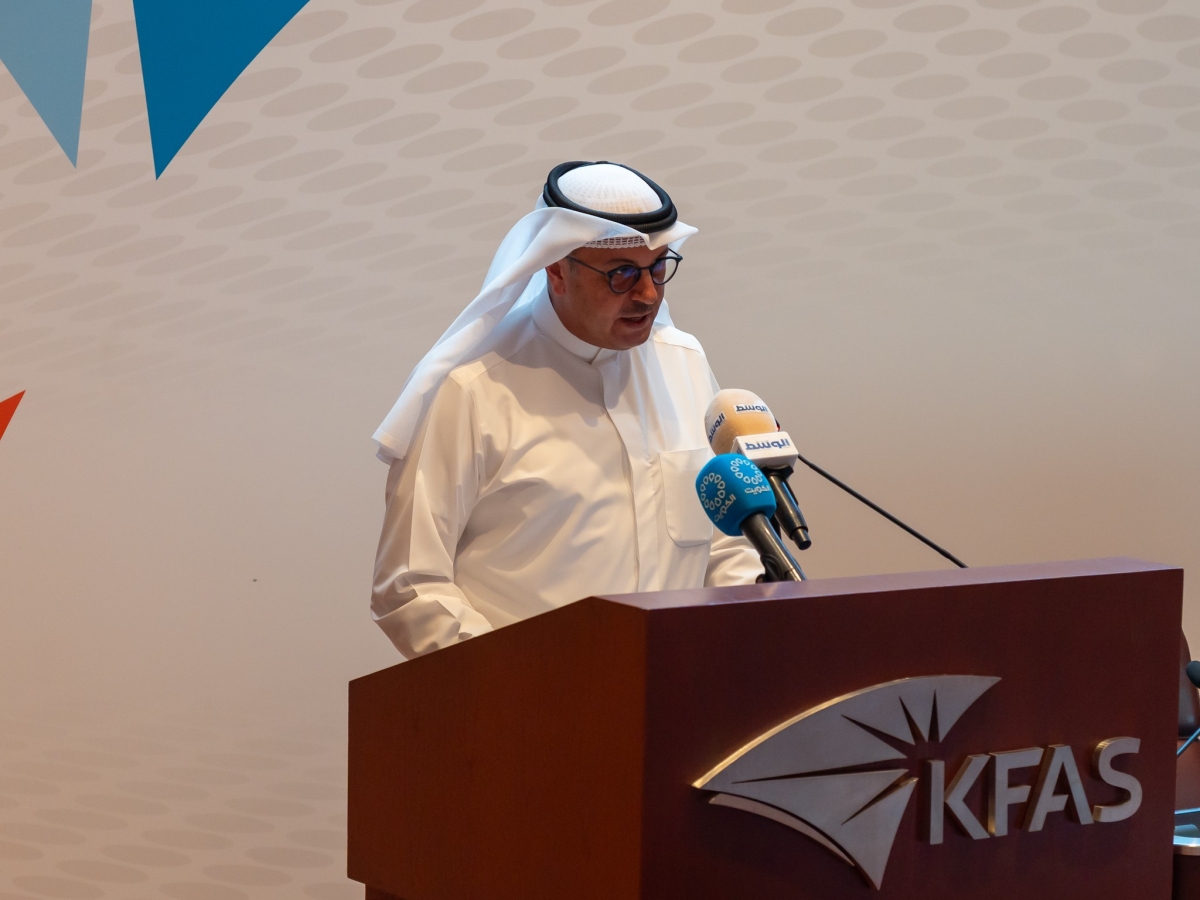
The Kuwait Foundation for the Advancement of Sciences hosted a high-level dialogue on “Water Security for All” today, Wednesday, with the participation of Dr. Sabih Al-Makhzoum, Minister of Electricity, Water, and Renewable Energy, as well as ambassadors and representatives from the United Nations and international financial institutions, to build momentum toward the 2026 UN Water Conference, scheduled to be held in the United Arab Emirates in December next year in partnership with Senegal.
Minister Al-Makhzoum, in his opening remarks, stated that “enhancing regional water connectivity represents one of the key pathways to support supply security and improve countries’ readiness to handle emergencies.”
He added that “the challenges posed by conflicts, wars, and humanitarian crises necessitate efforts to provide sustainable, resilient, and safe water sources, ensuring the continuity of essential supplies to populations, while strengthening the resilience of water infrastructure and expanding international cooperation to find practical and sustainable solutions for affected communities.”
For her part, Ghada Taher, Representative of the UN Secretary-General and Resident Coordinator in Kuwait, said in a similar address that “this dialogue is not an end in itself, but an important milestone on the path toward the 2026 UN Water Conference, offering an opportunity to translate discussions into concrete commitments, partnerships, and investments.”
She noted that “Kuwait offers an important perspective for this global dialogue, having contributed for decades to supporting and financing international water infrastructure projects and development solutions.”
Taher clarified that this dialogue comes at a pivotal stage in global efforts to accelerate progress toward achieving Sustainable Development Goal 6 (Clean Water and Sanitation for All), pointing out that approximately 2.1 billion people worldwide still lack access to safely managed drinking water services, while increasing demand, climate change, pollution, and environmental degradation are placing growing pressure on water resources.
For his part, Dr. Matar Al-Nuaimi, Ambassador of the United Arab Emirates to Kuwait, said in his speech that “the path toward the 2026 UN Water Conference is based on translating aspirations into practical steps,” explaining that this dialogue constitutes a significant contribution to this path by bringing together partners from various sectors to explore ways to leverage innovation, technology, and financing, and to enhance cooperation in delivering solutions at the required scale.
He reaffirmed the UAE’s commitment to enhancing practical water solutions through innovation, international cooperation, and partnerships that combine expertise and investments, thereby supporting progress toward achieving SDG 6 and promoting prosperity and resilience.
The dialogue was attended by a number of high-level government officials, diplomatic representatives from Switzerland, Japan, and France, as well as representatives and experts from the World Bank, the United Nations Development Programme (UNDP), the Food and Agriculture Organization of the United Nations (FAO), the International Organization for Migration (IOM), the Kuwait Foundation for the Advancement of Sciences, the Arab Fund for Economic and Social Development, Kuwait University, and other entities.
The dialogue aims to link global water priorities with tangible action by strengthening partnerships, identifying investment and innovation opportunities, and encouraging practical commitments that can contribute to the work of the 2026 UN Water Conference in December.
Participants discussed the six pillars that will form the framework for interactive dialogues at the December conference: (Water for People), (Water for Prosperity), (Water for the Planet), (Water for Cooperation), (Water in Multilateral Processes), and (Investments for Water).
The discussions also addressed ways to protect the right to access water and sanitation services, enhance the water-energy-food nexus, build resilience against water-related climate risks, expand international and transboundary cooperation, translate global commitments into national policies and bankable solutions, and mobilize public and private investments in the water sector.
