Parliamentary Interpellation Request Filed Against Iraqi Official Regarding 'New York Contacts'
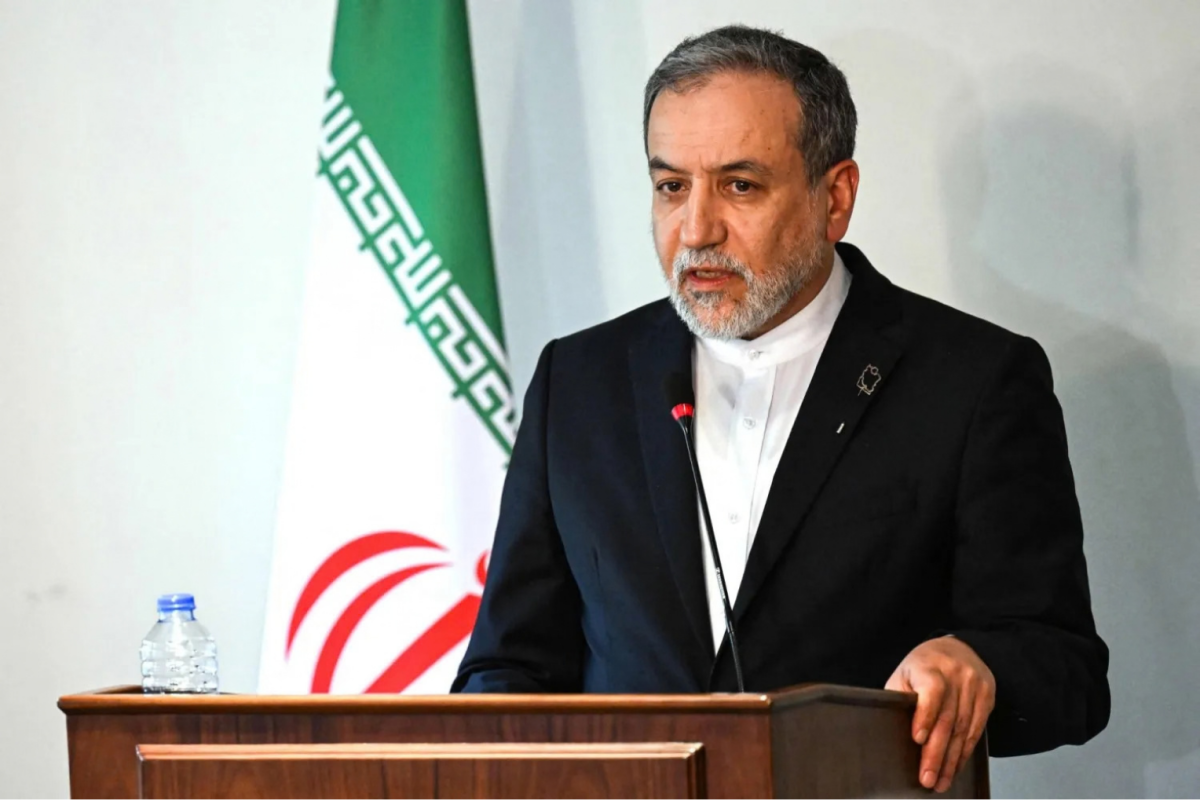
Indirect communications conducted by Iranian Foreign Minister Abbas Araghchi with the U.S. delegation in New York sparked widespread political controversy, escalating to the point of a parliamentary motion to summon him for questioning.
This debate revealed the decision-making process regarding negotiations with the United States, which operates through a multi-tiered system. It begins with a six-member committee on negotiations within the secretariat of the Supreme National Security Council (SNSC), proceeds through political, security, and military institutions, and culminates in final decisions on strategic and sensitive matters by Iran’s Supreme Leader, Mojtaba Khamenei, in his capacity as the Guardian Jurist with absolute authority. While the full membership of the six-member committee has not been officially announced, unofficial reports have named specific individuals within it.
Foreign Minister Abbas Araghchi previously stated that the committee’s structure evolved from being initially designated as the “Nuclear Committee,” then the “Negotiations Committee,” before finally being called the “Six-Member Committee.” Its mandate was to examine the fundamental decision to negotiate—i.e., whether to enter into talks at all—and to define the principles and frameworks under which negotiations would proceed. Its conclusions and decisions were to be submitted to the Supreme National Security Council.
According to Araghchi, the committee was previously chaired by Ali Shamkhani, Secretary of the SNSC, who was killed in a U.S. attack, followed by Ali Larijani, also Secretary of the SNSC, who was likewise killed in a U.S. attack. Iranian Foreign Ministry spokesperson Ismail Baghaei confirmed the existence of a six-member committee within the SNSC handling negotiation files and affirmed that Araghchi is a member, without officially naming all its members.
In the absence of an official announcement, unofficial sources circulated a composition including Parliament Speaker Mohammad Bagher Qalibaf, Head of the Judiciary Gholam-Hossein Ejei, IRGC Commander Ahmad Vahidi, Chief of Staff Ali Abdollahi, SNSC Secretary and Supreme Leader’s representative Mohsen Rezaee, and Foreign Minister Abbas Araghchi.
This six-member committee on negotiations differs from the “Six-Member Team” mentioned by President Pezeshkian in other remarks, which he described as a decision-making body coordinating among its members.
Available information indicates that these refer to two distinct mechanisms, despite potential overlap in personnel. Given these multiple decision-making levels, it remains difficult to pinpoint the entity holding final authority on strategic issues, particularly negotiations with the United States, the nuclear file, and major security matters.
Data and statements from Iranian officials suggest that sensitive decisions do not end at the six-member committee or even at the SNSC; rather, strategic and sovereign files require approval from Supreme Leader Mojtaba Khamenei.
The indirect communications held in New York between the Iranian and U.S. delegations, mediated by intermediaries, sparked extensive debate within Iran. On the Iranian side, Foreign Minister Abbas Araghchi participated; on the U.S. side, Special Envoy Steve Witkoff and Jared Kushner were involved. According to the U.S. account, the communications were limited to message transmission via intermediaries, while Tehran stated the objective was to convey its conditions regarding the reopening of the Strait of Hormuz.
However, these communications quickly became an internal political issue after critics of Araghchi, particularly from the hardline camp, questioned the extent of prior coordination and whether the talks fell within the Foreign Minister’s mandate. On September 23, 2026, demands for parliamentary action against him intensified.
The dispute later shifted to the parliamentary track, as Mohammad Rashidi, a member of the Iranian Parliament’s presidency, confirmed on October 6 that a motion to interrogate Araghchi had been registered in the parliamentary system, although it had not yet been referred to the parliament’s presidency. The criticism centers on accusations that steps were taken without the required coordination or approval, crossing what critics consider red lines, alongside objections to the Foreign Ministry’s handling of the US file.
However, the issue raises a broader dilemma, since Araghchi himself is a member of the Six-Party negotiating committee, raising questions about the limits of the mandate granted to him: Were the New York contacts part of the negotiating framework approved by the decision-making system, or did they constitute a move requiring additional approval?
Thus, the interrogation of Araghchi does not appear to be merely a mechanism for holding the foreign minister accountable, but rather a reflection of a deeper disagreement over who determines the scope of Iran’s diplomatic maneuvering toward Washington: the Foreign Ministry, the Six-Party committee, the Supreme National Security Council, or ultimately, Iranian Supreme Leader Mojtaba Khamenei.
Consequently, the Araghchi affair may become a test of the boundaries of Iran’s diplomatic autonomy and of who holds the mandate to negotiate with the United States, as well as where the authority of each institution ends within a decision-making system in which any step toward Washington is treated as a matter of national security and is also the subject of internal political contestation.
