Kuwait: Iran's Closure of 'Hormuz' Hinders Sustainable Development
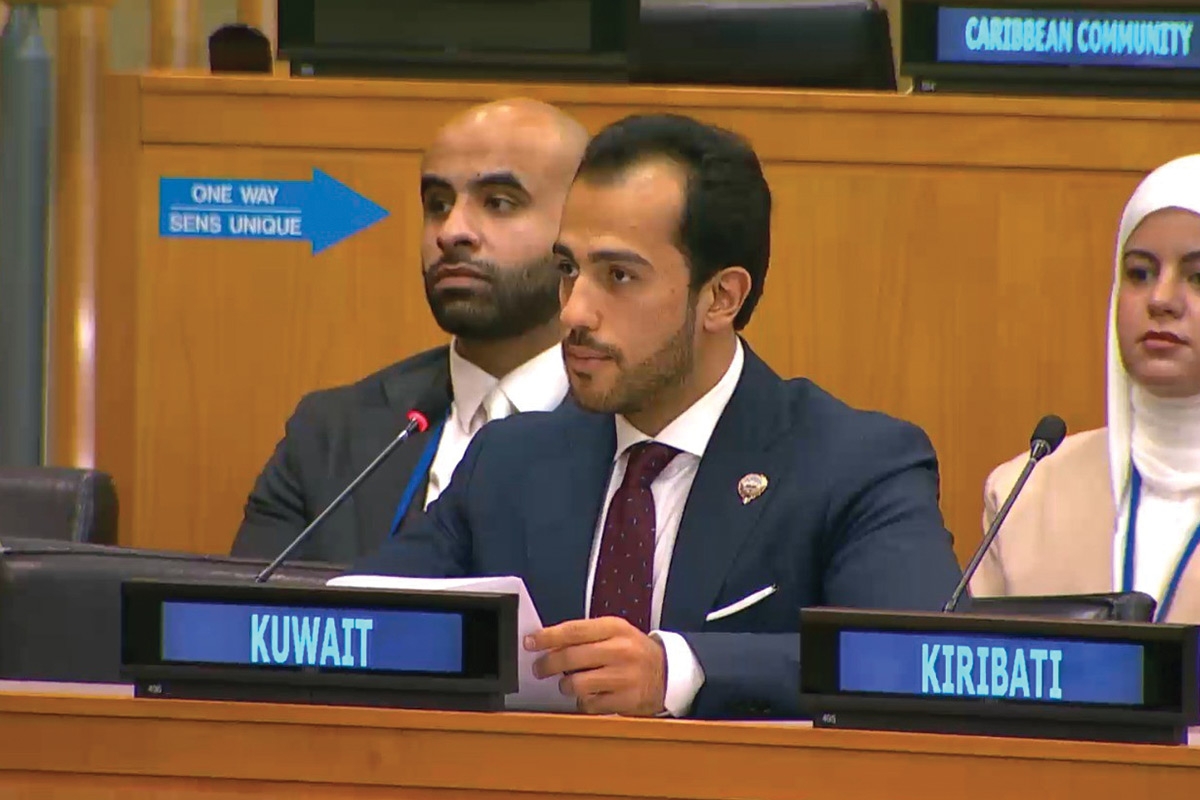
This came in Kuwait’s statement, delivered by Diplomatic Attaché Abdullah Bouskhar, during the general debate of the Economic and Financial Committee (Second Committee) of the United Nations General Assembly.
Bouskhar said that the 2030 Agenda for Sustainable Development is no longer a test of intentions, but a benchmark of the international community’s capacity to translate commitments into tangible impacts on people’s lives. He noted that the gap between what countries have pledged and what has been achieved on the ground remains wide and is widening in areas such as food security, decent work, clean energy, sustainable cities, and the building of resilient institutions.
He affirmed Kuwait’s continued translation of its commitment to the 2030 Agenda through the “Kuwait 2035” vision, which takes economic diversification, human capital development, and sound public financial management as fundamental pillars of national development.
He pointed out that the development path is inseparable from the requirements of security and stability, reiterating Kuwait’s strongest condemnation of Iranian attacks targeting its territory, in accordance with United Nations Security Council Resolution 2817 of 2026.
He condemned Iran’s closure of the Strait of Hormuz and its threats to freedom of navigation there, as well as the continued obstruction and disruption of navigation in the Bab al-Mandab Strait through its proxies in the region, given the repercussions for food and energy security, the rising cost of basic goods, and the hindrance to developing countries’ efforts to eradicate poverty and achieve the Sustainable Development Goals.
On the Palestinian issue, Bouskhar expressed Kuwait’s strongest condemnation of the systematic destruction policies carried out by the Israeli occupation in the occupied Palestinian territories, which have encompassed infrastructure, the environment, and the food system, alongside the imposition of a siege, the closure of humanitarian corridors, the obstruction of aid delivery, and the targeting of fields, warehouses, mills, and hospitals.
