Al-Badawi: Diversifying energy export routes and ensuring supply continuity strengthen Gulf system resilience
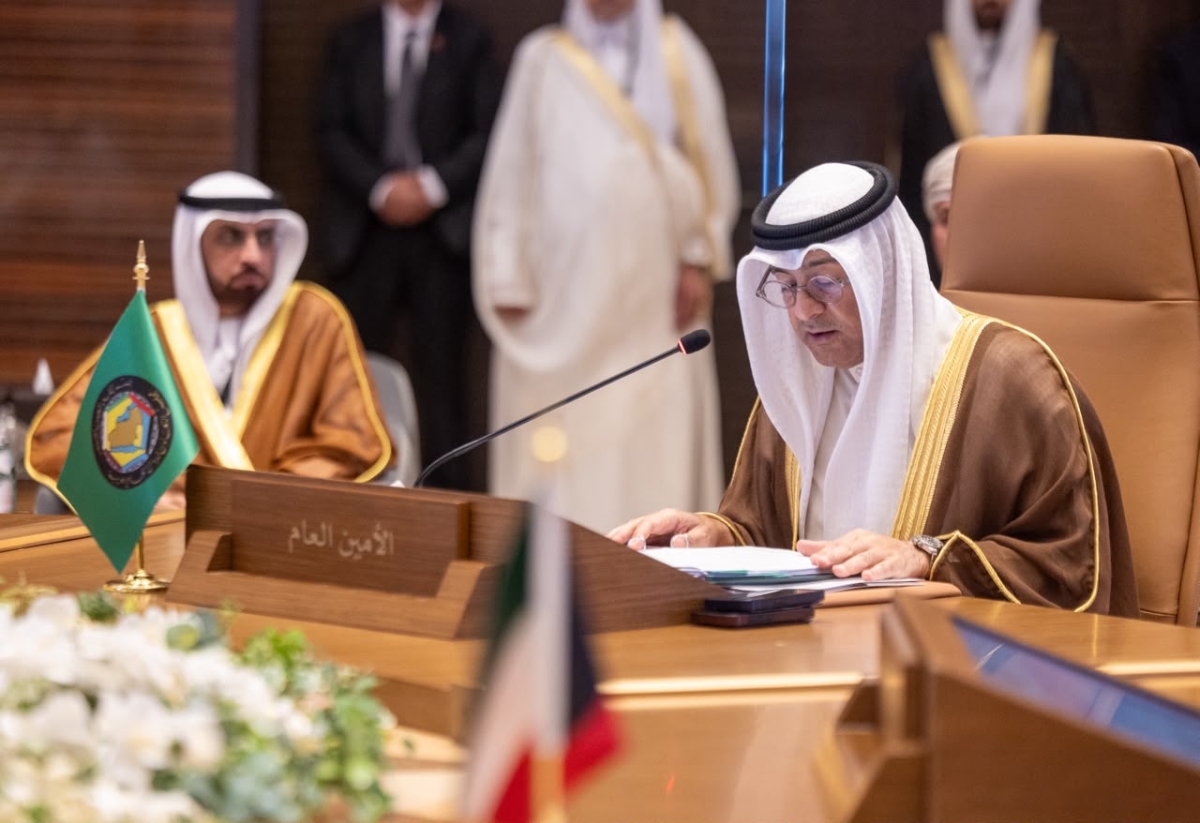
The GCC Secretary-General affirmed that energy security goes beyond production to ensure continuous supplies.
Translated by Qiyas from الجريدة — Original source
The Secretary-General of the Gulf Cooperation Council (GCC) States, Jassem Al-Bedaiwi, said on Monday that energy security has expanded beyond production capacity to include ensuring the delivery and continuity of supplies under all circumstances. He emphasized that GCC member states are working to diversify energy export routes and ensure the continuity of supply chains, thereby enhancing the resilience and readiness of the Gulf energy system to cope with rapid changes.
This statement came during Al-Bedaiwi’s address at the 37th meeting of the GCC Petroleum Cooperation Committee, held in Manama under the chairmanship of Bahrain’s Minister of Oil and Environment and Special Envoy for Climate Affairs, Dr. Mohammed bin Deneen. The meeting was attended by committee members from the GCC states, including Kuwait’s Oil Minister Tariq Al-Roumi, who headed the Kuwaiti delegation participating in the meeting.
The Secretary-General clarified that 2025 indicators reflect the prominent position of GCC states in global energy markets, with their crude oil reserves estimated at more than 518 billion barrels, while natural gas reserves exceed 44 trillion cubic meters. He noted that GCC crude oil production reached 16 million barrels per day, and marketed natural gas production amounted to approximately 461 billion cubic meters.
He affirmed that these indicators embody the strength of Gulf resources and capabilities, the efficiency of their management, and the associated responsibility to support energy security and market stability.
He pointed out that disruptions in certain energy transport routes and corridors underscore the importance of enhancing Gulf coordination to ensure supply reliability, alongside continuing to adopt a balanced and realistic approach to energy transition that maintains supply security and market stability, while promoting sustainability and investment in modern technologies.
He stressed the importance of monitoring international legislation and measures with cross-border impacts, studying their repercussions on the energy sector and GCC exports, and enhancing coordination and unifying Gulf positions on such matters to safeguard the interests of GCC states and their competitiveness in global energy markets.
