British Ambassador: Committed to Security and Defense Partnership with Kuwait
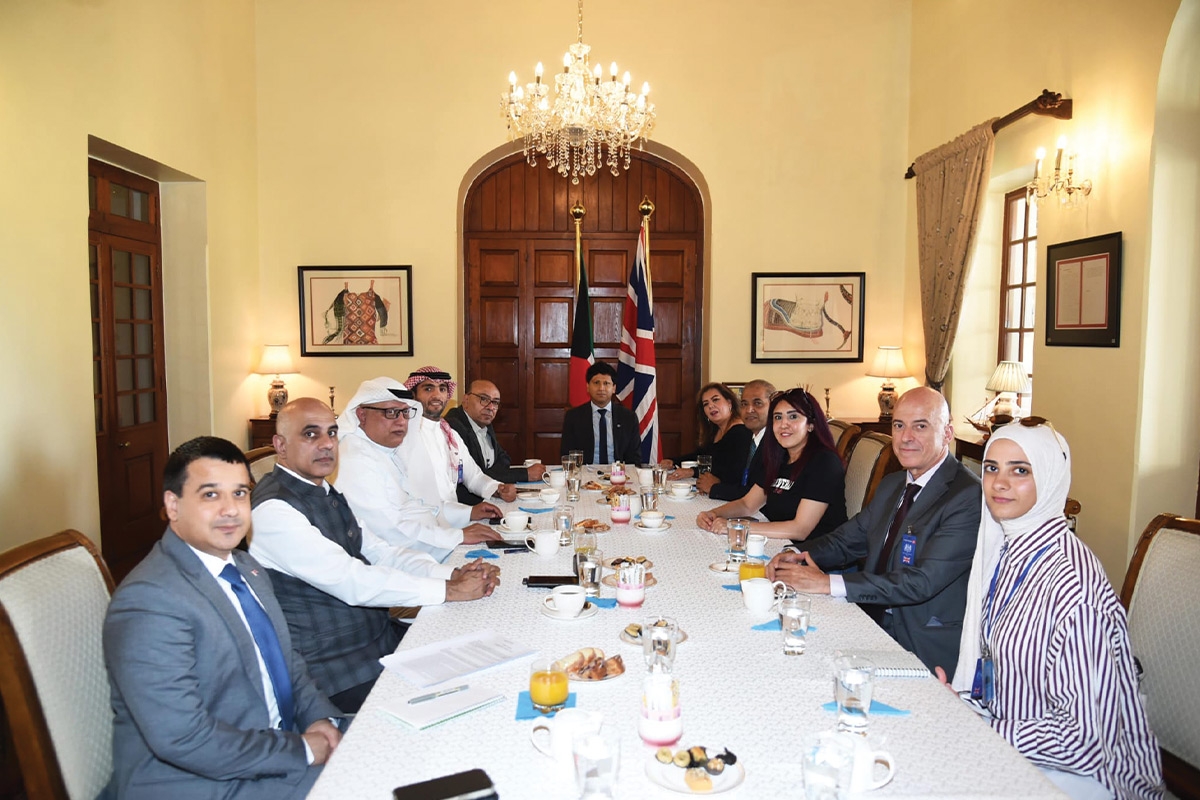
British Ambassador Qudsi Rashid affirmed the continuation of the strategic partnership with Kuwait in defense, economic, and educational fields, pointing to the deployment of defense systems and support for National Guard capabilities.
Translated by Qiyas from الجريدة — Original source
The British Ambassador to Kuwait, Qudsi Rashid, affirmed that “Kuwaiti-British relations represent a deep and enduring partnership based on trust, shared interests, and a long history of cooperation,” noting that his country has worked over the past year to strengthen this partnership in economic, security, defense, educational, and cultural fields.
During a press conference held at his residence, Rashid stated that one of the main priorities over the past year was deepening the economic partnership between the United Kingdom and Kuwait, expressing his pride in the progress made in this area.
He emphasized that the relationship between the two countries extends beyond economics, pointing to the continued strengthening of the “long-term security and defense partnership.”
Rashid said that Britain “stood by Kuwait during Iranian attacks and worked closely with Kuwaiti partners to support regional security and stability,” clarifying that following the Iranian attacks, the United Kingdom deployed the “Rapid Centurion” air defense system against drones in Kuwait to help protect British and Kuwaiti personnel and interests.
He added that Britain simultaneously provided additional support through ORCUS capabilities against unmanned aerial systems, and continued to exchange expertise, training, and operational experiences to enhance Kuwait’s readiness and capacity to confront evolving threats.
He noted that the “British Military Mission integrated into the Kuwaiti Armed Forces continued communication and training programs with Kuwaiti partners, including the National Guard,” viewing this as a reflection of the depth of the defense relationship between the two countries and their shared commitment to regional stability.
Regarding Britain’s commitment to Kuwait’s security and stability, Rashid said this commitment is reflected in a “broad and enduring partnership encompassing defense cooperation, military training, professional exchanges, strategic dialogue, and close diplomatic communication.”
He explained that recent examples include Britain’s support for Kuwait’s air defense capabilities through the provision of “Rapid Centurion,” along with air traffic control officers at the air defense operations center.
He added that the United Kingdom maintains a significant defense presence in the region, reflecting its long-term commitment to the security of its Gulf partners, noting that these activities contribute to enhancing capabilities, operational interoperability, and supporting regional stability.
He pointed out that the “British Military Mission has been a key part of defense cooperation between the two countries for over 30 years,” with personnel permanently stationed in Kuwait, and noted that it continues to evolve to support Kuwait’s defense priorities, working closely with the Kuwaiti Armed Forces to provide training, advice, and expertise across a wide range of defense capability areas.
He said there is significant potential to enhance cooperation in “artificial intelligence, cybersecurity, clean energy, advanced technology, and innovation, by combining British expertise with Kuwaiti ambition.”
On the other hand, Rashid affirmed Britain’s commitment to working with Kuwait, the Gulf Cooperation Council (GCC) countries, and the broader international community to protect freedom of navigation and secure international trade routes.
Regarding challenges related to the Strait of Hormuz, the Ambassador said that the United Kingdom views Kuwait as a “close strategic partner and long-standing friend,” reaffirming his country’s commitment to working closely with Kuwait and its regional partners to support maritime security, de-escalation, and freedom of navigation.
The British ambassador described education as “one of the strongest pillars of Kuwaiti-British relations,” estimating that approximately 14,000 Kuwaiti students are currently studying at British universities.
For his part, Rashid noted that British schools play an important role in the educational relationship between the two countries and contribute to building long-lasting human ties, pointing out that Kuwait hosted the first British school in the Gulf.
He said the electronic travel authorization system has been “widely welcomed” in Kuwait, reflecting the close bonds between the peoples of the two countries, and highlighted the continued strong demand among Kuwaitis to travel to the United Kingdom for tourism, business, education, and family visits.
