Iraq Free of Foreign Troops for the First Time in 23 Years
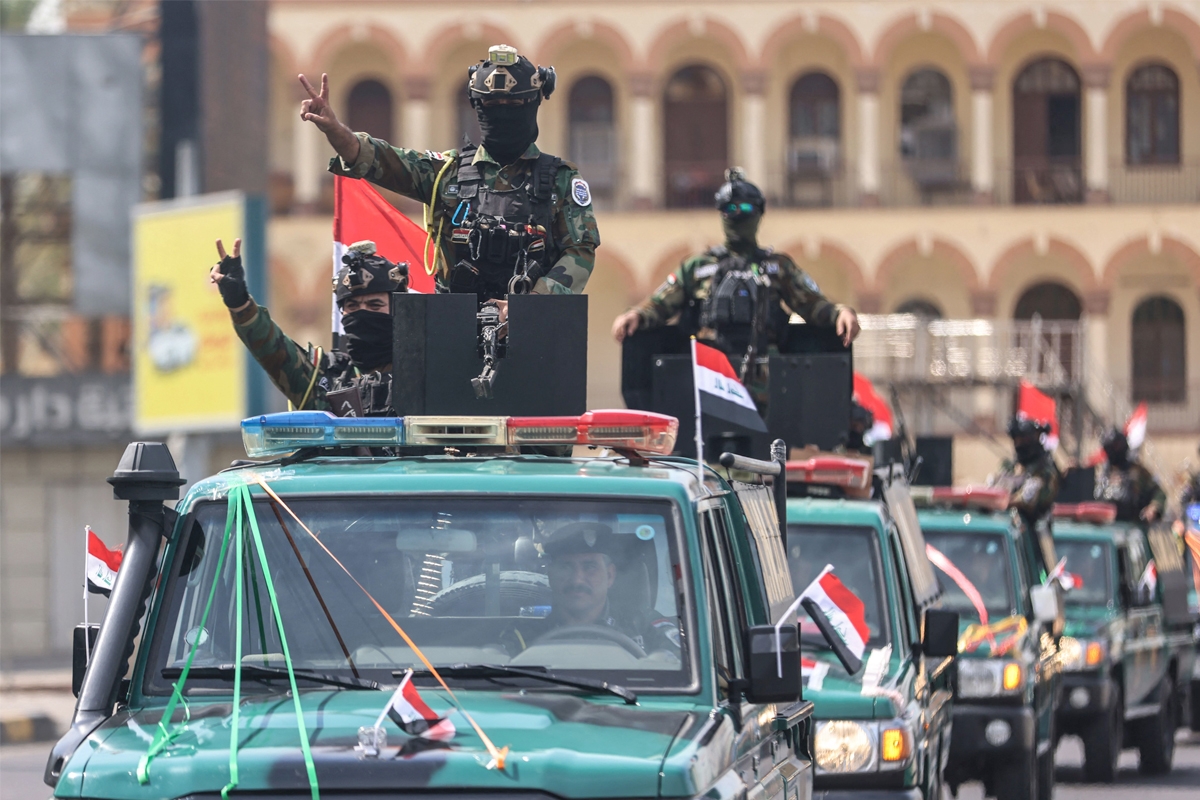
Official withdrawal of coalition forces from Iraq and conclusion of Operation Inherent Resolve against ISIS
Translated by Qiyas from الجريدة — Original source
After 23 years of US presence and 12 years of the International Coalition’s formation, the US Department of Defense (Pentagon), the International Coalition, and the Iraqi government officially announced today the conclusion of Operation Inherent Resolve against the Islamic State (ISIS), coinciding with the completion of the withdrawal from Erbil Air Base in the Kurdistan Region.
Pentagon spokesperson Sean Barnell said in a statement, “The organized withdrawal of coalition forces and equipment from Erbil Air Base, in line with the US-Iraq joint statement issued in September 2024, marks a successful conclusion and an important milestone in the success of a 12-year campaign to eliminate ISIS as an organized military threat in Iraq and the broader region, and a transition from a ‘wartime alliance’ mission to an Iraqi-led security effort supported by a stable and normalized bilateral security relationship.”
Barnell affirmed that Iraqi forces, including the Peshmerga and other forces in the Kurdistan Region, would take the lead in ongoing efforts to secure Iraq and counter ISIS remnants. He noted that the Pentagon would continue to provide specialized training and intelligence support to Iraqi security authorities and remain committed to counterterrorism. It would also continue working with Iraq and its partners to ensure the group cannot regroup from Iraqi territory.
For its part, the International Coalition stated there was no justification for the continued presence of armed groups amid the withdrawal of its forces from Iraq.
In a statement, the coalition said, “We have completed our mission and conducted the final withdrawal from Erbil. The relationship between coalition armies will now move to another stage of cooperation.”
Iraqi Prime Minister Ali al-Zaidi, speaking at the official ceremony marking “Sovereignty Day” in Baghdad, said, “A new phase has begun, characterized by Iraq’s sovereignty, the strength of its institutions, the readiness of its forces, the unity of its decision-making, and balanced partnerships with its friends.” He added, “Security cooperation will remain an open channel with friends from the International Coalition and will be more effective and focused.”
Al-Zaidi considered that “cooperation between friendly forces and peoples has yielded victory over one of the darkest chapters of extremism and brutality in history.” He pointed out that the end of the coalition’s mission does not mean the end of the fight against terrorism, but rather Iraq’s transition to a phase where it assumes full responsibility for its own security and stability. This transition reflects the transfer of joint operations tasks to the Office of the Commander-in-Chief of the Armed Forces, establishing an institutional framework for managing this effort under the authority and supreme leadership of the state.
In his speech at the ceremony, attended by the coalition forces commander and leaders of various military branches and security formations, al-Zaidi renewed his commitment to restricting the weapons of militias, stating, “No weapons outside the umbrella of the law, and no force outside state institutions, in accordance with the Constitution, as advocated by our esteemed religious authority, and as desired by our people.”
For his part, President Nizar al-Amedi emphasized that the decision on war and peace is an exclusive right of the state, with no other party involved, considering that Iraq has entered a new phase in its foreign relations based on full sovereignty.
Amedi affirmed that “sovereignty is not complete without a strong state, with entrenched institutions, the rule of law prevailing, monopolizing sovereign decision-making, and exercising its constitutional responsibilities across its entire territory.” He explained that “addressing weapons and placing them under state control, and subjecting all forms of force to the provisions of the Constitution and the law, constitute a fundamental pillar in safeguarding sovereignty, protecting stability, and consolidating the state’s authority.”
Kurdish leader Masoud Barzani reassured the people of Kurdistan that tight security coordination with the federal government is in place to address any risks and threats that may arise following the US withdrawal, noting that with the coalition’s mission now concluded, the responsibility of Baghdad and Erbil in the future is to conclude bilateral agreements with coalition countries in light of available conditions and in a manner that serves the preservation of stability.
The Kurdish leader said, “Many, out of concern, and others out of jealousy and hatred or based on inaccurate interpretations, believe that the coalition’s departure will leave the region vulnerable to threats or even disappearance. Therefore, I reassure our dear people that there is very good coordination with the federal government to confront any type of threat or risk, whether under the name ‘ISIS’ or any other designation.”
Sadr wrote on the X platform, “We hope the United States will reciprocate with diplomatic engagement, refrain from condescension toward Iraq, and provide compensation for all damages caused by its occupation of Iraq. Everyone should file legal complaints regarding this.”
Sadr also warned the United States and neighboring countries against the dangers of interfering in Iraqi affairs, noting that such interference could lead to the severance of relations and reciprocal actions, particularly in political and ideological matters, and could drag Iraq into regional conflicts.
