Gulf Oil Supplies Approaching Pre-War Levels
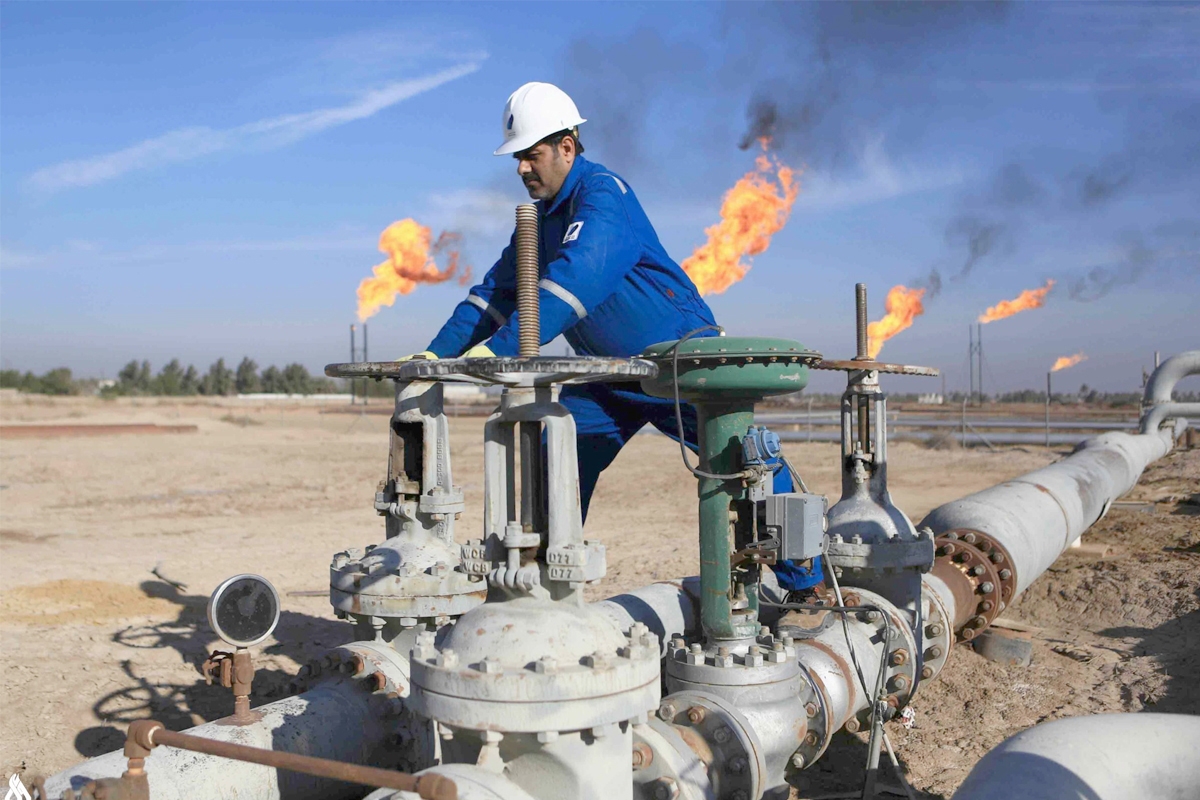
Two separate reports from U.S. investment banks JPMorgan Chase and Goldman Sachs Group indicate that crude oil flows from the Middle East have returned to levels close to those before the outbreak of the U.S.-Israeli war against Iran, despite ongoing risks threatening maritime shipping in the Gulf.
JPMorgan Chase analysts said in a client note yesterday: “The arteries of Middle East crude oil exports are back in operation. This is a remarkable recovery for a region that remains in a state of war.”
Bloomberg News cited the JPMorgan report, stating that Middle East crude oil shipments have rebounded to 17.5 million barrels per day, or 98 percent of pre-war levels, while exports of refined products such as diesel and gasoline stood at 3 million barrels per day, equivalent to 58 percent of pre-war levels. Overall, Middle Eastern export figures recently equaled 89 percent of last year’s levels.
For its part, Goldman Sachs reported that Gulf oil exports, including what are known as “dark flows” conducted covertly, reached 23.3 million barrels per day last week, a figure very close to 2025 levels.
Goldman Sachs analysts, including Julia Giestko Gregsby, wrote in a note today: “The global oil market experienced near-balance during September.”
The Strait of Hormuz, which connects Gulf oil-producing regions to global markets, has seen months of attacks on navigation amid Tehran’s efforts to assert control over this vital waterway, through which roughly one-fifth of global energy supplies passed before the war. The United States rejects this claim, having imposed sanctions on Iranian ports while simultaneously assisting other countries’ vessels in transiting the strait.
Goldman Sachs experts noted in the report: “We observe a divergence between declining Iranian exports and rising exports from other Gulf states. Saudi export figures doubled in September, surpassing their 2025 average.”
U.S. officials stated that large volumes of oil pass through the Strait of Hormuz, although estimates from other parties were more conservative. Earlier this month, U.S. Treasury Secretary Scott Bessent said that at times, 17 million barrels of oil pass through the strait. Meanwhile, Patrick Pouyanné, CEO of French energy giant TotalEnergies, estimated that crude oil and product supplies transiting the Strait of Hormuz amount to approximately 10 million barrels per day.
Despite the increase in shipments, global benchmark Brent crude oil is on track to record a monthly rise for the third consecutive month in September, with the price of crude increasing by approximately 14 percent over the course of the month.
The Kuwaiti Oil Basket price fell by $1.12 to $105.39 per barrel in Tuesday trading, down from $106.51 in last Friday’s trading, according to the Kuwait Petroleum Corporation.
In global markets, oil prices rose on Wednesday morning after U.S. President Donald Trump denied readiness to ease sanctions on Iran. This occurred as Qatar continued diplomatic efforts in hopes of achieving a breakthrough, following a price decline in the previous session due to the recovery of Middle Eastern supplies.
Brent crude is on track to post monthly gains of around 14 percent, its largest rise since July, while US crude is set to climb 4 percent after surpassing $106 per barrel for the first time since May, according to Reuters.
The spread between the two benchmark crudes also widened this month, reaching its widest level in four months, as traders monitored potential US plans to restrict diesel exports, which could lead to a surplus in the domestic market and prompt US refiners to cut crude processing.
Trump is considering allowing the sale of red-dyed diesel instead of imposing an export ban, aiming to ease some price pressure on consumers as the midterm elections in November approach.
Sol Kafonek, head of energy research at MSCI Markets, said, “With more evidence emerging of recovering flows through the Strait of Hormuz, hopes are rising for alternatives to restricting US diesel exports. Additionally, the absence of any tangible Iranian escalation over the past 24 hours has led to a slight decline in prices.”
Trump denied reports by Axios and CNN, which cited unnamed US officials, that he was prepared to ease sanctions on Iran and release frozen funds in exchange for “tangible” steps from Tehran regarding its nuclear program. He wrote on his Truth Social platform: “This is not true. I offered them nothing.”
Crude oil exports from Middle Eastern producers rebounded in September, reaching 16.328 million barrels per day, the highest level since the start of the US-Israeli war with Iran in late February.
Market sources, citing data from the American Petroleum Institute, reported that US crude oil and gasoline inventories rose, while distillate inventories fell last week.
Russia extended its diesel export ban to fuel producers until the end of October, the government announced on Wednesday, adding to supply pressures in a global market facing shortages and sharp price increases.
The move comes as US diesel prices hit record highs above $6.50 per gallon, with the wars in Iran and Ukraine constraining fuel supplies.
This means the Russian export ban extension reduces a key supply source at a time when fuel markets are under pressure from disruptions in the Middle East and Ukraine, keeping the risk of higher diesel prices alive through October.
China’s oil demand recovery is losing momentum amid the ongoing Middle East war and rising crude prices, prompting two research institutions to lower their forecasts for China’s imports in the coming months.
Last year, China imported 11.6 million barrels per day while building strategic reserves; since then, the average has fallen to just under 10 million barrels per day, despite expectations of a rise by year-end.
Samuel Kong, senior oil analyst at FGE Nexant ECA, said that rising price premiums and shipping costs are squeezing refinery margins and limiting crude import growth, according to Bloomberg.
The US administration has decided to release new quantities from the Strategic Petroleum Reserve and urged European countries to follow suit, as the Trump administration seeks to curb rising fuel prices less than two months before the US midterm congressional elections.
According to a statement issued by the U.S. Department of Energy today, the United States will release up to 40 million barrels from the Strategic Petroleum Reserve, marking the latest move by the U.S., which has already released 172 million barrels from the reserve, as part of a coordinated international effort to counter rising oil prices since the outbreak of the U.S.-Israeli war against Iran in late February.
For his part, U.S. Energy Secretary Chris Wright criticized several European countries, stating that they have fallen behind the United States and Japan in contributing to the International Energy Agency-led efforts to contain the recent energy shock.
Wright said, “Many European member countries (of the IEA) have released minimal amounts of crude oil and petroleum products compared to their commitments. We urge all member countries to fulfill their obligations.”
Bloomberg noted that oil, gasoline, diesel, and jet fuel prices have surged sharply since the war with Iran began on February 28, intensifying pressure on President Trump to address rising fuel costs ahead of the midterm congressional elections in November, which will determine which party controls the House of Representatives. Gasoline prices remain above $4 per gallon, while diesel has risen to more than $6 per gallon.
At the same time, the Energy Secretary hinted that the U.S. administration is ruling out any new drawdowns from the reserves.
The Strategic Petroleum Reserve is expected to fall to its lowest level since 1982 once the latest round of releases is completed. U.S. federal law prohibits drawdowns from the reserve outside of emergency situations if stocks fall below 252.4 million barrels, while a 1981 Government Accountability Office report recommended against drawdowns if reserves drop below 250 million barrels.
