"Hormuz Shuttle"... Has Iran Lost Its Card on the Strait?
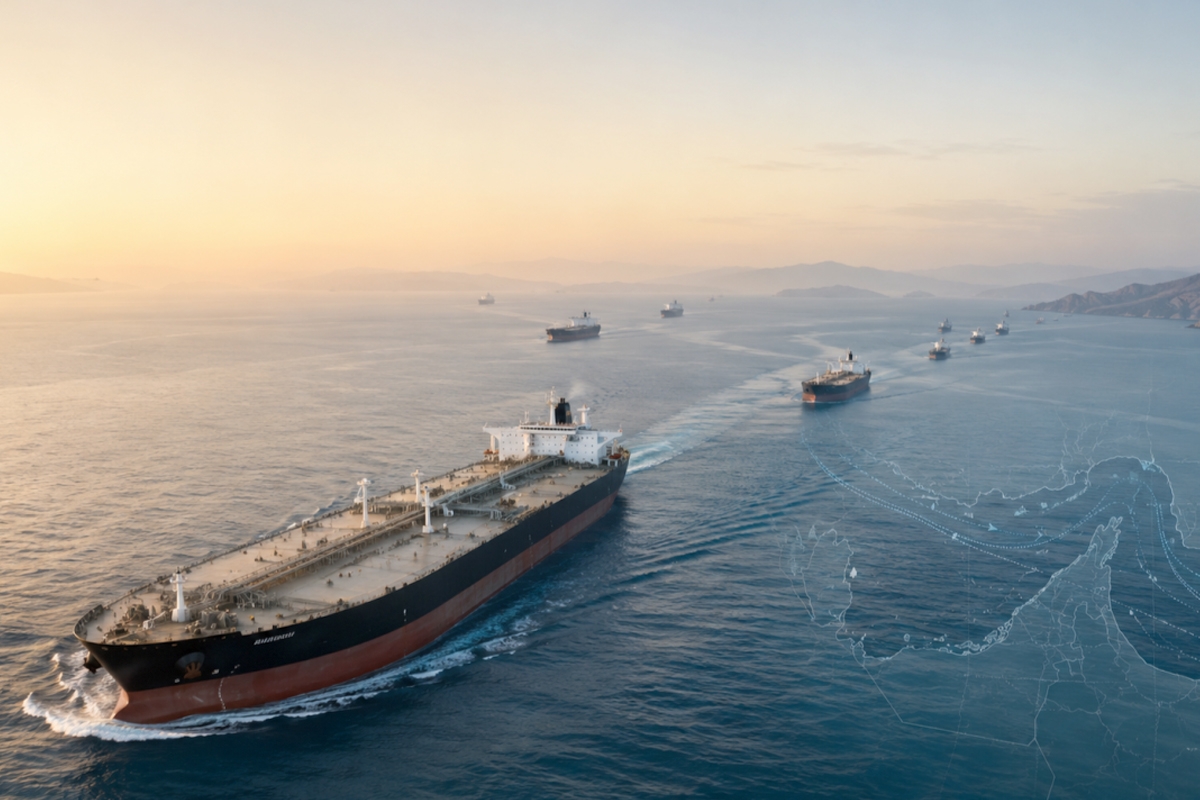
The development of the Hormuz Shuttle model by Saudi Arabia, the UAE, and Kuwait boosts exports and reduces reliance on Iran.
Translated by Qiyas from الجريدة — Original source
Recent developments in oil shipping movements in the Gulf have shown a noticeable decline in Iran’s actual ability to influence oil flows through the Strait of Hormuz, after national oil companies in Saudi Arabia, the UAE, and Kuwait successfully developed a new operational model for crude transport that has allowed exports to continue at a pace close to normal levels.
Alexander Stahl, an analyst specializing in energy markets and maritime shipping, believes that Middle East oil exports have returned to about 94 percent of their usual levels, despite regional security tensions and attempts to disrupt navigation in the strait, reflecting the ability of Gulf producers to adapt to growing risks.
According to Stahl, ADNOC began early on to build an operational model to bypass risks associated with the strait by allocating a fleet of very large crude carriers (VLCCs) to transport crude from inside the Gulf to the Gulf of Oman, where cargo transfers between ships take place before the tankers return to the Gulf to repeat the mission.
Stahl describes this mechanism as the “Hormuz Shuttle,” which was developed since May last year. Both Aramco and Kuwait have adopted this model.
As operations expanded, the number of tankers operating under this model rose to more than 100, most of which use a route adjacent to the Omani coast rather than passing through channels closer to the Iranian coast.
Stahl estimates the cost of removing oil from the Gulf through this system at about $28 to $30 per barrel, meaning that a VLCC carrying two million barrels could generate revenues exceeding $50 million on a trip lasting between 10 and 15 days.
These exceptional revenues explain the significant rise in the value of existing VLCCs in the market compared to the cost of building new tankers, as players prefer to capitalize on immediate demand rather than wait for new ships to be delivered years later.
The analysis indicates that Saudi Arabia has shifted a large portion of its exports toward Red Sea ports to reduce reliance on the Arabian Gulf. However, changing conditions in the Bab al-Mandab region have complicated this route.
This prompted Aramco to gradually return to relying on the Ras Tanura port and Gulf exports, benefiting from its ownership of a large fleet of tankers under the Bahri company, which has reduced insurance burdens and risk costs compared to competitors.
According to Stahl, Bahri deployed more than 20 tankers in the region in September, enabling Saudi Arabia to increase its participation in “Hormuz Shuttle” operations and strengthen its ability to maintain export levels.
The success of the Gulf model was not dependent solely on oil companies; Stahl believes the US military played a pivotal role in facilitating tanker passage through the strait.
Ships wishing to transit coordinate with US military-affiliated centers to determine transit routes and appropriate timings, while US naval and air assets focus on securing the southern channel near the Omani coast.
This approach, according to the analysis, has ensured transit movements without the need for direct escort of each individual tanker, thereby improving operational efficiency and reducing operational risks.
On the other hand, Stahl sees one of the most significant recent shifts as the increasing difficulties Iran faces in exporting its oil.
He attributes this to the limited number of tankers willing to operate in Iranian ports amid rising risks and sanctions, which has led to a decline in loading activity at some major terminals, according to his assessment.
The irony has become apparent: while Gulf states have succeeded in developing mechanisms to maintain oil flows, Iran itself is now facing greater challenges in marketing its production. For markets, the key message is that the Gulf states’ capacity to adapt to geopolitical risks appears greater than in the past, which may limit the impact of any future threats on global energy supplies and reduce concerns about a complete halt in exports.
