128 Countries Support Kuwaiti Initiative to Adopt September 7 as World Duchenne Day
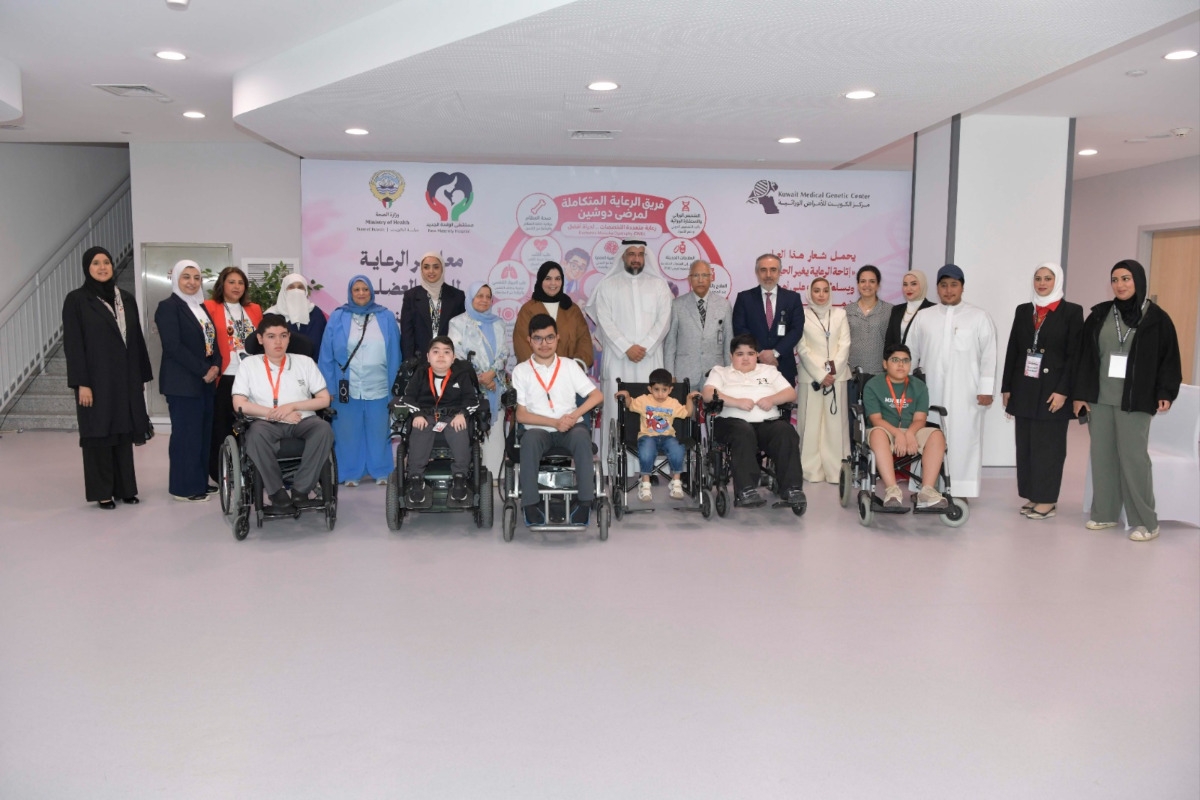
Deputy Minister of Health for Public Health Affairs, Dr. Munder Al-Husawi, confirmed that Duchenne muscular dystrophy is a rare genetic disorder affecting the muscles, causing weakness, and impacting approximately one in every 5,000 newborns. It is usually detected during the child’s early years and requires continuous medical care.
Speaking on behalf of Minister of Health Dr. Ahmed Al-Awadhi at the awareness health forum “Care Changes Life,” Dr. Al-Husawi stated that Kuwait has given the disease significant attention through a comprehensive package of preventive and therapeutic measures. These range from laboratory, genetic, and diagnostic tests and early detection to providing the latest genetic treatments, alongside continuous medical, social, and psychological care for patients.
He noted that Kuwait’s interest in the disease extends beyond the local level to the international arena. Kuwait submitted a draft resolution to the 78th session of the UN General Assembly to establish a World Duchenne Awareness Day. The initiative received approval, support, and endorsement from 128 countries, leading to the designation of September 7 as the annual World Duchenne Day, a Kuwaiti initiative.
Dr. Al-Husawi emphasized that designating a world day for the disease does not mean efforts end with the occasion. Rather, it aims to place the disease among the priorities of global health organizations and enhance awareness throughout the year. He pointed out that while the journey of a child with the disease is long and challenging, scientific progress has opened up diagnostic and therapeutic opportunities that were previously unavailable.
For her part, Dr. Laila Bastaki, Head of the Kuwait Center for Chronic Diseases, revealed that previous estimates indicated around 5 to 7 new cases of Duchenne muscular dystrophy annually. However, genetic screening efforts, in collaboration between the Genetic Diseases Center, Kuwait hospitals, and the fertility assistance unit, have helped reduce this number to approximately one case per year through pre-implantation genetic testing of fertilized eggs.
In a press statement, she clarified that in about 60% of cases, the mother is typically a carrier of the disease, while approximately 30% of cases result from a new mutation.
She noted that the cost of currently available genetic treatment ranges between 900,000 and one million dinars per child. She explained that the treatment does not completely eradicate the disease but alleviates its complications and improves quality of life.
Dr. Bastaki mentioned that around eight children have received genetic treatment so far, with two more on the waiting list. Additionally, about 22 children have received another type of treatment based on modifying the patient’s existing gene, which costs approximately 200,000 dinars annually.
She affirmed that these treatments have brought about a qualitative change in patients’ lives. For some, hospital admissions due to respiratory or cardiac complications have decreased from seven or eight times a year. Furthermore, their ability to lead lives closer to normal has improved, with one young man currently pursuing higher education.
She highlighted that the recent integration of the Genetic Diseases Center into the maternity hospital represents a crucial step toward more comprehensive and continuous care. She stressed that genetic diseases require a unified health system operating as an integrated team from the early childhood stages when symptoms first appear.
