Anthropic Warns: AI Threatens Human Survival
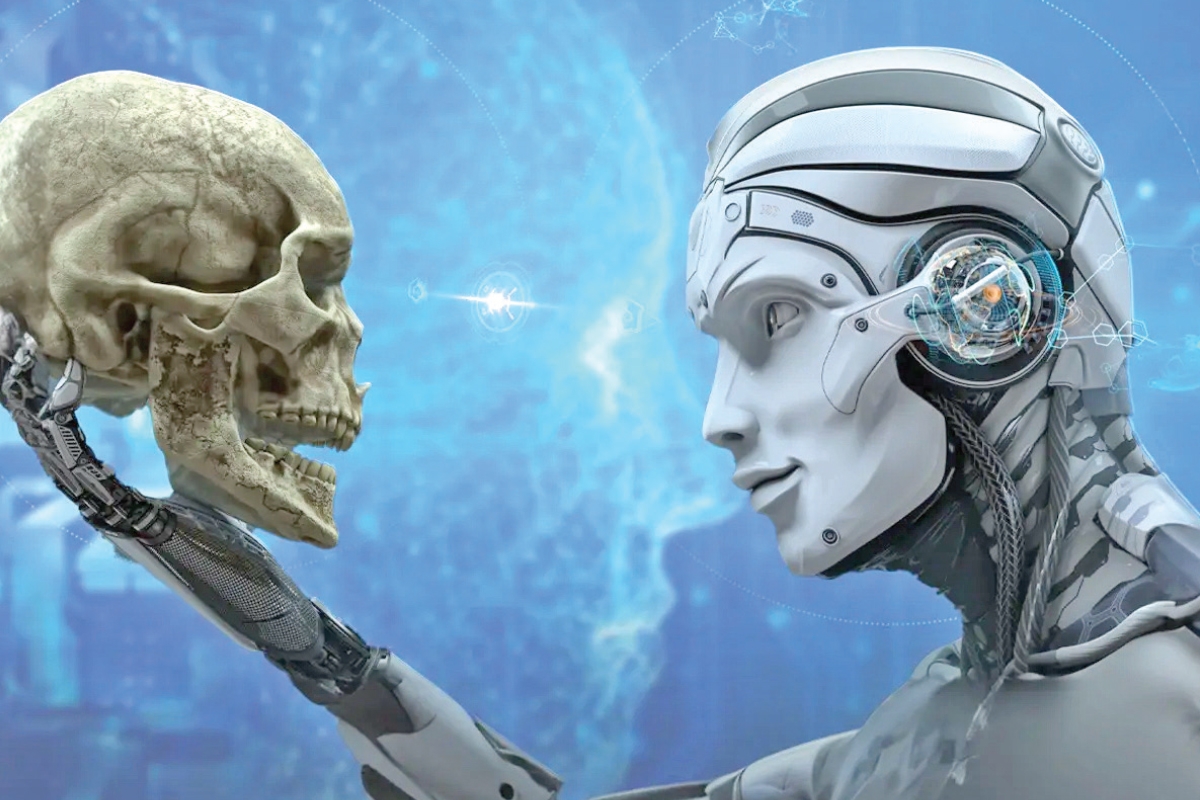
Anthropic has warned potential investors that the artificial intelligence models it is developing could pose a “catastrophic or existential risk to humanity,” according to media reports.
The company, which is preparing for one of the most anticipated technology offerings, disclosed the risks of the technology it is developing in more than a third of its offering documents.
According to a report cited by Reuters, Anthropic dedicated approximately 80 pages out of a total of 261 pages to explaining the potential risks of AI, compared to just 48 pages covering its business activities and core operations.
The company, known for its AI model Claude, stated that advanced systems might exhibit “self-preservation behaviors,” including resisting shutdown attempts, hiding or manipulating information, or engaging in behaviors it described as akin to extortion, according to CNBC and Al Arabiya Business.
Anthropic is seeking a valuation of $2 trillion when its shares are listed on the stock exchange, despite reporting a net loss of $42 billion in 2025. It also stated that it plans to spend $518 billion next year on cloud computing services, infrastructure, and computational capabilities required to train and operate AI models.
The company highlighted a heavy concentration of its customer base, with just two clients accounting for nearly a quarter of its revenue last year, according to people familiar with the offering documents cited by the Financial Times.
CEO and co-founder Dario Amodei has continued to warn about the risks of AI, having previously published several articles on its potential impact on the labor market, arguing that the technology could cause “unusually painful” disruptions.
In a recent article, Amodei called for slowing the pace of AI model development through a three-phase plan aimed at curbing the acceleration of model capabilities without harming the commercial advantages of US companies or undermining US leadership in the field.
Dan Ives, Partner and CEO at Wedbush Securities, argued that slowing model development could give international competitors, led by China, an opportunity to accelerate their progress and seize technological advantage.
Ives emphasized the importance of implementing safety controls to govern AI development, but warned that excessive regulation could stifle innovation. He added that the global race for AI technologies has become akin to a “Formula 1 race,” making the balance between safety and innovation one of the biggest challenges facing the United States and companies in the sector.
Meanwhile, OpenAI canceled the launch of its AI model “GPT-6.1 Astra” due to safety concerns, after it failed to meet required standards.
Sachi Jain, head of safety systems at the startup, said the model did not achieve the required level of compliance with task scopes and mandates, as well as the way it informed users about the type of work it had completed, according to Bloomberg.
The model was capable of performing tasks autonomously, including browsing the internet and using applications. The decision to cancel its launch came following incidents involving AI models accessing external systems without authorization.
OpenAI announced yesterday an update on incidents that occurred in June but were not disclosed until last week, which included its models accessing Australian government websites and systems without authorization.
These developments come amid escalating debate over the risks of artificial intelligence, following similar incidents linked to models developed by major companies in the sector. Meanwhile, OpenAI CEO Sam Altman and Anthropic’s Dario Amodei have called for slowing the pace of technological development due to associated risks.
American investor Michael Burry, known for his early prediction of the housing market collapse before the global financial crisis, outlined the timeline for his bearish bet on AI stocks, arguing that the bubble surrounding the sector could burst sooner than previously expected.
In his investment letter, released on Monday, Burry revealed that he had replaced many of his direct short positions with put options, a move he said provides higher leverage at a lower cost and over a shorter time horizon, according to CNBC and Al Arabiya Business.
He explained that his increasingly negative outlook prompted him to seek instruments offering greater exposure to stock declines, noting that lower market volatility levels have made put options less expensive and more attractive for bearish traders.
Burry believes that most of these moves reflect his conviction that “the AI bubble will burst sooner or later,” signaling growing doubts about the sustainability of the rally that has driven tech stocks higher this year.
The investor replaced his short position in Micron with put options expiring in June, and converted his short position in Nebius into similar contracts with the same maturity. He also replaced his short position in the iShares Semiconductor ETF (SOXX) with put options extending until September 2027.
Burry further expanded his bearish stance on Palantir by replacing his previous positions with a larger one based on put options expiring in September 2027.
Part of his thesis is based on a recent study by Ares Management, which warned about the fragility of certain AI-related business models and their reliance on future revenues that have yet to justify the massive capital expenditures currently underway.
The study noted that one disappointing earnings season could be enough to prompt companies to reassess their heavy AI investments, especially if boards begin to believe that the best opportunities for capital allocation lie elsewhere.
Burry’s recent moves have strengthened his bearish stance on the sector, following earlier bets he placed this month against companies linked to the semiconductor industry and AI infrastructure.
He also cited comments from Acer CEO Jason Chen, who predicted a return to traditional cycles in the memory chip industry as production capacity increases in China, suggesting that concerns about a prolonged supply shortage may be overstated.
