Fitch: Gulf stock exchanges gain increasing importance as capital raising channels
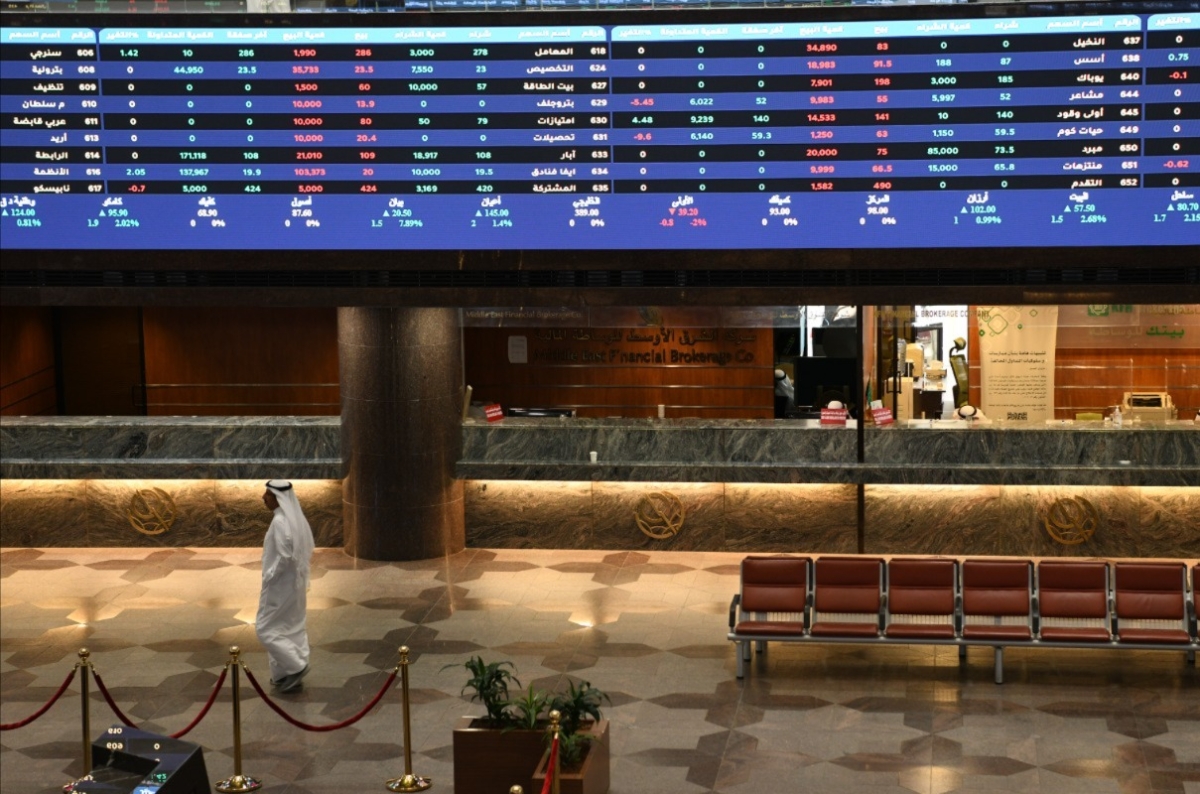
Fitch Agency points to the growth of Gulf financial markets with a focus on Saudi Arabia and local debt instruments
Translated by Qiyas from الجريدة — Original source
Fitch Ratings stated that Gulf stock markets are gaining increasing importance as channels for raising capital, alongside bank financing, by expanding issuers’ access to capital, supporting longer funding tenors, and improving pricing transparency.
In a report, Fitch added that market development remains uneven across Gulf countries, given high levels of concentration, limited product diversity, and lower liquidity compared to many major advanced and emerging markets, as well as fragmented market structures.
It noted that the combined market capitalization of Gulf equity markets reached approximately $4 trillion in September 2026, while the volume of outstanding debt instruments in Gulf capital markets stood at around $1.2 trillion by the end of the first half of the current year, with sukuk accounting for 42% of that total.
It clarified that the Saudi stock market remained the largest in the region in September 2026, holding about 63% of the total market capitalization of Gulf equity markets, followed by the Abu Dhabi Securities Exchange with an 18% share, and then the Dubai Financial Market with approximately 7%.
Fitch reported that it rates 24 listed entities in the Saudi market, representing about 84% of its market capitalization as of August 2026, noting that all these entities hold investment-grade ratings, with 96% of them having a stable outlook.
It explained that Saudi Aramco accounts for about 65% of the market capitalization of the Saudi market as of August 2026, indicating high levels of concentration in the region’s markets, while five entities represent about 60% of the market capitalization of the Abu Dhabi market.
It mentioned that the Saudi market also has a more developed local-currency debt market compared to most other Gulf markets, where local-currency debt markets remain nascent with limited issuances so far.
It added that sovereign sukuk issuances denominated in riyals reflect the Saudi government’s efforts to develop a local yield curve, improve market liquidity, and reduce reliance on foreign-currency financing, noting that all listed riyal-denominated debt instruments are structured as sukuk to attract Islamic banks, which are among the key investors.
Fitch predicted that the inclusion of Saudi government riyal-denominated sukuk in the J.P. Morgan Emerging Markets Bond Index starting in 2027 would help attract more foreign investment.
It pointed out that the share of foreign investors in Saudi sovereign debt issuances in the primary market rose to 15% during the first half of 2026, compared to 8% in the first quarter and 12% during 2025.
In the equity market, foreign ownership of free-float shares in the main Saudi market rose to 12.7% by the end of August 2026, compared to 12.4% at the end of 2025, while Fitch said that Saudi Arabia’s cancellation of the Qualified Foreign Investor framework from February 2026 would broaden the market’s participation base.
At the level of Gulf debt markets, Fitch clarified that most Gulf equities are listed in local markets, while Gulf debt issuances, particularly sukuk and foreign-currency bonds, are concentrated in overseas markets.
It showed that the London Stock Exchange hosts listings of more than half of global dollar-denominated sukuk by the end of the first half of 2026, with 95% of them coming from the Middle East, primarily from Gulf Cooperation Council countries.
In the UAE, Fitch noted that the Abu Dhabi and Dubai markets focus primarily on equities, while debt instrument listings are concentrated on Nasdaq Dubai.
It added that Nasdaq Dubai is among the leading markets for the listing of foreign-currency-denominated sukuk, accounting for more than 28% of outstanding global sukuk by the end of the first half of 2026. Total listed debt instruments on the exchange exceeded $140 billion, with sukuk representing approximately 70% of that total.
Fitch noted that the development of securities markets constitutes an important part of the Gulf Cooperation Council (GCC) governments’ plans to diversify their economies, deepen local capital markets, increase private sector participation, and broaden access for foreign investors. However, the region’s corporate financing culture, which still leans heavily toward bank financing, limits the pace of deepening local debt markets.
