Saudi Arabia Resumes Oil Exports via East-West Pipeline
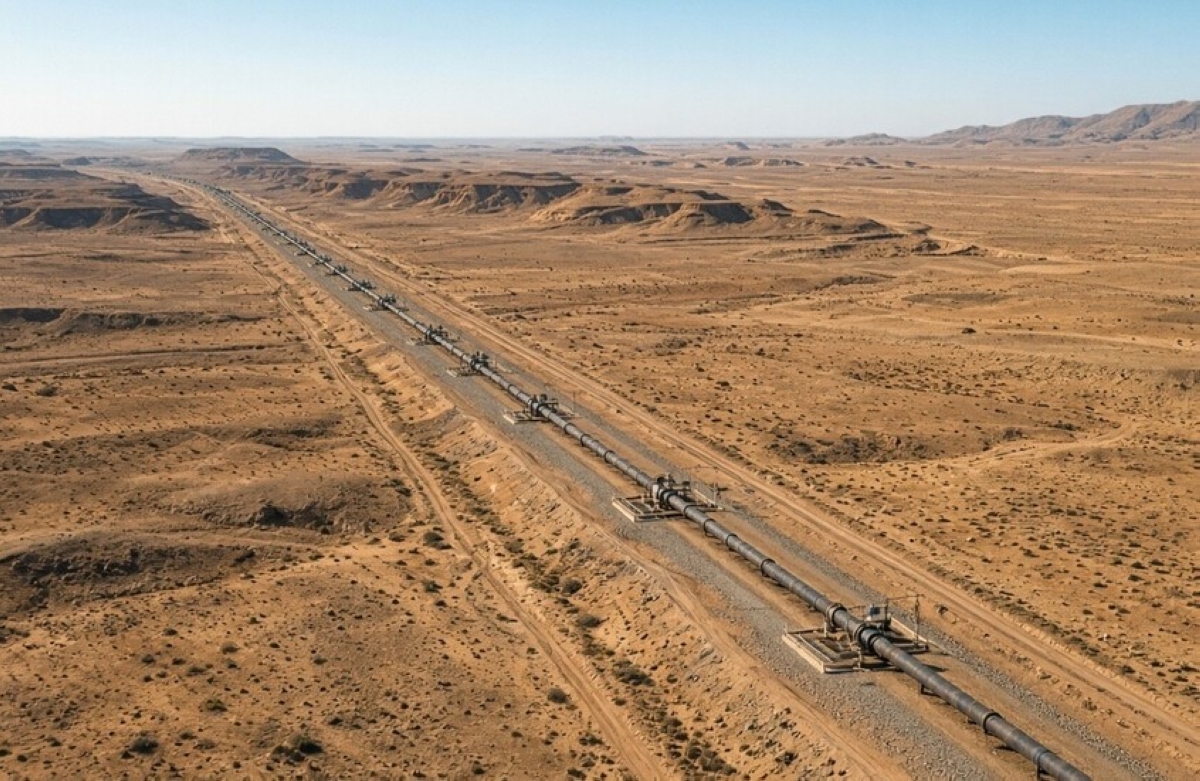
Saudi Arabia has resumed oil exports through its main pipeline stretching from the eastern part of the kingdom to the west. Saudi Aramco conducted tests on the East-West pipeline last week and raised pressure levels within it to resume tangible oil flows over the weekend, according to sources familiar with the matter who requested anonymity due to the sensitive nature of the information.
The resumption of operations on the pipeline restores to the kingdom the ability to use an alternative export route it relied on during the period of war with Iran, despite an increase in shipments passing through the Strait of Hormuz this month. It is also expected to ease pressure on buyers who have demanded additional supplies, after some customers in Europe were informed they would not receive any crude volumes next month under long-term contracts.
Traders in energy markets will monitor the volume of oil Saudi Arabia continues to export through the Strait of Hormuz after the pipeline returns to its full operational capacity.
A source familiar with the matter indicated earlier this month that a full return to operations could take about six weeks. The export route through the Arabian Gulf remains fraught with risks as some ships face sporadic attacks with the Iranian war approaching its seventh month.
Saudi Arabia had halted operations on the East-West pipeline on September 10.
The kingdom has increasingly relied on exports through the Strait of Hormuz to raise total oil exports to more than 5 million barrels per day in September, the highest level since the outbreak of the war, with most shipments heading to Asian markets.
The pipeline has a capacity of approximately 7 million barrels per day, of which about 2 million barrels per day typically goes to refineries on the kingdom’s western coast, while the remaining volumes are available for external export. During the period of war with Iran, these supplies served as a vital lifeline for global markets and helped curb sharp spikes in oil prices.
In markets, Brent crude traded in London above $107 per barrel on Monday, supported by declining hopes of reaching an agreement between the United States and Iran to end the conflict in the Middle East.
Amin Nasser, CEO of Saudi Aramco, confirmed last week that the company possesses operational flexibility and logistical capabilities enabling it to fulfill its commitments to customers even amid geopolitical disruptions.
In an interview with Nikkei Asia, Nasser added that the East-West pipeline project is not a single line but consists of a network of lines that provide significant flexibility in transporting crude and petroleum products, emphasizing that the company is capable of withstanding and managing severe disruptions thanks to its advanced infrastructure and operational expertise.
He clarified that Aramco is also evaluating opportunities to expand its overseas storage capacities, which would enhance its ability to meet global demand and maintain supply reliability under various conditions.
Nasser noted that Aramco can address any disruptions affecting its operations within a few days, adding that the company is seriously considering alternative oil export options amid current geopolitical developments.
According to data from Kpler, a firm specializing in trade and energy flow information, Saudi crude oil exports surged in September to their highest levels since the outbreak of the Iranian war nearly seven months ago, up 80% compared to August.
Data showed that the Kingdom exported around 6 million barrels per day in September, bringing Saudi crude shipments back to levels close to their monthly average recorded in 2025.
