Diesel Prices in Britain Hit Record Levels
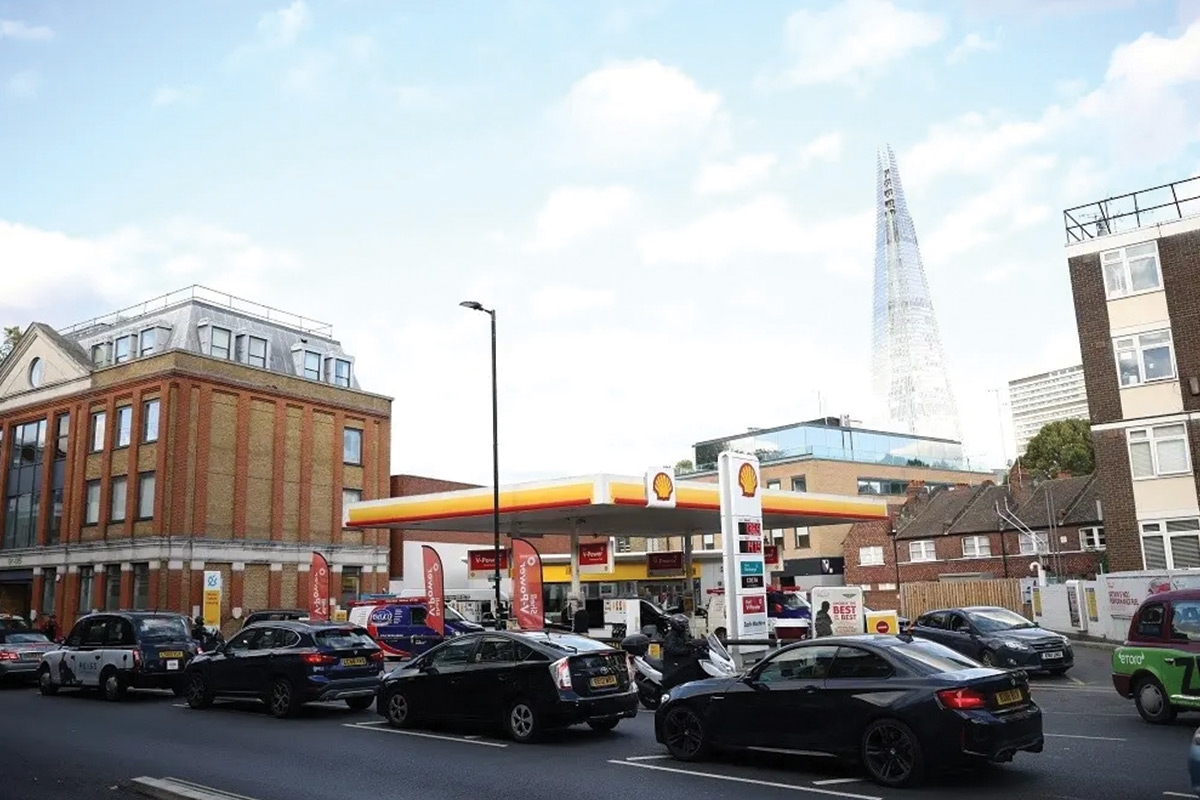
Diesel prices in Britain are reaching record levels, while QatarEnergy extends force majeure on gas exports, and Trump rejects Iran's proposals to halt fighting, driving up oil prices.
Translated by Qiyas from الجريدة — Original source
The Royal Automobile Club (RAC) of the United Kingdom announced today that diesel prices reached an unprecedented record high of 199.18 pence per liter (approximately $2.64), amid the ongoing war in the Middle East that has driven fuel costs higher.
In a statement, the club said gasoline prices rose to 174.13 pence per liter ($2.32), adding that diesel prices had entered an “unprecedented phase” due to the continuing war with Iran, which has led to higher prices for oil-derived fuels.
It clarified that current prices mean filling the tank of a mid-size family car with diesel now costs £110 ($146), an increase of £31 (about $41) compared to levels at the outbreak of the war last February. The previous peak for diesel was recorded in June 2022 at 199.09 pence per liter.
The Royal Automobile Club (RAC) was founded in 1897 as one of the oldest organizations specializing in automotive services and roadside assistance in the United Kingdom.
Gas prices in Europe surged sharply at the start of the week after QatarEnergy extended a force majeure declaration, sparking market concerns about continued disruptions to liquefied natural gas (LNG) supplies and their impact on European energy security.
Bloomberg reported that Qatar extended force majeure measures on LNG exports to Asia and Europe for an additional month, as ongoing disruptions continue to hinder energy flows through the vital Strait of Hormuz.
The state-owned QatarEnergy informed customers in Pakistan and Bangladesh during the current week that LNG shipments would remain canceled until November, according to the agency citing informed sources. At least one Indian buyer also received a similar notice, while Italian company Edison announced it would continue suspending its allocated supplies until early December.
The company has continued to update its customers on force majeure measures and canceled shipments on a roughly monthly basis since the war with Iran began, without issuing an immediate comment on recent developments.
Qatar increased shipments transiting the Strait of Hormuz in September compared to previous months, but flows remain well below pre-war levels. This comes as Iran maintains its conditions for fully reopening the strait, while statements from US President Donald Trump sent mixed signals regarding the prospects of reaching an agreement.
The ongoing crisis has kept pressure on one of the world’s most critical energy chokepoints, through which approximately one-fifth of global LNG supplies passed last year. Concerns have also grown over continued shipment restrictions amid the absence of a clear peace agreement between the United States and Iran.
These disruptions have pushed LNG prices in Europe and Asia close to their highest levels since late 2022, signaling rising energy costs and utility bills during the winter in the Northern Hemisphere.
Qatar has operated its Ras Laffan LNG export facility at reduced capacity since it was attacked in March last year, which caused damage to some of its facilities.
The crisis highlights Qatar’s importance in the global gas market, as it is one of the world’s largest LNG exporters, while the Strait of Hormuz remains one of the most sensitive chokepoints for international energy trade.
The price of a barrel of Brent crude rose by more than 3 percent on Monday morning following US President Donald Trump’s rejection of an Iranian proposal to halt hostilities for seven days and reopen the strategic Strait of Hormuz.
The barrel reached $107.51 in Asian afternoon trading, up 3.1 percent, while West Texas Intermediate crude rose 2.1 percent to $94.32, exacerbating inflationary pressures.
The vital waterway for global oil supplies is central to the conflict between the United States and Iran, which has reached a deadlock nearly seven months after its outbreak.
However, Trump said on Sunday that he expects negotiations with Iran to resume during the coming week.
Stephen Innes of Qubeix Intelligence wrote, “Tensions in the Middle East have escalated after President Donald Trump rejected the latest Iranian proposal to reopen the Strait of Hormuz.”
He added, “Oil prices rose and Asian stocks fell, and suddenly it appears that the brief respite global fixed-income markets experienced on Friday was merely a pause, not the end of the show.”
But he added, “The market still prices in the possibility that everyone will eventually find their way to the negotiating table, even if they spend the coming weeks exchanging shouts.”
The administration of US President Donald Trump plans to launch new, lower fuel-efficiency standards, easing requirements imposed on automakers to limit pollution from gasoline-powered passenger cars and light trucks.
Trump said in a post on his social media platform, Truth Social, last Saturday that less stringent fuel-efficiency requirements “will eliminate waste in the American auto industry,” save American families “thousands of dollars when buying a new, beautiful, and safe car,” and support US auto production.
Last December, the National Highway Traffic Safety Administration (NHTSA) projected that the new standards would set the average fuel efficiency for light vehicles at around 34.5 miles per gallon by 2031, lower than the previously expected rate of 50.4 miles per gallon in the same year under rules established by the administration of former US President Joe Biden.
Fuel-efficiency requirements set the minimum distance a vehicle must travel per gallon of gasoline. The anticipated change aligns with President Trump’s pledge to rescind policies that encourage or incentivize electric vehicle production.
Since taking office, Trump has eased vehicle exhaust emission rules, eliminated fines for automakers that fail to meet fuel-efficiency standards, and ended tax credits for purchasing electric vehicles of up to $7,500 per car.
For his part, US Transportation Secretary Sean Duffy said on Saturday via his X account that these changes would be announced on Monday. It was not immediately possible to obtain comments from the White House, the Department of Transportation, or NHTSA regarding the details of the new standards.
Immediate comments were also unavailable from automakers General Motors, Stellantis, and Ford Motor (which produces the best-selling light truck, the F-150).
The US administration and automakers have affirmed that the new rules will allow Americans access to a wide range of gasoline-powered vehicles that they need and can afford.
According to data from the U.S. car valuation firm Kelley Blue Book, the average price of a new car in the United States reached $50,089 in August, surpassing the $50,000 threshold for the first time since December last year.
At the same time, U.S. spending on fuel is rising amid global oil supply disruptions resulting from the U.S.-Iran war. The average price of a gallon of gasoline in the United States hit $4.47 on Sunday, up from $4.04 a month ago, according to data from the American Automobile Association (AAA).
In a note issued over the past weekend, strategists at the investment bank led by Dan Struve, head of oil research, explained that if a ban is implemented and inventories accumulate, gasoline prices are likely to fall temporarily, potentially dropping by $0.25 per gallon, as long as storage capacity remains available.
However, the bank’s strategists believe that diesel inventories could begin to fill within nine to ten weeks of the ban’s imposition, possibly even sooner, thereby increasing pressure on U.S. refineries.
As diesel inventories approach storage limits, U.S. refining margins may decline, prompting refineries to cut production. Since diesel, gasoline, and jet fuel are largely co-produced, a reduction in diesel output could also curtail gasoline production.
According to MarketWatch, citing the bank, consumer gasoline prices in the United States could rise by approximately $0.30 per gallon weekly once diesel inventories are full.
Globally, the ban could raise diesel prices in Europe by slightly less than 2 percent for each week it remains in effect, although the release of European strategic diesel reserves could offset about half of the expected increase.
After the ban is lifted, U.S. diesel prices may revert to tracking global prices, pushing domestic prices up and foreign prices down, though they will likely remain higher than they would have been without the ban.
What does this mean? Goldman Sachs’ analysis indicates that a ban on diesel exports may provide temporary relief for U.S. fuel prices, but as inventories fill, it will turn into upward pressure on gasoline and refining margins, with part of its impact spilling over into European fuel markets.
