Eco-tourism in Kuwait: Natural Treasures Opening Horizons for Sustainable Development
Janan Bahazad and Mubarak Al-Hajri shed light on the foundations of eco-tourism and geological tourism in Kuwait.
Translated by Qiyas from الجريدة — Original source
Despite the common perception of Kuwait as a flat desert environment, its expanse from the desert to the coastlines, along with its islands, mudflats, salt pans, and coral reefs, constitutes natural treasures and foundations for eco-tourism that open avenues for sustainable development.
These assets are diverse, ranging from birdwatching and visiting nature reserves to marine tourism, island tourism, desert and coastal exploration, and geological tourism, which offers visitors the opportunity to read the Earth’s history through rocks, landforms, sediments, and fossils.
Eco-tourism is based on enjoying natural areas responsibly, respecting the protection of ecosystems and biodiversity, minimizing the impact of visits, and enhancing visitors’ knowledge of the place and its environmental and cultural value.
Eco-tourism in Kuwait stands out as a promising field for leveraging the country’s natural diversity and raising awareness of the importance of preserving the environment and its resources, coinciding with the celebration of World Tourism Day, which falls on September 27 every year.
World Tourism Day, established by the United Nations World Tourism Organization, aims to raise awareness of the importance of tourism and its social, cultural, and economic role and value worldwide.
In this context, Janan Bahzad, Secretary General of the Kuwait Environment Protection Society, told the Kuwait News Agency (KUNA) on Sunday that the Kuwaiti environment is rich in natural diversity, which can serve as a promising foundation for developing eco-tourism, thereby contributing to linking recreation with environmental education and preserving the country’s natural heritage.
Bahzad added that the country boasts multiple eco-tourism assets, with nature reserves at the forefront. Al-Jahra Reserve, in particular, serves as a practical model that provides a sanctuary for resident and migratory birds, protects biodiversity, and includes a network of ponds, vegetated areas, and coastal environments.
She noted that Al-Jahra Reserve has recorded no fewer than 250 bird species, giving it special significance for birdwatching, environmental photography, and educational programs.
She explained that the Public Authority for Environmental Affairs has opened the reserve to the public through a system of organized visits and advance booking, allowing people to enjoy nature and observe wildlife within regulations that protect the site from disturbance and encroachment.
Bahzad mentioned that Bubiyan Island and Mubarak Al-Kabeer Reserve represent another dimension of eco-tourism. The reserve is listed under the Ramsar Convention as a wetland of international importance, covering an area of 50.948 hectares, and includes salt pans, shallow lakes, mudflats, and water channels.
She stated that Bubiyan holds global importance for migratory birds as a breeding station, while its marine and coastal environments play a crucial role for fish, shrimp, and various marine organisms. This makes any future tourism activity there dependent on protection, regulated visits, and designated zones to avoid harming the ecosystem.
The Secretary General of the Kuwait Environment Protection Society pointed out that Kuwait’s islands and marine environment constitute a significant part of the country’s natural capital. Organized marine activities, birdwatching, wildlife observation, coral reefs, and coastal environments offer a tourism model distinct from traditional recreational activities.
She highlighted that Kuwait possesses natural sites that combine multiple values in a single location. Failaka Island is a clear example, where coastal environments intersect with history, archaeology, and heritage, allowing for the development of routes that integrate eco-tourism, cultural tourism, and geological tourism.
Regarding geological tourism, which is part of eco-tourism, Al-Bahzad stated that she published the first peer-reviewed scientific study documenting geological sites of tourist importance in the journal “Geoheritage.” She explained that the study covered 14 natural and geological sites, including Jale Al-Zour, Failaka, Al-Khiran, Wadi Al-Batin, and Anjifa Beach, as well as several Kuwaiti islands.
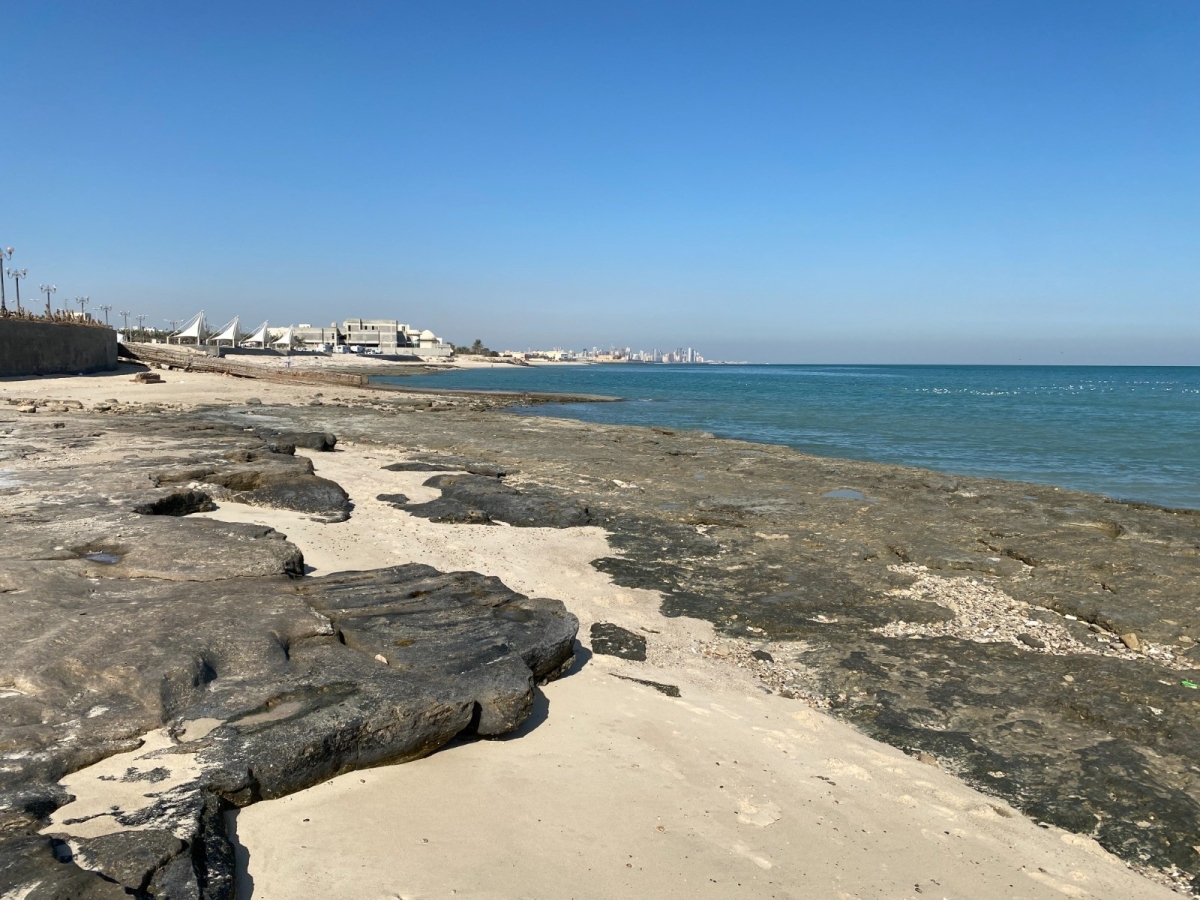
She clarified that the study revealed Kuwait possesses geological and natural diversity that can be utilized for educational and tourism purposes. Jale Al-Zour serves as an open record of geological layers and formations, while the Al-Khiran highlands provide evidence of ancient coastal changes. Anjifa Beach offers an opportunity to explore sedimentary structures and fossils at a site easily accessible within an urban environment.
Al-Bahzad noted that natural sites can be linked with schools, universities, and scientific programs to transform visits into educational experiences and recreational activities, involving environmental institutions, civil society, and the private sector in developing related programs and services.
Regarding current assets in the country, she reported that there is potential to develop a national eco-tourism map connecting nature reserves, islands, coastlines, deserts, and geological sites through various routes. This would define the nature of permitted activities at each site based on its environmental sensitivity and carrying capacity.
She explained that this map could include routes for birdwatching and geological heritage, programs for exploring the marine environment and islands, as well as educational desert and coastal trips. It would also integrate digital technologies, interactive maps, and applications providing information about sites and their natural stories.
Al-Bahzad emphasized that eco-tourism is not measured by visitor numbers nor does it begin merely with building facilities; rather, it starts with the ability to introduce people to the country’s assets, fostering a deeper understanding of the place and a greater commitment to its protection, before presenting it to visitors in a responsible manner.
She affirmed that Kuwait offers visitors a diverse image of the country, combining deserts, seas, islands, birds, and biodiversity, along with the Earth’s history. These are natural treasures and notable eco-tourism assets that invite understanding, enjoyment, and contribution to their preservation for future generations.
For his part, Dr. Mubarak Al-Hajeri, Chairman of the Board of Directors of the Kuwait Earth Sciences Association, told KUNA that the Kuwait GeoPark project achieved notable success in its first season, representing a qualitative addition to the country’s domestic tourism.
Dr. Al-Hajeri added that GeoPark has evolved from a strategic project of the Association into a unique initiative supported by coordinated state agencies, marking an exceptional and qualitative step in the state’s journey toward protecting natural heritage and revitalizing eco-tourism.
He clarified that this project serves as a vital platform highlighting rare geological landmarks and the unique biodiversity of the Kuwaiti environment, making it an educational, tourist, and environmental destination of significant strategic value.
He noted that efforts to register and develop the project according to global standards (within the Global Geoparks Network under UNESCO) place Kuwait on the global eco-tourism map and reflect its commitment to international conventions related to sustainable development, biodiversity conservation, and desertification control.
He praised the attention given by the government and its various institutions to the tourism file in general and the GeoPark project in particular, commending the appreciated efforts of Kuwait Oil Company in supporting this project and deploying all resources to ensure an enjoyable and beneficial experience for visitors.
For her part, Faysa Al-Muslem, a member of the board of directors of the Kuwait Geosciences Society and head of its media committee, said in a similar statement that the focus of ecotourism has shifted toward protecting the environment, reducing carbon emissions, and investing in sustainable, climate-resilient infrastructure.
Al-Muslem added that Kuwait Geopark is not merely a recreational project or a protected geographical area, but a national vision that combines the preservation of the past, the utilization of the present, and the building of a sustainable future. She considered supporting and developing this project as a genuine investment in Kuwait’s natural and human resources.
In this regard, she pointed to the “Aziza” rock, one of the geological jewels and an icon of the Geopark, which played a key role in launching the project. The rock received attention and care for nearly nine years, from 2016 to 2025, due to its scientific significance and its unique geological formation, before being returned to its original location within the Geopark.
